


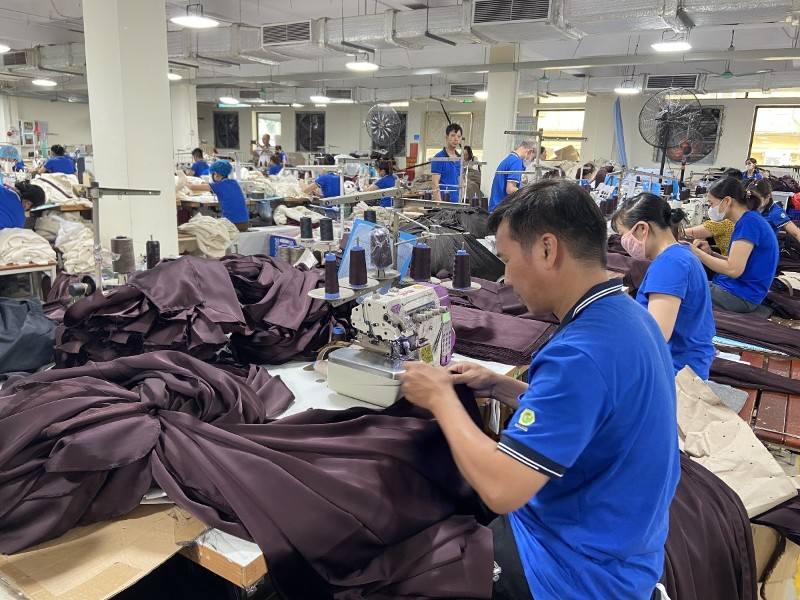
In 2025, total bilateral trade between Vietnam and members of the Comprehensive and Progressive Agreement for Trans-Pacific Partnership (CPTPP) reached $124.5 billion, with Vietnamese exports accounting for $70.6 billion. However, significant room remains to capitalize on preferential tariffs, as the proportion of exports granted CPTPP Certificates of Origin (C/O) stays relatively modest.
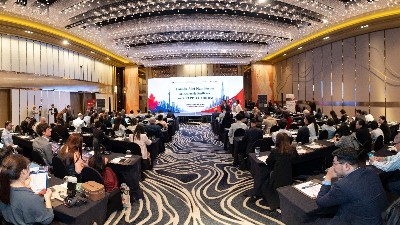
These figures were released by the Ministry of Industry and Trade (MoIT) during the recently-held seminar "From 'Made in Vietnam' to 'Made in CPTPP': Restructuring supply chains to meet rules of origin and enhance resilience."
Mr. Ngo Chung Khanh, Deputy Director General of the Foreign Market Development and Multilateral Trade Department (MoIT), pointed out that in 2025, the total import demand across the CPTPP bloc (excluding Vietnam) reached approximately $4.25 trillion. With export revenue exceeding $70 billion, Vietnam accounted for just over 1% of the bloc's total imports. Notably, the utilization rate of preferential C/Os in 2025 stood at less than 10%.
Analyzing this bottleneck, Mr. Khanh noted that difficulties regarding rules of origin do not apply uniformly across all product categories, but are primarily concentrated in textiles and garments due to the requirement for origin starting from three production stages onward.
Regarding labor and environmental standards, he said, not every market enforces requirements as stringent as the European Union; Malaysia, for instance, does not set excessively high standards compared to European nations. Therefore, specific obstacles—whether related to rules of origin, sustainable development criteria, or market intelligence—must be clearly dissected to formulate targeted and practical solutions.
Head of the Goods Origin Division under the Agency of Foreign Trade (MoIT) Tran Thanh Binh noted that when the agreement took effect in 2019, the C/O utilization rate was merely 2% of total export turnover to the bloc, as only Canada and Mexico had implemented it at the time.
By 2025, this figure rose to 10%, representing over $6 billion in export value. The average C/O growth rate has ranged from 1% to 2% annually, a fourfold increase compared to the initial phase.
Although this rate has yet to match full potential, it represents a commendable effort by the business community. Vietnamese products—ranging from agricultural produce, textiles, footwear, and steel to rattan, bamboo, and handicraft items—have established an active presence bearing "Made in Vietnam" labels and C/Os in distant markets across four continents, including Canada, Mexico, and Chile.
Building sustainable supply chains
Ms. Binh emphasized that the CPTPP is a next-generation trade agreement featuring modern rules of origin designed to maximize convenience for businesses. Its most progressive elements lie in the full cumulation mechanism and provisions allowing wholly obtained origin criteria across all intra-bloc member countries.
For example, a product processed in Vietnam can incorporate input materials imported from Australia or New Zealand and still satisfy the criteria for originating goods when exported to Malaysia or Singapore. To leverage this advantage, enterprises must maintain transparent documentation and proactively seek raw and intermediate materials from member countries to comply with specific product origin rules.
From a macro management perspective, Mr. Khanh said that in its role as CPTPP Chair in 2026, Vietnam is actively fostering intra-bloc connectivity across raw materials, supporting industries, logistics, and investment.
MoIT is also co-chairing a dialogue between the CPTPP and the EU alongside Canada to connect both economic areas and serve their shared demand for supply chain diversification. Following up on ministerial commitments established in 2025, the key task for 2026 is to translate these connectivity initiatives into tangible outcomes, positioning the CPTPP as a strategic supply source of raw materials for Vietnamese enterprises.





 Google translate