


The National Assembly on August 24 approved a resolution to endorse an investment policy for the National Target Program on cultural-social development, rural areas, ethnic minorities, and mountainous regions for the period 2026 - 2035, with a total resource allocation of VND808.558 trillion (more than $30.895 billion) for the 2026 - 2030 period.
The program is built on the integration of four national target programs which had been previously approved by the National Assembly, including: the National Target Program on Cultural Development 2025 - 2035; the National Target Program on Modernizing and Enhancing the Quality of Education and Training 2026 - 2035; the National Target Program on Building New Rural Areas, Sustainable Poverty Reduction, and Socio-Economic Development in Ethnic Minority and Mountainous Areas 2026 - 2035; and the National Target Program on Health Care, Population, and Development 2026 - 2035.
According to the resolution, one of the key objectives is to build modern, prosperous, distinctive, and sustainable new rural areas, linked with urbanization and climate change adaptation; while comprehensively developing ethnic minority and mountainous regions, implementing multidimensional, inclusive, and sustainable poverty reduction, ensuring gender equality and social welfare.
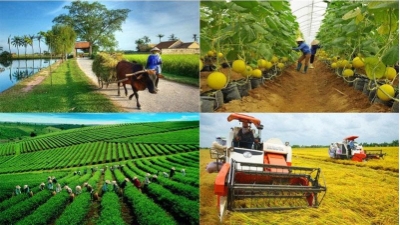
The program aims to develop rural economies in a green, circular, and ecological manner, linked with restructuring the agricultural sector; improving income, quality of life, and narrowing the development gap between regions, especially in ethnic minority and mountainous areas.
Additionally, the program aims to preserve and promote the good cultural identity of ethnic minority communities, strengthen national unity; ensure national defense, security, and social order, especially in strategic, border, and island areas.
In the cultural sector, the goal is to create a strong, comprehensive transformation in cultural development, building and perfecting the personality, ethical standards, identity, courage, and value system of Vietnamese people and families; enhancing the spiritual life and cultural access and enjoyment of the people.
The resolution also emphasizes the need to mobilize focused and prioritized investment resources for cultural development, promoting cultural industries to become an important part of the economy; building a professional, high-quality cultural and artistic workforce; preserving traditional culture, developing the cultural environment at the grassroots level, and enhancing international integration, leveraging the soft power of Vietnamese culture.
For education and training, the program aims to standardize and modernize the entire education system, creating a fundamental shift in quality; expanding learning opportunities, ensuring equity in access to education and lifelong learning rights.
Simultaneously, the education and training system must increasingly meet the human resource needs, especially high-quality human resources, to serve rapid and sustainable development in the context of science, technology, innovation, digital transformation, and deepening international integration.
In the field of health, population, and development, the program aims to ensure that all citizens receive primary health care management, early and remote disease prevention, and care at the grassroots level; reducing diseases, improving physical and mental health, stature, longevity, and quality of life.
The program also aims to increase birth rates, gradually bring the sex ratio at birth to balance, adapt to population aging, improve population quality, and enhance care for vulnerable groups.
The program will be implemented nationwide; simultaneously deploying some content to develop Vietnamese culture in countries with long-term cultural relations and interactions with Vietnam and where many Vietnamese people live, work, and study.
Resources will be prioritized for particularly difficult communes and villages, ethnic minority and mountainous areas, safe zones, borders, islands, and areas with difficult or particularly difficult socio-economic conditions.
The National Assembly assigns the Government to review and decide on adjusting the structure of public investment capital and regular expenses of the central budget, ensuring that public investment capital is allocated in a focused manner, not spreading out; while thoroughly saving regular expenses to allocate resources for investment, implementing social welfare policies for supported groups and other important tasks.
During the implementation process, the Government will continue to balance the central budget to prioritize additional support for the program, including policy credit capital, based on budget balancing capacity, implementation progress, achievement of objectives, tasks, and disbursement of state budget capital.
At a National Assembly session to be held in early 2030, the Government will report to the Legislature on the results of the program, and propose the resources needed for the next period (2031-2035).
 Google translate