


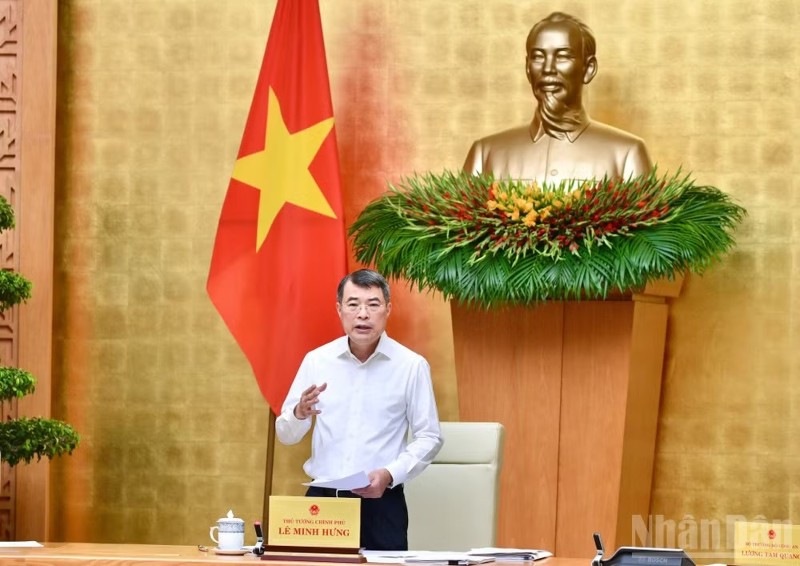
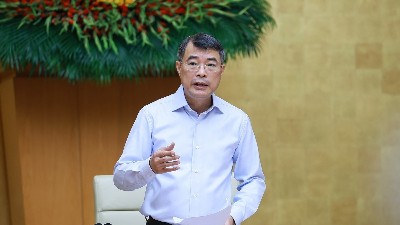
Chairing the Government's September thematic session on lawmaking, Prime Minister Le Minh Hung called for the thorough resolution of overlapping and inadequate regulations, the unlocking of resources, the protection of the legitimate rights and interests of citizens and businesses, and greater efficiency in state management.
The session, held on September 16, considered and gave opinions on eight draft laws and resolutions scheduled to be submitted to the second session of the 16th National Assembly.
The Government leader asked ministers to personally direct the full incorporation of appropriate comments from Government members, the Ministry of Justice's appraisal opinions, and the conclusions reached at the session. Ministries were instructed to urgently finalize the dossiers for the draft laws and resolutions and report them to the Deputy Prime Minister in charge before September 21.
Regarding the draft amendment to the Land Law, the PM described it as a particularly important legislative project with a direct and far-reaching impact on socio-economic life.
The draft must also ensure consistency with the Housing Law, the Law on Real Estate Business and other relevant legislation. The Government will accelerate the development and integration of land databases based on the principle of maximum transparency and promote transactions in the market. It will also continue decentralizing and delegating authority while simplifying administrative procedures according to the principle of “one point of contact, one-stop service.”
For the draft revised Housing Law, PM Hung assigned the Ministry of Construction to continue studying and refining mechanisms concerning the useful life of apartment buildings, different types of rental housing, and accompanying financial mechanisms.
The regulations should aim to simplify procedures for investment in, development of and access to housing, meeting people's need for stable, long-term accommodation. At the same time, they should clearly establish criteria for restricting the subdivision and sale of residential land plots and preventing speculation.
The PM also asked the ministry to study and report to the National Assembly on a proposal to pilot a mechanism under which the State could buy back commercial housing projects from developers that are no longer capable of implementing them or are unable to transfer them to another party.
Regarding the draft revised Law on Real Estate Business, the Ministry of Construction was tasked with completing mechanisms to make the real estate market a public, transparent, healthy, stable and sustainable channel for allocating land resources.
The draft law should clearly define criteria for identifying speculative activities and market manipulation, while ensuring legal certainty and protecting the rights and interests of market participants, particularly homebuyers.
It should also provide for the connection and sharing of real estate data with land, planning, tax, notarization, population and credit databases.
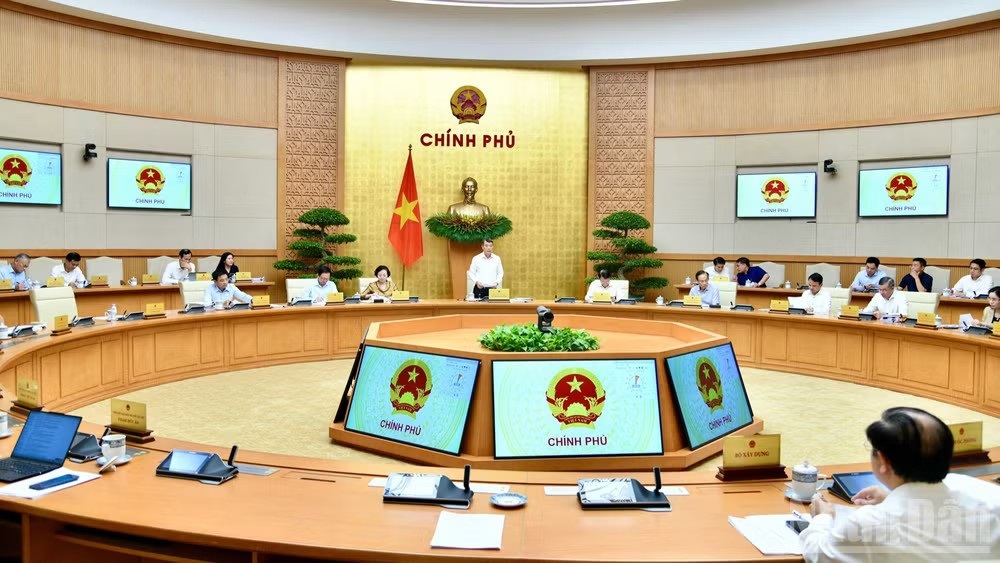
For the law amending and supplementing a number of provisions of the Investment Law, the Government's objective is to continue removing institutional barriers and bottlenecks while ensuring policies that are stable, transparent and easy to implement, as well as fair and consistent treatment of investors.
Investment incentives and support policies should focus on attracting high-quality and high-tech projects that involve technology transfer and linkages with domestic enterprises. At the same time, overlapping provisions with laws on land, construction, planning, bidding and the environment must be definitively resolved.
Easing difficulties for production and ensuring major economic balances
Alongside lawmaking, PM Hung directed several key and urgent socio-economic tasks, with a particular emphasis on achieving the country's growth target.
Ministries and sectors were instructed to continue promoting public investment and removing obstacles so that delayed and long-standing projects can be put into operation. They must also ensure progress on key projects and works, particularly in infrastructure, transport, science and technology, and energy, while maintaining macroeconomic stability, controlling inflation and safeguarding major economic balances.
The Prime Minister asked the Ministry of Finance to coordinate with the Ministry of Industry and Trade and local authorities to assess the situation facing businesses, particularly small and medium-sized enterprises, and promptly address their difficulties and obstacles in order to facilitate production and business activities.
Regarding the fuel and electricity markets, the Ministry of Industry and Trade was instructed to closely monitor developments and ensure adequate reserves and supplies from now until the end of the year. It was also asked to urgently submit amendments to Decree No. 83 on petroleum trading, finalize the amended and supplemented Power Development Plan VIII, and complete the overall plan for restructuring the electricity sector.


 Google translate