


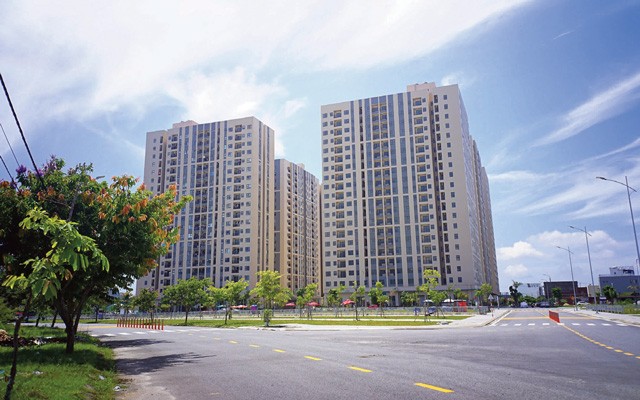
Providing affordable housing for workers and lower-income households has become an increasingly pressing challenge in Vietnam as urbanization accelerates. With homeownership remaining out of reach for many and workforce mobility driving demand for flexible accommodation, the government is seeking to expand rental housing through new financing mechanisms, investment incentives, and regulatory reforms.
Against this backdrop, on October 13, Deputy Prime Minister Pham Gia Tuc chaired the first meeting of the Central Steering Committee on Housing Policy and the Real Estate Market, to discuss measures to expand social and rental housing. He said the government is positioning rental housing as a strategic priority in its efforts to better align housing supply with actual demand.
Implementation remains slow
At the meeting, Deputy Minister of Construction Nguyen Van Sinh reported that Vietnam had completed 8,314 rental housing units as of the end of the third quarter of 2026, equivalent to just 48 per cent of the annual target. Implementation remains slow in some localities, while mobilizing investment, particularly for rental housing, continues to be challenging.
Mr. Pham Van Thinh, Vice Chairman of the Bac Ninh City People’s Committee, proposed long-term preferential credit for rental housing projects and using resources from housing funds to purchase apartments in social housing developments, creating a rental housing portfolio managed by local authorities. Representatives from Hung Yen province similarly reported rising rental demand in industrial parks but limited access to investment capital.
Elsewhere, Mr. Le Anh Quan, Standing Vice Chairman of the Hai Phong City People’s Committee, proposed a suitable rental pricing mechanism for housing developed with State capital. Mr. Le Hoang Chau, Chairman of the Ho Chi Minh City Real Estate Association, advocated expanding affordable commercial housing and encouraging developers to shift away from high-end projects toward more affordable homes and rental properties.
Deputy Prime Minister Tuc noted that unsold housing inventory is increasing, while credit has not been sufficiently directed toward actual housing demand. High interest rates and lending constraints continue to weigh on businesses and homebuyers, while some localities are falling behind on social and rental housing targets. He called for greater diversification of investment and closer coordination between public and private resources.
Resolution No. 303/NQ-CP sets targets for 2026 and the 2026-2030 period. The Ministry of Construction (MoC) is tasked with reconciling housing statistics, distinguishing social housing from rental housing, and measuring progress based on completed units rather than projects that have merely broken ground. The Ministry of Agriculture and Environment, in coordination with the Ministry of Justice and the MoC, will address issues related to land legislation. The Ministry of Finance is expected to clarify the legal framework, revenue and expenditure mechanisms for housing funds, and potential funding sources. And the State Bank of Vietnam will work to improve credit access and direct financing toward social and rental housing, while the Vietnam Bank for Social Policies will provide funding and simplify lending procedures.
Local authorities must incorporate housing targets into annual development plans and assess demand by population group and location. Mr. Tuc emphasized the need for regular inspections and greater accountability among developers.
Rental housing as a market pillar
Mr. Ha Quang Hung, Deputy Director of the Department of Housing and Real Estate Market Management at the MoC, said the proposed policy framework marks a shift in how rental housing is positioned within Vietnam’s housing market. The approach rests on five principles: expanding the focus beyond homeownership and commercial housing to include rental housing; developing a regulated market with transparent returns and affordable rents; integrating housing plans with regional and sectoral development; prioritizing areas linked to public transport, urban renewal, and employment centers; and diversifying funding sources by using public capital to mobilize private and long-term investment.
Localities are expected to assess demand for rental and official-duty housing, review land availability in urban areas, economic zones and industrial parks, high-tech parks, and rapidly-urbanizing areas, and prepare serviced land for development. They should also consider allocating local budget funding to rental housing projects that meet quality standards and maintain affordable rents over the long term, while making effective use of the National Housing Fund.









 Google translate