


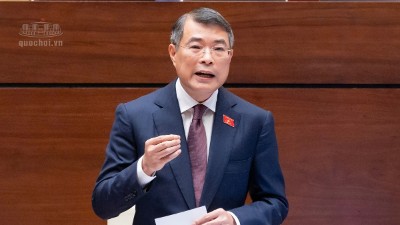
Regarding the mobilization of capital and growth resources for the entire period and current term, issues frankly raised by National Assembly deputies, Prime Minister Le Minh Hung asserted that for foreign direct investment (FDI), foreign indirect investment, and private investor resources, the first and most crucial step is to perfect the institutional framework.
Creating a transparent, clear, and implementable institutional framework
According to the Prime Minister, it is essential to build a transparent legal framework consistent with international practices and standards, fostering trust among the public, businesses, and foreign investors in the legal environment. This includes legal provisions to protect the legitimate rights and interests of investors. The institutional framework must be perfected to be public, transparent, and easy to implement, thereby consolidating trust.
Secondly, it is imperative to consistently maintain a stable macroeconomic foundation and ensure major balances. Investors will never feel secure if the legal environment is not transparent, clear, or easy to implement; trust will also erode if macroeconomic balances are not maintained. Without these, it will be impossible to mobilize capital from investors.
Thirdly, there are specific tasks for different investor groups, such as foreign direct and indirect investors, especially investment funds and medium-to-long-term capital sources. A plan and strategy for stock market development are already in place.
Prime Minister Hung affirmed the commitment to creating a public, transparent, and easily implementable institutional framework. The Government will notably direct the development of tools to attract medium and long-term investment capital, providing financial facilities and instruments for investors, including the development of financial centers in Ho Chi Minh City and Da Nang.
According to the head of the Government, with a stable macroeconomic environment, clear development objectives, and effective capital mobilization tools, along with inspection and supervision mechanisms to ensure capital flows align with targets, investment capital will undoubtedly be mobilized.
Public investment projects significantly reduced
Regarding public investment capital, in accordance with Conclusion 18 of the 2nd Central Committee Conference, the number of public investment projects must be controlled, with a minimum reduction of 30 percent.
The Prime Minister stated that in the previous term, the number of projects was sharply reduced to approximately 5,000. Currently, the total number of central budget public investment projects stands at just over 3,000, according to a report from the Ministry of Finance.
Based on the Central Committee's full-term program and National Assembly resolutions, public investment projects with widespread, inter-regional impact and those investing in essential infrastructure such as transportation, key science-technology sectors, and agriculture will be identified.
By determining the number of projects, controlling their quality, and accelerating the progress of public investment, funds will be directed towards their intended purposes, serving the goal of promoting growth and creating a ripple effect to mobilize private and foreign investment resources without causing market instability.

 Google translate