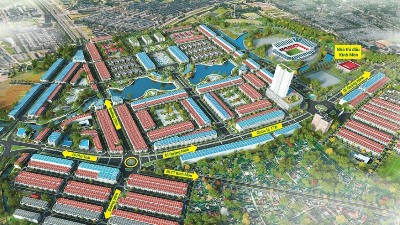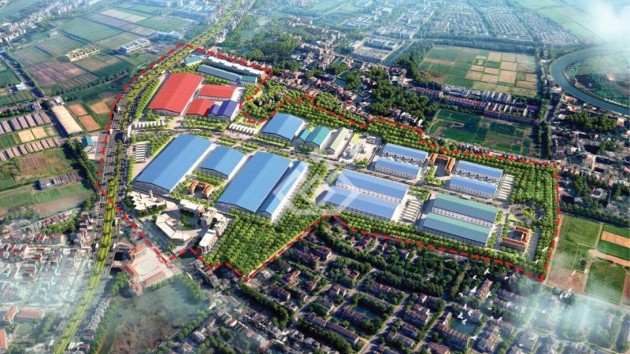
These projects have already received approved detailed planning and are part of the Mekong Delta city’s portfolio to invite independent social housing investment.
According to its housing development plan for the 2020-2025 period, south-central Binh Dinh province will develop more than 11 million sq m of residential housing, with capital of nearly VND74 trillion ($3.27 billion) required. To implement the plan, 12 new housing projects have recently been added.
Resort real estate has been developing strongly in Vietnam, with a range of models meeting the diverse needs of domestic and international tourists. The Ministry of Construction has proposed amending the Law on Real Estate Business to create a solid legal basis for its continued development.
Central Thua Thien-Hue province is attempting to reach an average housing area per capita of 26.5 sq m by 2025, so requires over VND63 trillion ($2.8 billion) to build more than 8.56 million sq m of floorspace.
Newly-built housing in Ho Chi Minh City is to reach 50 million sq m in the 2021-2025 period, with a per capita area of 23.5 sq m by the end of 2025. The per capita area is now just 21.04 sq m, or 24.4 sq m less than the national average in 2020.
Under its Master Plan to 2040 and vision to 2050, northern Quang Ninh province’s Ha Long city will develop with Cua Luc Bay being the connection center. A number of infrastructure projects have been implemented since the planning was approved, giving a boost to the city’s real estate market.
A report from the Batdongsan.com.vn website shows that Vietnam’s real estate market is witnessing a spectacular recovery post-pandemic. Interest in the three main markets - Hanoi, Da Nang, and Ho Chi Minh City - increased sharply in all types of real estate.