



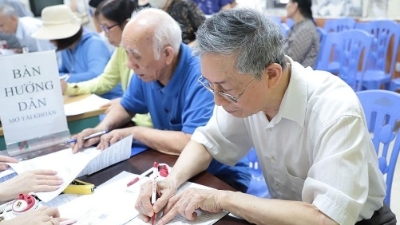
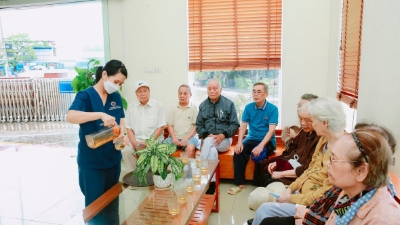
Vietnam will transition from an “aging” society to an “aged” society by 2036. While this demographic shift presents major challenges, from mounting pressure on healthcare and a shrinking workforce to rising demand for social care, it also presents an opportunity to rethink the country’s social welfare system. Aging is not inherently a burden: older people can continue to work, innovate, and contribute to their communities. The challenge is that the transition is unfolding faster than systems and families can prepare.
Population aging is the cumulative result of declining fertility, rising life expectancy, and large generations entering old age. In Vietnam, its foundations were established long before 2011. World Bank (WB) data shows that the total fertility rate fell from about 6.3 children per woman in 1960 to 4.8 in 1979, 3.8 in 1989, and around 2.3 in 1999. By the early 2000s, fertility had approached the replacement level of 2.1 children per woman, but has occasionally fallen below this since 2006. In less than half a century, Vietnam shifted from large families to a model in which one or two children became increasingly common.
Demographic shifts
The change helped Vietnam enter its demographic dividend, as the dependent child population declined while the working-age population grew. But smaller generations also mean a narrower workforce and a smaller family-based care network as the population ages. Meanwhile, declining child mortality and improvements in disease prevention and treatment extended life expectancy from about 51 years in 1950 to around 75 years in 2016.
As the large generations born after 1945 entered old age, the population pyramid narrowed at the bottom and widened at the top. Thus, 2011 was not when Vietnam suddenly began aging, but a milestone in a transition that had been unfolding for generations, with people aged 60 and above already accounting for more than 10 per cent of the population.
After 2011, the older population grew rapidly. People aged 60 and above accounted for about 11.9 per cent of the population in 2019. By 2024, their number had reached approximately 14.2 million, up 4.7 million in a decade, and could reach 18 million by 2030. At the same time, the total fertility rate fell to around 1.91 children per woman in 2024; below replacement level. Significant regional differences in fertility mean that the pace of aging, workforce contraction, and demand for care will vary around the country.
People aged 65 and above are projected to account for 14 per cent of the population by 2036, moving Vietnam from an “aging” to an “aged” society. By 2050, people aged 60 and above could make up more than one-quarter of the population, while the share of those aged 80 and above - who typically require greater health and daily living support - will also increase. The speed of this transition is particularly important: while many European countries had decades to adjust their pension, healthcare, and social care systems, Vietnam has only about two decades and is aging while pension coverage and long-term care remain limited. Those who will turn 60 in 2050 are already in their 30s today, making the policy choices of this decade particularly consequential.
Rising life expectancy is a measure of progress, but the benefits of longevity depend on whether people can maintain their health, mobility, and independence. According to the WB, a Vietnamese person reaching 60 in 2016 could expect to live another 22.7 years, or until around age 82-83, but healthy life expectancy was only about 17.2 years. On average, more than five additional years could therefore be accompanied by illness, functional decline, or the need for assistance.
The impact goes beyond medical treatment. Declining health can affect basic activities such as eating, bathing, moving around, and taking medication. The 2011 National Survey on Older Persons found that more than two-thirds of older people experienced at least one mobility difficulty, while nearly 38 per cent had difficulty with at least one activity of daily living.
Vietnam’s goal therefore cannot simply be to increase life expectancy; it must also delay disease, narrow the gap between life expectancy and healthy life expectancy, and preserve independence for as long as possible.
Cost of aging
The financial pressure of aging extends beyond medical bills. It includes healthcare costs, long-term care, and the income or working time families sacrifice to care for relatives. According to the WB, current health expenditure in 2016 was about 7.7-times higher than in 2000 in nominal terms, while the population grew by only around 19 per cent. Public health spending rose from some VND12 trillion ($4.61 billion) in 2000 to VND109 trillion ($4.19 billion) in 2015, and nearly tripled on a per capita basis after adjusting for inflation. Though health insurance coverage has expanded, out-of-pocket spending still accounted for around 43 per cent of total health expenditure in 2018.
For older people with multiple chronic conditions, costs can accumulate through repeated consultations, tests, medications, transportation, and prolonged treatment, forcing lower-income households to delay care, borrow money, or cut other essential spending. Healthcare is only part of the equation. When functional capacity declines, older people may require years of long-term care, yet Vietnam still lacks a unified system for financing, quality standards, and workforce development.
Most older Vietnamese people prefer to remain at home, close to their children and communities, but home-based care is not cost-free. Family members may cut their working hours or leave the labor market after facing physical strain, psychological stress, and burnout. This unpaid work often falls on wives, daughters, and daughters-in-law, and becomes increasingly difficult to sustain as children live farther from their parents for education, migration, or work.
Without early preparation, Vietnam could face overcrowded hospitals, greater pressure on insurance funds, rising household spending, and substantial working time diverted to informal caregiving. Investment in disease prevention, primary healthcare, rehabilitation, and home-based care can help reduce preventable hospital admissions while distributing costs more equitably among the government, society, and families.
Preparing for longevity
The National Strategy for the Elderly until 2035, with a vision toward 2045, together with social assistance programs and intergenerational clubs, are important steps. But Vietnam needs a broader approach that helps people maintain health, work capacity, and independence throughout their lives.
First, the focus should shift from extending life expectancy to extending healthy life expectancy. Healthy aging begins well before 60, as risks linked to smoking, alcohol consumption, physical inactivity, poor nutrition, excessive weight, hypertension, and diabetes accumulate early in life. Disease prevention, vaccinations, nutrition, physical activity, mental health, and the early detection of non-communicable diseases can reduce the years people live with illness.
Second, healthcare should move toward integrated care. Primary healthcare needs to continually manage health and coordinate between family physicians, specialists, pharmacists, rehabilitation professionals, and social services. Interoperable electronic health records could reduce duplicate testing and medication-related problems, while Vietnam also needs more training in geriatrics, nursing, rehabilitation, dementia care, and palliative care.
Third, long-term care should become a formal component of social welfare. Vietnam needs a legal framework, care-needs assessment criteria, quality standards, and oversight mechanisms, with home care, day care, caregiver support, and community-based rehabilitation prioritized before institutional care. Financing could include pilots for long-term care insurance or co-payment mechanisms combining public funding, insurance, and contributions based on ability to pay, while protecting low-income earners and those living alone.
Fourth, older people should be supported in remaining economically and socially active. Retirement age adjustments should be accompanied by age-friendly workplaces, retraining, and flexible employment, while pension and social insurance coverage should be expanded for informal workers.
Finally, policy should be increasingly data-driven, using long-term information on health, functional capacity, living conditions, and service needs to guide investment in assistive devices, appropriate housing, home care, and telehealth. Digital technology and AI can help identify risks and manage chronic diseases, but cannot replace human care.
These measures are closely connected: disease prevention reduces the need for care; primary healthcare can limit hospital admissions; long-term care shares the burden on families; and employment and social welfare help preserve independence. Adapting to population aging must therefore be part of a broader national development strategy.
The National Strategy for the Elderly until 2035, with a vision toward 2045, together with social assistance programs and intergenerational clubs, are important steps. But Vietnam needs a broader approach that helps people maintain health, work capacity, and independence throughout their lives.







 Google translate