


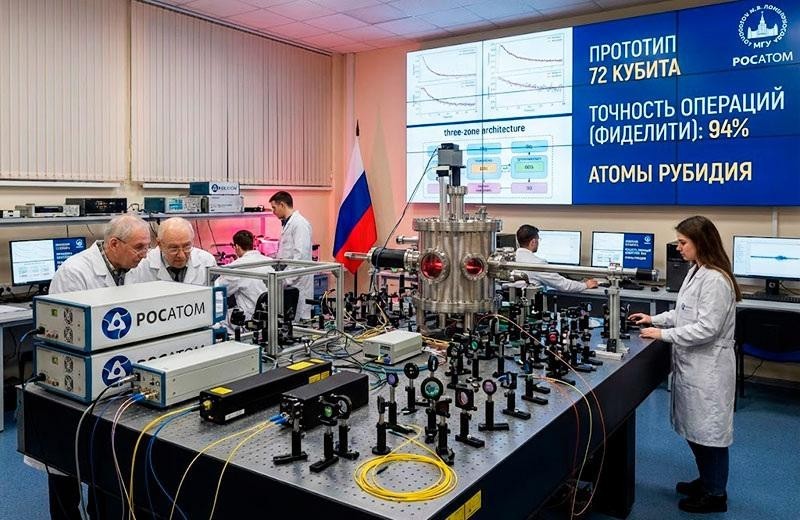
According to Rosatom - a Russian state-owned corporation, it and the Vietnam Academy of Science and Technology (VAST) are seeking to expand cooperation in quantum technology, with a focus on developing a long-term development roadmap, designing a quantum technology center in Vietnam, establishing joint laboratories, and training human resources.
The information was shared by Ms. Ekaterina Solntseva, Rosatom’s Director for Quantum Technologies, at the Russia-Vietnam Science and Technology Forum, one of the key events held recently in Moscow as part of the Russia-Vietnam Year of Science and Education.
Developing a roadmap for quantum technology
According to Ms. Solntseva, cooperation between Rosatom and VAST is expected to focus on three main areas.
First, the two sides will work together to develop a roadmap for quantum technology and design a Quantum Technology Center, which is expected to be established in Vietnam.
Second, the two sides will coordinate the implementation of the roadmap, including the possible establishment of joint laboratories to promote research and development activities.
The third pillar is human resource development. This is regarded as one of the most important issues if Vietnam is to build capacity in quantum technology research, development and applications in the coming years.

This is an important and very complex task: in a short period of time, we essentially have to build an entirely new high-tech industry.
This approach indicates that the proposed cooperation is not limited to the transfer or application of individual technologies, but is instead aimed at building a broader ecosystem encompassing development strategies, research infrastructure, laboratories, a pool of experts and practical applications.
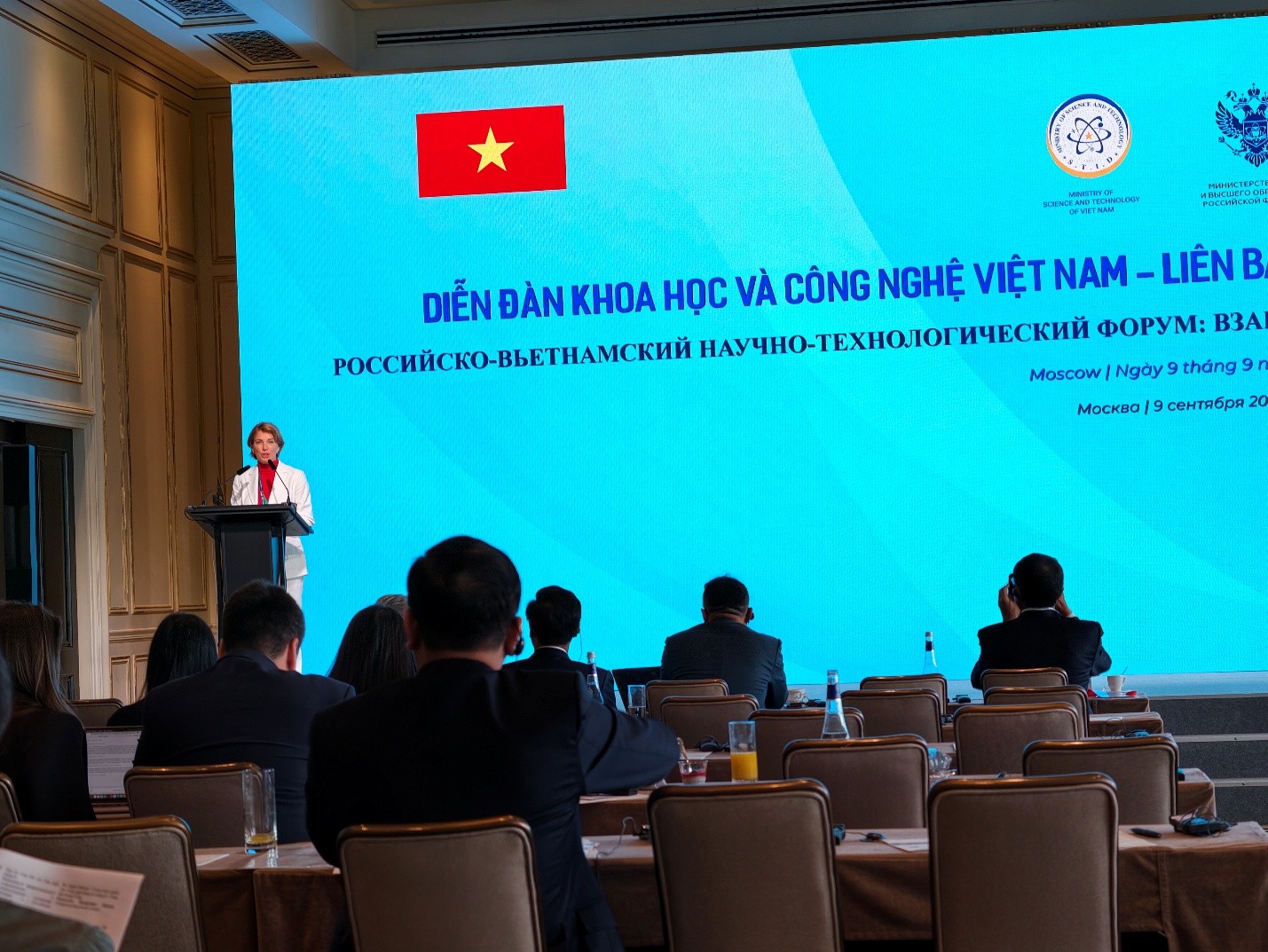
For Vietnam, quantum technology is opening up a new area of development as next-generation computing technologies are increasingly regarded as an important component of national technological capabilities. Quantum computing, quantum sensing and related technologies have the potential to be applied across a wide range of fields, from scientific research, healthcare, materials and logistics to energy and industry.
Rosatom and Russia’s quantum ecosystem
Rosatom is a diversified Russian technology corporation operating in energy, engineering, construction and a range of other high-tech sectors. The corporation currently comprises more than 550 enterprises and organizations, with around 415,000 employees.
In the quantum technology sector, Rosatom has been responsible since 2020 for implementing Russia’s roadmap for the development of the high-tech field of quantum computing.
The work is organized under Rosatom’s Quantum Project, an ecosystem comprising 19 research institutes and universities and bringing together more than 750 researchers and engineers.
One of the key objectives in the initial phase has been to build domestic capabilities for developing quantum computers. Russia has developed quantum computer prototypes based on four technological platforms: ions, atoms, photons and superconductors. According to Rosatom, these achievements have placed Russia among the three leading countries in terms of the number of quantum computing platforms developed.
Russia currently has seven quantum processors, five of which were developed under its quantum technology roadmap. Three quantum computers have reached a scale of more than 70 qubits.
These figures reflect Russia’s relatively comprehensive approach to quantum technology, ranging from fundamental research and hardware development to building research teams and gradually bringing the technology into economic applications.
From research to industrial applications
Rosatom’s quantum technology development roadmap for 2025-2030 is designed not only to strengthen research capabilities but also to promote practical applications of quantum technologies.
One of the priority areas is Russia’s nuclear industry. More than 30 initial projects applying quantum computing technologies are currently being implemented in this sector.
This is particularly relevant to the proposed cooperation with Vietnam, as Rosatom’s experience extends beyond developing quantum platforms to identifying practical problems where emerging technologies can be put to use.
Since 2026, Rosatom has also begun participating in research and development in several areas of quantum sensing. This represents another branch of quantum technology alongside quantum computing, with potential applications in high-precision measurement, positioning, geophysics, healthcare and a range of industrial fields.
For Vietnam, the establishment of a quantum technology center and joint laboratories, if implemented, could provide an additional platform for connecting scientific research with human resource development and practical applications.
The biggest challenge remains human resources. Quantum technology requires a combination of physics, mathematics, computer science, engineering and other specialized disciplines. Human resource development therefore needs to go beyond training scientists and also focus on building a pool of engineers and specialists capable of translating research results into products and applications.
Against this backdrop, the three areas of cooperation proposed by Rosatom - developing a roadmap, building research infrastructure and training human resources - can be viewed as interconnected components in the development of Vietnam’s quantum technology capabilities.
If translated into long-term cooperation programs, the partnership between Rosatom and VAST would open up a new avenue for scientific and technological cooperation between Vietnam and Russia, while providing Vietnam with an opportunity to gain access to Russia’s research and development experience in a technology field that is expected to have an increasingly significant impact on technological competitiveness in the future.






 Google translate