It is necessary to protect the legitimate rights and interests of the people, enterprises, and related parties in all circumstances, the Prime Minster told a recent conference.
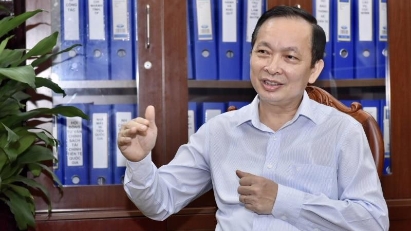
Capital demand for green growth is quite large and long-term, so the burden of provision should not be put solely on the shoulders of the banking sector. According to Deputy Governor of the State Bank of Vietnam Pham Thanh Ha, “In the 2021-2030 period, to realize green growth, the government will focus on promoting resources from commercial loans and private investment such as green credit and green corporate bonds.”
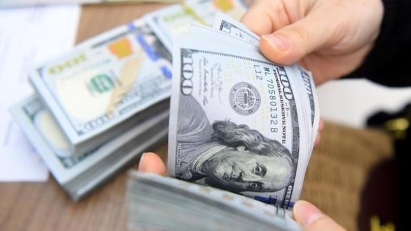
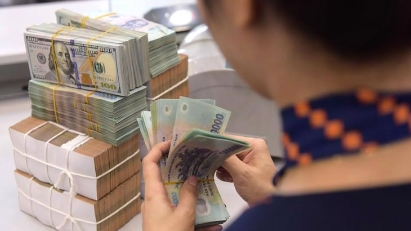
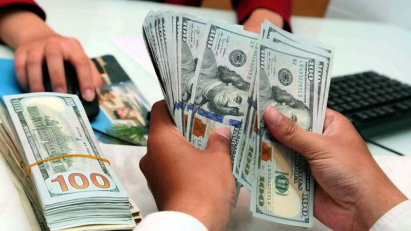
Under pressure from global USD prices and rising demand for foreign currencies, the State Bank of Vietnam (SBV) is trying to identify a new exchange rate intervention point. The USD selling rate has been increased from VND23,700 to VND23,925. This is the fourth time the SBV has increased the price this year, totaling VND905, or 3.9 per cent.
In an updated report, Dragon Capital said that in an environment of rising interest rates, expected returns in the stock market are unlikely to be outstanding. In the short term, the market will see many fluctuations depending on developments around the world. However, the influence of external factors on Vietnam is much lower than in emerging countries and is not systematic.
After the State Bank of Vietnam (SBV)’s decision to raise the operating interest rate, analysts believe that the net interest margin (NIM) in the industry will narrow but the impact will differ. Banks with high CASA ratios will be more resilient, while banks with low LDR or short-term capital ratios for medium and long-term loans will be under less pressure.
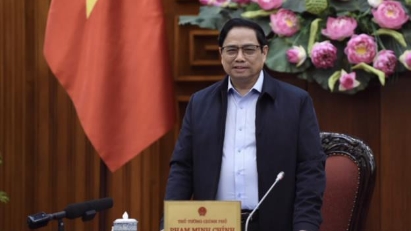
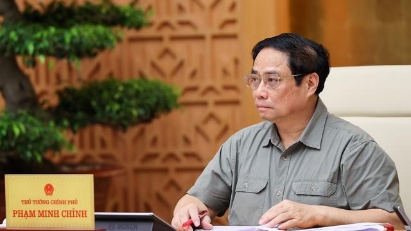
At a government meeting on the morning of September 22, Prime Minister Pham Minh Chinh said that, in the context of an unpredictable global situation, monetary and fiscal policy orientations must be effective and coordinated closely with other policies to stabilize the macro-economy. He asked the State Bank of Vietnam (SBV) to research and raise the operating interest rate and the deposit rate but to try to keep the lending rate stable.
A recent banking report from VnDirect shows that the State Bank of Vietnam (SBV) has loosened credit limits on 18 banks. Sacombank now has the highest limit, at 4 per cent, followed by MB and Vietcombank with 3.2 per cent and 2.7 per cent, respectively. TPBank, Eximbank, and LienVietPostBank also received adjustments. The SBV prioritized banks with a healthy credit structure in extending limits. According to VnDirect, total credit growth is estimated at 13 per cent by the end of the year following this adjustment; close to the 14 per cent target set by the central bank.
The State Bank of Vietnam (SBV) adjusted the selling price for USD from VND23,400 to VND23,700 on the afternoon of September 7. It also stopped listing the intervention buying rate. According to analysts, the decision to raise the selling price is mainly a defensive measure against upcoming US Fed interest rate hikes.
At the end of the session on September 6, the interbank interest rate for VND loans was 5.44 per cent per annum for an overnight term, only slightly lower than the last peak of 5.56 per cent per annum in February 2016. Liquidity in the system is still tight and interbank interest rates continue to increase despite the State Bank of Vietnam’s intervention.
Data from the State Bank of Vietnam (SBV) shows that after eight consecutive quarters of growth, individual deposits to banks had declined as of the end of June. Experts cite two reasons: the amount of idle funds held by businesses and individuals no longer being so abundant, and credit sources becoming limited as banks have hit their lending limits.
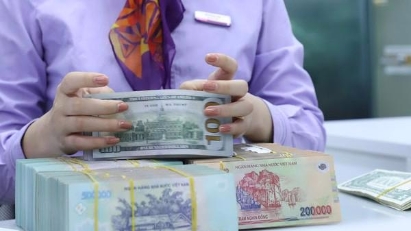
Data from the State Bank of Vietnam shows that as of the end of August, total credit at credit institutions in Ho Chi Minh City stood at over VND3.1 quadrillion ($132 billion), up 0.4 per cent compared to the end of July and 11 per cent compared to the end of 2021.
The Ministry of Finance has forecast that CPI will increase 3.37-3.87 per cent in 2022; higher than the forecast of 3.4-3.7 per cent from the General Statistics Office. The State Bank of Vietnam, meanwhile, has put inflation in the range of 3.7 per cent, ± 0.3 per cent.
The State Bank of Vietnam has reported that, on average, individuals deposit nearly VND1.8 trillion ($76.92 million) in banks every day. In the first half of the year, nearly VND320 trillion ($13.67 billion) was deposited. The figure is forecast to continue to rise towards the end of the year as deposit interest rates head upwards.
The State Bank of Vietnam (SBV) has issued Circular No. 10/2022/TT-NHNN stipulating procedures for registration and changes to the volume of non-government-guaranteed bonds issued to the international market by enterprises. Other content is in regard to foreign exchange management relating to foreign loans in the form of bond issuances to the international market complying with regulations on foreign borrowing and repayment by enterprises.
The interbank VND interest rate fell sharply during the week of August 8-12 from a large volume of bills maturing and money being pumped back into the market, resulting in the difference between VND and USD interest rates becoming negative. According to SSI Securities, the State Bank of Vietnam is implementing a relatively flexible monetary policy via open market operations in order to balance inflation, exchange rates, and interest rates.
Banks have been permitted to increase their charter capital and this has had a positive impact on the banking industry in general and banking stocks in particular.