


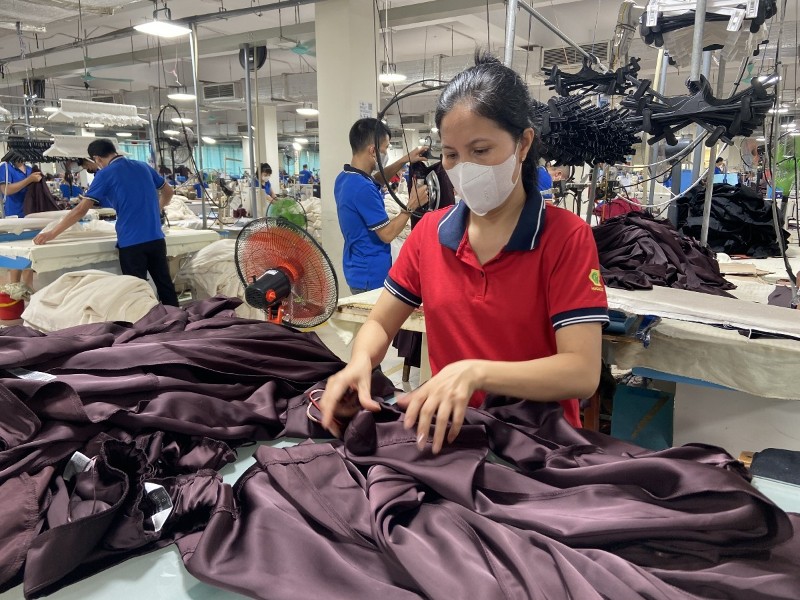
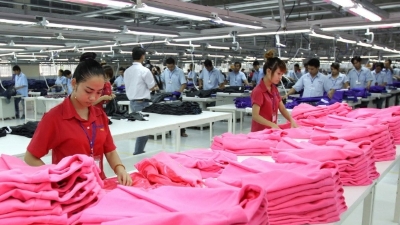
The Vietnamese textile industry aims to maintain an average monthly export turnover of over $4 billion in the second half of the year. This will drive the sector toward a full-year 2026 target of $48 billion in a positive scenario, or a minimum of $47.5 billion in a more cautious scenario.
To achieve this, the Vietnam Textile and Apparel Association (VITAS) has outlined a core group of solutions: a aggressive shift from pure processing (CMT) to high-value-added models like FOB (Free on Board - full package production) and ODM (Original Design Manufacturing); prioritizing the use of domestic raw materials; diversifying export markets; and proactively working with US authorities to mitigate legal risks related to Section 301 investigations.
Furthermore, to create a solid launchpad for businesses to overcome current challenges, VITAS has submitted several key recommendations to the Government and relevant ministries. These include policies to attract high-tech investment in the weaving and dyeing stages, and VAT exemptions or grace periods for domestic raw materials within the export production chain to encourage localization.
Furthermore, the industry advocates for a "single-window" inter-agency mechanism to streamline investment, construction, environmental, and fire safety procedures, while eliminating redundant traceability requirements for exported textiles.
A review of regulations regarding unemployment insurance and the unilateral termination of labor contracts is also necessary to prevent abuse and stabilize the workforce, which is 71.65% female. Finally, the industry seeks accelerated negotiations for the ASEAN-Canada Free Trade Agreement, more flexible thresholds for the Vietnam-EAEU FTA, and government-level support in U.S. Section 301 investigations.
“The road ahead requires that the textile and garment industry to pivot toward improving productivity and value-added content, securing raw material autonomy, diversifying markets, and accelerating digital and green transformations,” VITAS chairman Vu Duc Giang made the remarks in the context that the industry no longer has much room for growth based purely on scale.
According to Mr. Giang, to realize this goal, the VITAS Executive Board has approved the establishment of four specialized committees directly aligned with essential industry trends. These are expected to be piloted in the third quarter of 2026:
The Fashion Committee focuses on developing the domestic market (leveraging a population of over 100 million with an estimated capacity of $5.5 billion as a "supporting pillar") and building Vietnamese fashion brands.
The International Enterprise Committee aims at connecting global supply chains and attracting high-quality FDI into upstream sectors such as weaving, dyeing, and finishing.
The Sustainability Committee is dedicated to promoting a circular economy and implementing ESG practices to meet stringent requirements regarding carbon emissions and ecodesign from the EU and the US.
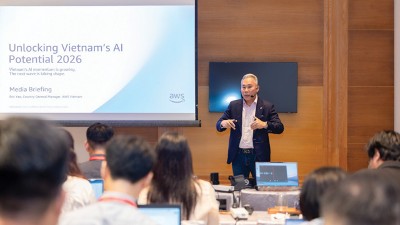
The Technology, Innovation and Digital Transformation Committee supports businesses in applying Artificial Intelligence (AI) and automation to build smart factories, optimize costs, and enhance order performance.


 Google translate