


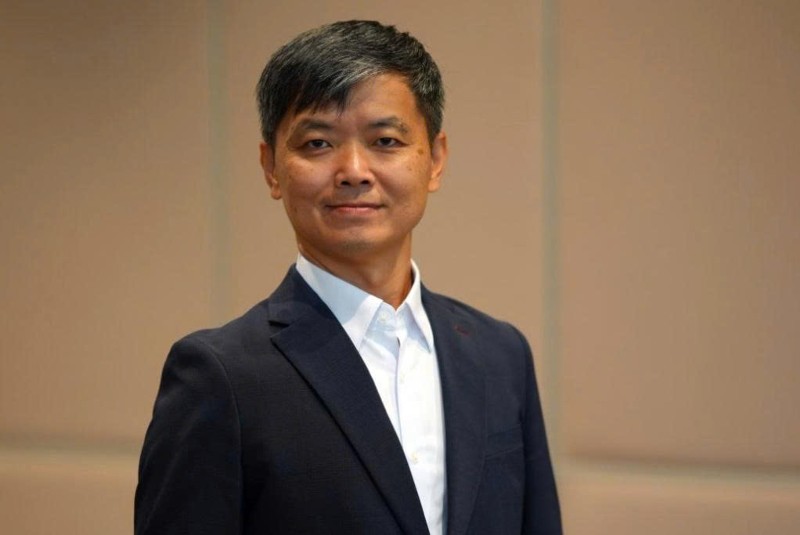
ADI has been working across Thailand, Singapore and Malaysia for many years. Based on your experience, what have you learned about Southeast Asia? What strengths does Vietnam have, and what can Vietnam learn from neighboring countries?
One thing that stands out to me is Vietnam's very strong government commitment to technology development and innovation. That commitment creates a positive ripple effect throughout the economy.
Vietnam also has a strong domestic industrial champion that is driving technological development, and at the same time, I see a vibrant startup ecosystem with many young entrepreneurs building new technology businesses.
Compared with other countries in the region, I believe Vietnam is in a very strong position. While other countries certainly have technology ecosystems as well, I feel the momentum in Vietnam is especially strong because of this combination of government support, large local enterprises, and an active startup community.
Another characteristic that I find quite unique is that many Vietnamese who study overseas choose to return home to start companies or develop new technologies. They bring back international knowledge and experience and apply it locally. This is something I don't see as often in other countries, and it strengthens Vietnam's local design and engineering capabilities.
At the same time, one area where Vietnam can continue improving is English proficiency. From my experience, engineers in several neighboring countries are generally more comfortable communicating in English. That allows them to access technical documentation more quickly, collaborate internationally, and absorb new technologies faster.
I'm not saying this is right or wrong, but having stronger English skills certainly opens more opportunities and accelerates technology learning.
As a global semiconductor leader providing core technologies for top automotive manufacturers, how do you view the adoption and the application of new technologies for electric vehicles in Vietnam, and how it stands compared to other countries in ASEAN?
I think the adoption of EV technology in Vietnam is progressing at a very accelerated pace, largely because of a very strong local company that is driving the industry forward. That company has made significant progress, and we have also seen reports that it is beginning to adopt Software-Defined Vehicle (SDV) technologies.
In terms of local adoption and local design capabilities, I would say Vietnam is doing very well. In many other ASEAN countries, the focus is still mainly on EV consumption -importing vehicles or assembling them locally. However, when it comes to developing and designing automotive technologies, I have not seen the same level of activity elsewhere. Based on my observations, Vietnam is currently in a very strong position.
What is your assessment of Vietnam's communications and telecommunications infrastructure? Does the country need any adjustments to successfully deploy these technologies, for example in relation to 5G?
Over the past two years, Vietnam has rolled out its 5G network, and ADI has had the opportunity to collaborate and contribute to that effort. If I am not mistaken, Vietnam has now achieved around 90% nationwide 5G coverage, which is a very impressive pace.
The next step is really about maximizing the value of that infrastructure. It's no longer just about building the network, but about enabling more applications, digital payments, smart mobility, industrial automation, and many other digital services.
From a technology perspective, Vietnam has also made very good progress by adopting technologies such as Open RAN. While people have already started discussing 6G, I believe it is still at a very early stage globally. For now, Vietnam has done very well in deploying 5G, and the priority should be helping more people and industries fully utilize its capabilities.
Looking three to five years ahead, what do you think will be the biggest technological trends in Vietnam's EV market? How do you expect consumer expectations to evolve?
Looking at the policies that the Vietnamese government is introducing to encourage EV adoption, I believe the biggest trend over the next few years will be enhancing the overall EV user experience.
That starts with convenience. For electric cars, it means expanding the charging network. For electric motorcycles, it means having more battery swapping stations and making charging easier. Convenience is one of the most important factors in encouraging consumers to adopt EVs.
Once this foundation is in place, consumers will naturally begin to expect higher levels of comfort and premium experiences inside the vehicle. But I think at a very foundation, convenience—that means, you know, how easily can I charge my car?
So there are two main trends: the technology trends, which will be the improvement of battery management systems and the user expectation – the convenience.
The surging demand for AI chips has driven up prices across multiple industries. How do you view this trend and its expected duration? Will ADI adjust its pricing, and what impact might this have on the automotive sector?
If we set AI aside for a moment, I think the broader issue is inflation. Around the world, the prices of almost everything have increased, from raw materials to transportation costs.
For example, in Singapore, even a cup of coffee costs more than it did a few years ago, and transportation services such as Grab have also become more expensive. Global inflation, geopolitical conflicts and higher energy costs have all contributed to rising production costs.
As for AI demand, I don't think anyone can accurately predict when the current cycle will end. Based on publicly available market reports, demand for AI-related chips appears likely to remain strong through at least the middle or even the end of next year. Many major memory and AI semiconductor suppliers continue to report strong order books.
Another important point is whether AI can ultimately generate sustainable business value. Today we are all using AI tools such as Copilot, but these services require continuous investment in infrastructure. Over the long term, the industry will need to demonstrate sustainable monetization in order to justify those investments.
One thing is certain, however: AI is already changing the way we live and work. In fact, before coming here today, I even asked AI what I should say during today's session.
Regarding ADI's pricing strategy, I can't comment on future pricing decisions. What I can say is that ADI continuously works to optimize its global supply chain and leverage the scale of the company to remain competitive despite inflationary pressures. As one of the world's leading analog semiconductor companies, maintaining competitiveness for our customers remains a key priority.
Vietnam is expanding its EV and automotive technology ecosystem. What collaboration opportunities do you see between ADI and Vietnamese automakers or technology companies?
From what I understand today, Vietnam still has relatively few local Tier-1 automotive suppliers. Most Tier-1 suppliers operating in the market are overseas companies, particularly from China and Taiwan.
At the same time, Vietnam now has its own domestic EV manufacturer. The opportunity, in my view, is how that company can leverage its scale to acquire more technology capabilities and move beyond simply purchasing modules from suppliers.
Rather than only buying complete modules, Vietnamese companies can gradually build their own engineering and design capabilities, develop technologies locally, and bring more of that expertise in-house. I believe this represents one of the biggest opportunities for Vietnam's automotive industry.
In the long run, design capabilities create much higher value than manufacturing alone. If companies are able to develop their own designs and intellectual property, they move further up the value chain.
Of course, this is a gradual process. Companies may begin by purchasing technologies, then move into manufacturing, and eventually build the engineering capabilities needed to develop their own technologies and intellectual property.







 Google translate