


The Joint Crediting Mechanism (JCM) implementation rules specify the procedures and processes for executing JCM projects, including project idea development and approval, project registration review and approval, and the issuance and allocation of carbon credits among participating parties.
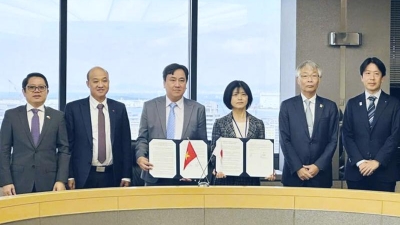
Members of the Joint Committee of the JCM between Vietnam and Japan have officially approved the JCM Implementation Rules at its 10th meeting.
The approval of these rules will provide a transparent legal and technical foundation for JCM projects, reducing greenhouse gas emissions in both countries in the new phase. The implementation of JCM projects, issuance, and transfer of carbon credits must comply with the legal regulations of both countries. In Vietnam, this is governed by Decree No. 112/2026/ND-CP dated April 1, 2026, concerning international exchange of greenhouse gas emission reduction results and carbon credits.
Vietnam and Japan signed an amendment to the Memorandum of Cooperation on low-carbon growth during the high-level visit of Japanese Prime Minister Takaichi Sanae to Vietnam in May 2026. This event marked a step forward in completing the JCM cooperation framework in line with the Paris Agreement guidelines and new legal regulations of both countries.
Based on this, the 10th meeting of the Joint Committee of the JCM aimed to concretize the contents of the amended Memorandum of Cooperation on low-carbon growth and discuss the implementation plan for the upcoming period.
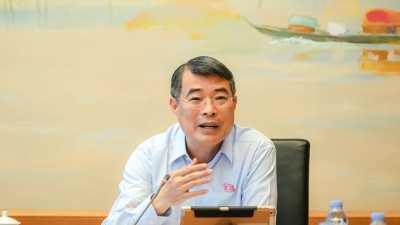
Mr. Le Trong Yen, Vietnamese Deputy Minister of Agriculture and Environment, emphasized that over the years, the cooperative relationship between Vietnam and Japan in environmental protection, climate change response, and green transition promotion has increasingly played an important role.
Notably, the two countries have established the JCM to create a cooperative framework for implementing greenhouse gas emission reduction projects through financial support, investment, and low-carbon technology transfer. Carbon credits from the projects are shared among participating parties, thereby contributing to the greenhouse gas emission reduction targets of both nations.
Since its establishment in 2013, the JCM has seen 14 projects complete registration and issuance of over 35,000 carbon credits. According to the Ministry of Agriculture and Environment, these positive results demonstrate effective cooperation between agencies, organizations, and businesses of the two countries, and indicate the potential for further expansion of JCM activities in the future.
From Japan's perspective, Mr. Ishikawa Isamu, Deputy Ambassador and Minister of the Japanese Embassy in Vietnam, believes that establishing transparent JCM rules will encourage investors to take stronger actions in reducing greenhouse gas emissions.
At the meeting, the Climate Change Department under the Ministry of Agriculture and Environment urged focal agencies and the Secretariat of both sides to continue close coordination, promptly complete the Handbook and review the detailed form system to guide specific steps for businesses participating in the new phase of the JCM. This will help promote the implementation of JCM projects and enhance support for participating businesses, ensuring emission reduction effectiveness and compliance with the Paris Agreement guidelines.







 Google translate