



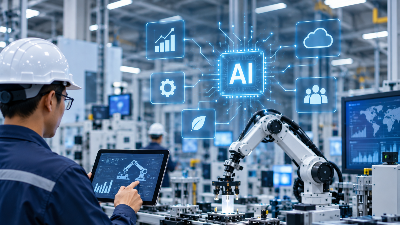
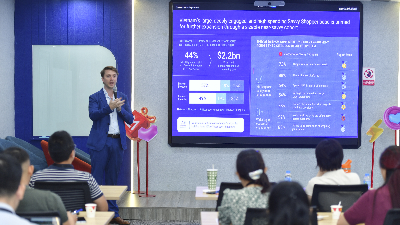
Vietnam is positioning embodied artificial intelligence (AI) as a breakthrough tool to address labour shortages, improve workplace safety and enhance the quality of economic growth, a senior official said at the recent Vietnam Embodied AI Conference.
Speaking at the event, themed “A New Productivity Era of Embodied AI: Vietnam – A Southeast Asian Pillar”, Mr. Do Duc Thinh, Deputy Director of the National Innovation Centre (NIC), said Vietnam sees embodied AI as an important driver of productivity growth.
The application of automation in key industries, including electronics, textiles and garments, food processing, seaports and agriculture, is expected to contribute directly to the national target of raising labour productivity by 10–15% by 2030. It could also create opportunities for Vietnamese businesses to join global value chains in components, precision engineering, specialised chips and integrated software.
Vietnam has moved early to establish a legal framework for these technologies. Resolution No. 57-NQ/TW, issued in December 2024, identified science, technology and innovation as core national priorities.
The Law on Artificial Intelligence, effective from March 1, 2026, establishes a three-tier risk management system covering high-, medium- and low-risk AI. It also provides support for testing new models, data infrastructure and AI businesses.
Meanwhile, Decision No. 21/2026/QD-TTg added robotics and automation to the list of 10 strategic technology groups prioritised for development.
Under the national AI strategy, Vietnam aims to rank among Southeast Asia’s top three AI research hubs, build an AI economy accounting for about 6% of GDP, achieve $5 billion in AI product exports and develop eight Vietnamese-language AI models.
The country also plans to train 10,000 highly skilled AI workers, including 1,500 core-technology specialists, and establish at least 10 advanced AI training and research centres.







 Google translate