


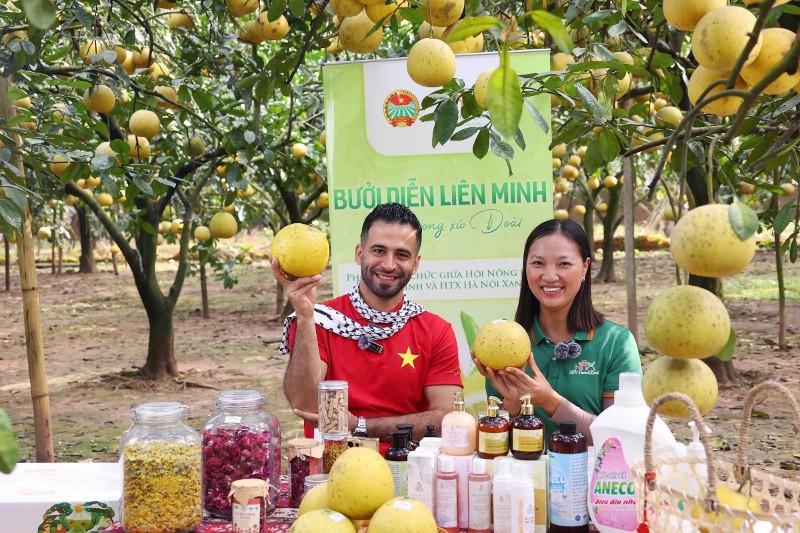
Speaking at a September 2026 trade promotion conference hosted by the Ministry of Industry and Trade, Mr. Vu Ba Phu, Director General of the Vietnam Trade Promotion Agency, highlighted the huge global Halal market which covers a Muslim population exceeds 2 billion across 112 countries.
“Accounting for 25 percent of the global population, this consumer base is heavily concentrated in Asia and the Middle East,” he said. The global Halal food market alone reached approximately $2.3 trillion in 2022 and is projected to hit $4 trillion by 2030, offering Vietnam a vital engine for export diversification amidst global economic volatility.
Vietnam holds significant natural advantages as one of the world’s top ten agricultural exporters. Mrs. Ba Thi Nguyet Thu, Director of the HalalViet Promotion and Experience Center, noted that over 80 percent of Vietnam’s plant-based agricultural products inherently meet fundamental Halal requirements, such as natural sourcing without prohibited additives or alcohol. Modifying the remaining 20 percent of processing stages could easily allow local exporters to access this lucrative market.
Despite these advantages, Vietnam’s Halal exports face substantial hurdles. Annual export sales average around $900 million, consisting primarily of raw agricultural and seafood products. Deeply processed goods that meet market-specific Halal standards remain extremely limited.
Furthermore, among nearly 900 domestic enterprises capable of entering the Halal segment, only 0.2 percent hold valid Halal certifications. Outside major trading centers, certified suppliers of deeply processed goods are scarce, leaving foreign buyers struggling to source compliant Vietnamese products.
A central challenge lies in the fragmentation of global Halal standards. Mr. Le Anh Ngoc from the National Authority for Quality, Processing and Market Development under the Ministry of Agriculture and Environment explained that regions such as the Gulf Cooperation Council (GCC), Indonesia, and Malaysia maintain distinct certification criteria, meaning a product certified in one jurisdiction may be rejected in another. Beyond fragmented standards, exporters face strict requirements for end-to-end Halal logistics, high certification costs, and limited market intelligence.
To address these bottlenecks, regulatory bodies are working to streamline trade infrastructure under Decree No. 127/2026/ND-CP and an official traceability portal covering nearly 100,000 products.
Industry experts and business leaders emphasize that mutual recognition agreements (MRAs) on Halal certification between Vietnam and major Muslim nations are urgently needed to reduce recurring compliance costs for small and medium-sized enterprises.
Additionally, establishing a specialized Halal early-warning information portal and creating dedicated national pavilions in key import markets would significantly lower entry risks and elevate brand visibility.
At the operational level, Halal compliance rests on three core pillars, including transparent sourcing, cross-contamination prevention, and strict safety controls. By prioritizing pilot export programs for key commodities, regulators and trade offices can establish proven benchmarks to replicate across the entire agricultural sector, positioning Vietnamese goods prominently in the global Islamic economy.





 Google translate