


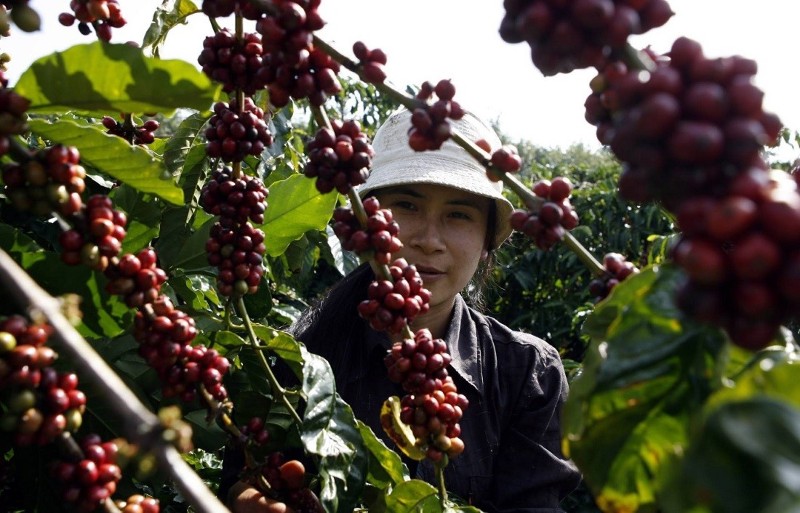
In the first eight months of 2026, Vietnam exported approximately 1.3 million tons of coffee, valued at $6 billion, increasing by 13.1% in volume, but decreasing by 9.1% in value, compared to the same period in 2025, according to reports from the Ministry of Agriculture and Environment
Germany, Italy, and Japan remain Vietnam's three largest coffee markets, with market shares of 13.2%, 8.2%, and 7.1%, respectively. However, the export value to all three markets has declined compared to the previous year. Conversely, among the top 15 largest markets, China recorded the strongest growth in export value (up 72.7%), while Malaysia saw the sharpest decline (down 26.7%).
Vietnamese coffee exports are currently facing a challenge from increasing value rather than merely boosting output. Given the sector's significant advantage in Robusta, experts believe that controlling quality from raw material areas, diversifying products, and innovating procurement methods are key requirements to elevate the value of the Vietnamese coffee bean.
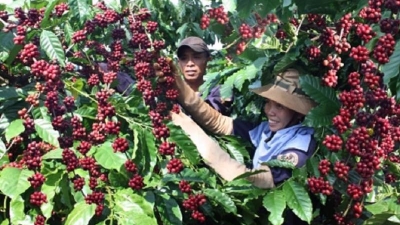
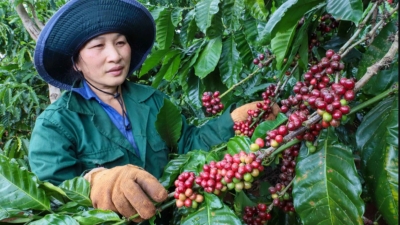
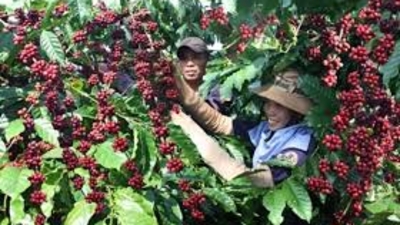
For years, Vietnam has been among the world’s top producers of Robusta coffee, accounting for approximately 40% of the global supply. Coffee is also the primary livelihood for hundreds of thousands of farming households, particularly in the Central Highlands region.
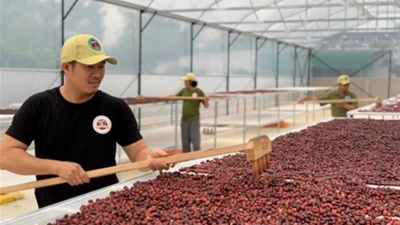
However, large-scale production has not yet translated into optimized value. Issues regarding seedlings, nutrition, irrigation, harvesting, grading, and procurement methods are necessitating a total reorganization of the value chain.
According to the Vietnam Coffee-Cocoa Association (VICOFA), the country's total coffee area reached over 720,000 hectares in 2023, with Robusta making up about 95%. In the 2024–2025 crop year, Vietnam exported over 1.5 million tons of coffee, earning a turnover of more than $8.4 billion.
Despite this scale, Vietnam has yet to build a sufficiently strong global brand. Vietnamese Robusta faces four main bottlenecks: inconsistent quality between different farms and batches; the practice of purchasing various quality grades together, which prevents high-quality beans from being identified and priced appropriately; a production mindset focused on yield that ignores input costs, recovery rates, and the long-term health of the trees; and the lack of a unified grading and quality standard system for growers, cooperatives, traders, factories, and buyers to follow.
Consequently, the core issue is not a lack of high-quality beans, but the failure to organize quality differences into distinct, stable, and commercially valuable material lines.
At the recent seminar "Enhancing Vietnamese Robusta from the Roots" held in Lam Dong Province, Vice Chairman of VICOFA, Mr. Thai Nhu Hiep, emphasized that the bottleneck for Vietnamese Robusta lies in the inability to categorize quality distinctions into clear, stable material streams that command corresponding commercial value.
To enhance the value of Robusta, VICOFA suggests the industry focus on four restructuring requirements:
First, organize raw material areas according to specific usage goals and quality levels.
Second, build a green bean grading system based on measurable indicators that can be used consistently across the entire supply chain.
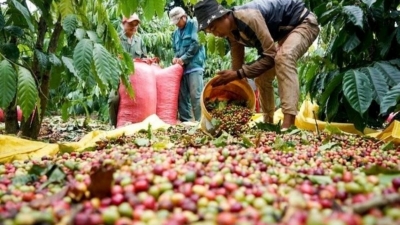
Third, shift to quality-based procurement. This requires a transparent process: announcing requirements before the season starts, providing production guidance, implementing separate receiving and proper sampling, and paying based on specific quality grades.
Fourth, transform agricultural extension services from merely providing input guidance to managing the profitability of farming households.






 Google translate