


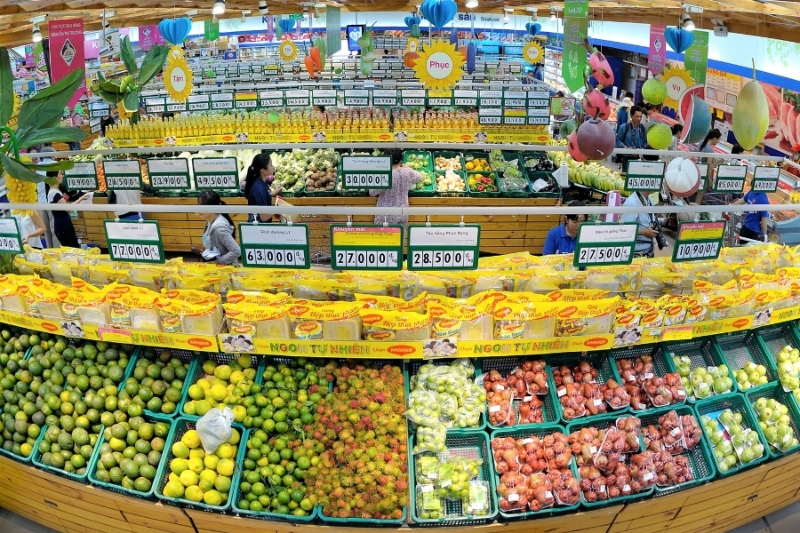
The year 2025 marked a significant milestone as Vietnam’s domestic market that has not only recovered but achieved a powerful breakthrough, reaching an impressive scale of $269 billion.
According to the latest report from the Agency for Domestic Market Surveillance and Development (Ministry of Industry and Trade), 2025 was a strategic turning point, marking the transition from post-pandemic recovery to explosive growth.
Total retail sales of goods and consumer service revenue grew by 9–10% compared to 2024. This represents the highest growth rate in the last five years (excluding the unusual fluctuations of the pandemic period), demonstrating the strong internal resilience of a market with over 100 million people.
National commercial infrastructure also made significant strides in both quality and quantity. The modern distribution system now includes 1,293 supermarkets and 276 shopping malls, while a network of 8,274 traditional markets continues to play a vital role in supplying essential goods.
E-commerce witnessed a massive boom, reaching $32 billion and accounting for 12% of total national retail revenue. With a growth rate exceeding 20%, Vietnam has risen to the second-fastest growing e-commerce market in Southeast Asia.
Notably, consumption patterns are shifting positively. While food and staples still hold the largest share (34.1%), spending on services—including hospitality, dining, and tourism—is growing faster at a rate of 12–14% per year. This reflects the consumption trends of a developing economy where citizens are beginning to prioritize quality of life and experiential values.
Outlook for 2026
Heading into 2026, the market is expected to be influenced by trends in automation and Artificial Intelligence (AI), which may impact consumer sentiment due to employment concerns. However, given the young population and rapidly rising per capita income, the outlook for 2026 remains very optimistic.
To maintain this growth momentum, experts from the Domestic Market Management Department have proposed several key solutions. First, there is a need to accelerate digital transformation by investing in digital technologies—ranging from warehouse management systems to cashless payments and livestream selling—to optimize costs.
Businesses are encouraged to invest heavily in smart inventory management and online sales platforms. Applying AI to analyze consumer behavior will be crucial in personalizing the shopping experience.
Furthermore, bridging the regional gap is a priority. This involves developing commercial infrastructure in rural areas and effectively connecting supply and demand to bring modern goods closer to people in remote regions. The report notes that this solution aims to address the current imbalance, where 50% of modern infrastructure is concentrated in major cities.
While maintaining the 8,274 traditional markets, there should be policies to encourage the development of mini-marts and convenience stores in rural and mountainous areas. Improving transportation and warehousing systems in remote regions is also essential to ensure a seamless flow of goods and reduce logistics costs—a major current barrier.
Finally, the report suggests organizing specialized trade promotion programs to bring high-quality goods to rural areas while supporting local agricultural products in accessing modern distribution channels in cities. On the corporate side, domestic enterprises are encouraged to merge and form alliances to increase their scale and competitiveness against international rivals.








 Google translate