


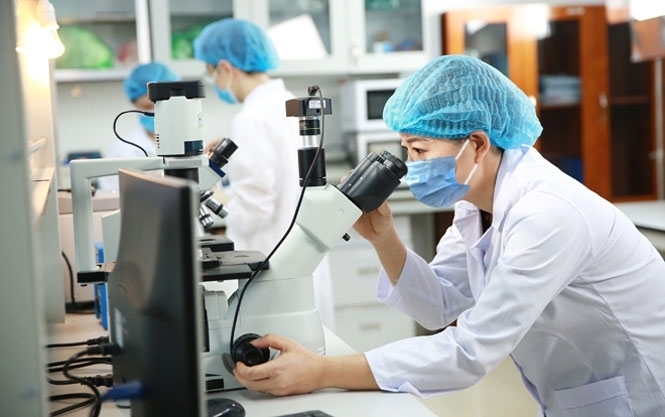
Deputy Prime Minister Nguyen Chi Dung has signed Prime Ministerial Decision No. 2813/QD-TTg, approving a national program to enhance the capacity of public scientific research and technology development organizations for the 2025–2030 period.
The program specifically targets public research academies, institutes, centers, and public higher education institutions across the country.
Under the newly approved plan, Vietnam aims to have five basic research organizations, specializing in Mathematics, Physics, Biology, Materials Science, and Earth Science, ranked within the top 30% globally by 2030. These rankings will be based on assessments from prestigious international bodies such as the SCImago Institutions Rankings (SIR) or equivalent standards.
In the fields of engineering and technology, the government aims to propel 7 to 10 public research organizations into the global top 30%. These institutions are expected to play a leading role in researching and developing foundational and strategic technologies for the nation.
The program also outlines the development of four "excellent" research organizations in the social sciences and humanities. These bodies will serve as the core scientific pillars providing evidence-based arguments to the Party and the State for formulating guidelines, strategies, and socio-economic development plans. At least one of these organizations is expected to reach regional and international standards.
To ensure global integration, the program sets specific key performance indicators (KPIs) for these institutions. Starting from the second year of implementation, each targeted organization must attract at least 70 instances of participation from prestigious regional and international experts and scientists for research collaboration, training, and academic exchange; and maintain at least one reputable annual scientific forum or international-scale conference.



 Google translate