


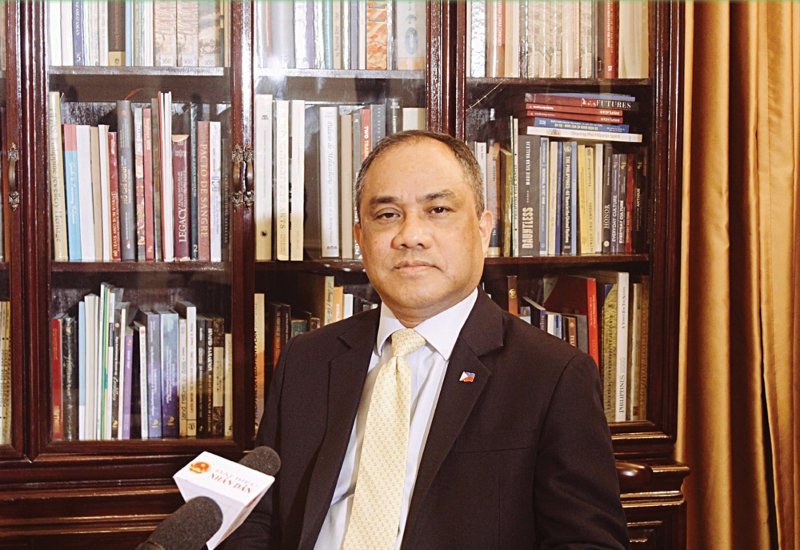
2026 marks the 50th anniversary of the establishment of diplomatic relations between Vietnam and the Philippines (1976-2026). In your view, what have been the most significant and meaningful milestones in the relationship over the past five decades?
Leaders of both countries have attached great importance to bilateral relations, as manifested by regular visits and meetings at the highest level over the years.
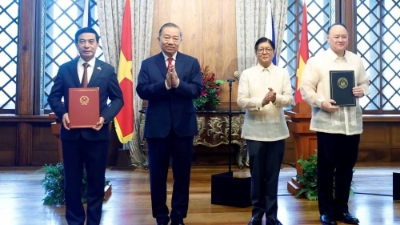
Specifically, in 2015, Vietnam and the Philippines signed a Strategic Partnership Agreement, indicating their mutual desire to further strengthen bilateral relations. It is anticipated that the two countries will elevate this relationship to an Enhanced Strategic Partnership during the state visit to Manila by Party General Secretary and State President To Lam.
In order to ensure the proper framework to advance bilateral relations, the two countries have signed bilateral agreements on trade and investment, air services, agriculture, tourism, double taxation avoidance, sports, defense, education, technical and scientific cooperation, maritime and fisheries cooperation, naval and coast guard cooperation, disaster response, and political cooperation, among others. These agreements ensure that engagements between the two governments are purposeful and structured toward further growing cooperation.
In the area of bilateral trade, it grew from $4.91 billion in 2019 to $8.33 billion in 2025. The two sides are exerting mutual effort to reach $10 billion soon.
Vietnam and the Philippines are both among the most dynamic and fastest-growing economies in the ASEAN region. How can they complement each other to further enhance regional competitiveness and contribute more effectively to ASEAN’s overall development?
The Philippines prides itself on its robust business process outsourcing industry. Many of the leading global corporations have availed themselves of the voice call services offered by competent and English-proficient Filipino personnel operating from major cities in the Philippines.
As Vietnam seeks to grow its business globally, it can tap into the mature business process outsourcing industry of the Philippines to support its customer service requirements as more Vietnamese products are introduced globally. This complementarity in trade promotion will help promote the mutual economic development of both countries as companies from both sides expand their reach globally.
In the global supply chain ecosystem, electrical machinery and parts produced in the Philippines find their way to manufacturing plants in Vietnam, where they are incorporated into products that Vietnam sells to other countries. This mutually-beneficial arrangement allows both sides to create jobs for their respective workers.
In 2024, Philippine exports to Vietnam of electrical machinery and parts accounted for more than $500 million in bilateral trade. Vietnam, for its part, has been the principal supplier of rice and cereals to the Philippines, thereby ensuring food security for the Philippines while ensuring sustainable incomes for Vietnamese farmers. Again, this trade shows complementarity between the two sides.
It can be anticipated that companies from both sides will explore cooperation in the areas of renewable energy, AI, and the vastly untapped blue economy, among others. These new areas provide a rich source of incentives to encourage companies from both sides to work together as a means to sustain the economic growth of both countries.
Vietnam and the Philippines are working toward the goal of increasing bilateral trade turnover to $10 billion. What should they do to create new breakthroughs in trade cooperation and better unlock the full potential of their bilateral economic ties?
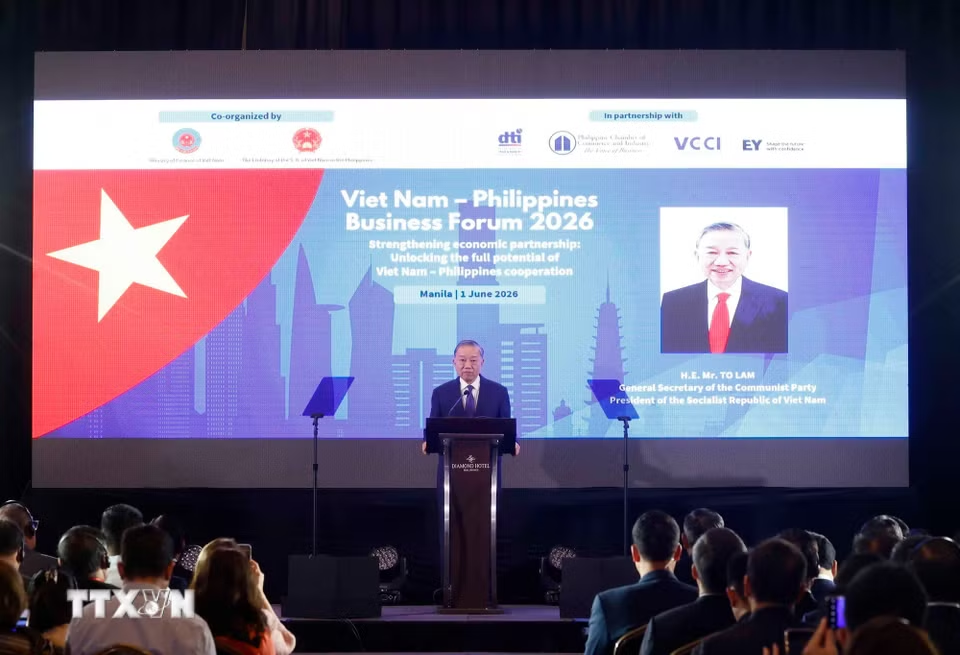
It is important that enterprises from both sides participate in events where they are introduced to each other in order to explore new areas of cooperation. The state visit to the Philippines by Party General Secretary and State President To Lam, from May 31 - June 1, will see the participation of enterprises from both sides in a business forum organized in Manila. It is hoped that this event will be replicated regularly, both in Manila and in Hanoi, as it is through regular interaction that enterprises become aware of each other’s expertise and potential.
Both sides need to explore non-traditional areas of trade cooperation. Among the untapped areas of economic activity is the blue economy, with both now starting to realize its vast potential for contributing to bilateral trade growth. The blue economy covers wide areas of cooperation, including tourism, marine resource management, and renewable energy production. With ASEAN already adopting a basic framework to promote the blue economy, the Philippines and Vietnam are ideally situated to agree on pioneering activities from which both economies may grow.
Likewise, as I said earlier, the Philippine business process outsourcing sector is best positioned to support the expansion of Vietnamese enterprises onto the global stage. With its mature and talented pool of English-speaking workers, the Philippine business process outsourcing industry would be able to provide administrative and remote technical support to Vietnamese companies venturing into markets in other regions of the world. In this field of cooperation, both sides would be able to create more job opportunities for their people.
In the retail industry, Philippine food giants are expected to expand their presence in the Vietnamese market. We anticipate that this sector will contribute toward reaching the $10 billion target. For Vietnam, the entry into the Philippine market of electric vehicles from a known Vietnamese automobile brand will certainly expand the volume of bilateral trade.
Which sectors do you believe still hold the greatest potential and room for deeper cooperation between Vietnam and the Philippines in the years ahead?
The blue economy boasts great potential for collaboration and cooperation between the two countries. The sector will promote greater people-to-people exchange through growth in tourism and ensure food security for our people, as enterprises from both sides would be able to better understand proper management of marine resources and tap their potential for trade.
In addition, the scientific management of the blue economy will allow both sides to address challenges posed by climate change and protect residential and agricultural areas from natural disasters. Good management of mangrove forests in coastal areas of both countries, for example, will lessen the impact of high waves on coastal communities. By learning from each other’s experiences in the protection of marine and coastal resources, the blue economy will protect our peoples from natural disasters.
The blue economy likewise provides a natural point for cooperation between the two countries, as our people have long engaged in economic activities on the ocean. There is, however, a need now to expand these economic activities while ensuring that marine and coastal resources are better protected and managed.
Multilateral diplomacy likewise presents many opportunities for collaboration and cooperation between the two countries. Mutual support for each other’s candidatures to international organizations, adoption of mechanisms to strengthen multilateral institutions and promote the active participation of developing countries in discussions, strengthening the importance of ASEAN centrality in the evolving political-security and socio-economic infrastructure of the Indo-Pacific region, and sustaining cooperation in United Nations peacekeeping operations are among the areas where Vietnam and the Philippines can further deepen their cooperation.
The two countries can furthermore enhance their cooperation in disaster risk reduction and management as they regularly confront the impact of natural disasters on their people and resources. While initial exchanges take place within the framework of ASEAN, the two countries can pursue bilateral initiatives to learn best practices from each other and share resources to mitigate the consequences of natural disasters affecting them.
In your opinion, what advantages does Vietnam offer to attract Philippine investors? At the same time, what more should the two countries do to further strengthen investment cooperation and enhance connectivity between their business communities?
Vietnam is at a stage of expanding its infrastructure and modernizing services for its people. There are areas where the Philippines has developed expertise that may be tapped by Vietnam in its development programs. With the correct incentives, Philippine companies may continue to invest in Vietnam’s road infrastructure, water distribution systems, renewable energy, and international port operations, among others. In the area of human resources, Filipinos continue to show interest in accepting placements in Vietnam’s educational system, which in turn helps Vietnamese develop better skills in their interaction with other countries, particularly in improving proficiency in the English language.
While there are several Philippine business conglomerates that have invested in Vietnam, there is much opportunity for Vietnamese businesses to favorably consider investing in the Philippines, including in the areas of telecommunications and electric vehicle manufacturing.
With only a little over $8 billion in bilateral trade between them, the two countries have much room to further promote the exchange of goods and services between their respective enterprises and peoples. Each side should therefore initiate opportunities to participate in each other’s trade fairs and exhibitions to provide more opportunities to showcase what they offer each other.
Much of the effort exerted by both Vietnam and the Philippines to promote external trade has been directed toward other countries. It is about time that Manila and Hanoi look at each other as ideal trade partners, especially since both countries have shown their resilience in promoting development and achieving remarkable economic growth in recent years.


 Google translate