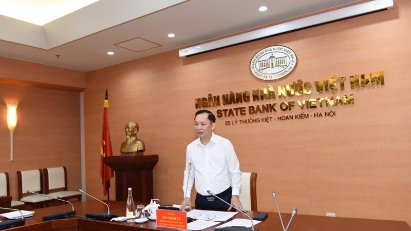
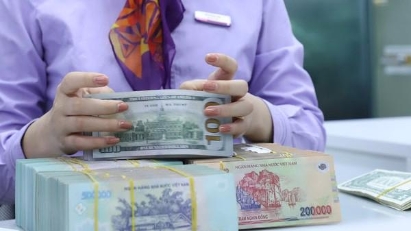
Rice businesses have faced a range of difficulties in harvesting, distribution, processing, and exporting rice because of the pandemic. State Bank of Vietnam Deputy Governor Dao Minh Tu has asked banks to continue to meet capital needs in the industry, offering reasonable terms and interest rates and, especially, loans without collateral.
The overnight interest rate on the interbank market has fallen to 0.71 per cent per annum. This is the lowest rate for four months and the fourth weekly decline in succession. According to the SSI Securities Company, the fall in recent days is because there have been no new transactions in terms of open market operations, meaning the State Bank of Vietnam has not withdrawn any funds. Forward contracts to sell foreign currencies continued to be implemented, helping to obtain new sources of VND.
Loan interest rates fell continuously last year and in the first seven months of this year but are still quite high in the context of business stagnation due to Covid-19. The leader of one bank said it receives hundreds of applications for interest rate cuts every day, and some businesses want a further reduction of 5 per cent.
After a long period of silence on the stock market, seafood stocks broke out in June and July on the back of profits and future export potential. The Viet Dragon Stock Company (VDSC), however, believes that seafood companies will start to see a sharp fall in exports from August onwards. This may continue into the fourth quarter as Covid-19 infections continue.
The decision to extend social distancing measures in economic centers such as Hanoi, Ho Chi Minh City, and southern provinces has put pressure on cash flow in businesses. Experts have said that even though loans have been suspended, when they become due once again there will be more problems surrounding bad debts, especially when they are covered as restructured debts.
The State Bank of Vietnam (SBV) is collecting opinions from organizations and individuals on a draft circular guiding foreign currency transactions between the central bank and credit institutions licensed to conduct foreign exchange activities, to replace Circular No. 02/2012/TT-NHNN. Under the draft, the SBV will conduct transactions with credit institutions through five forms: spot trading, forward trading, swap trading, options trading, and other types of transactions decided upon by the central bank in the future, of which options trading is a newly-added form.