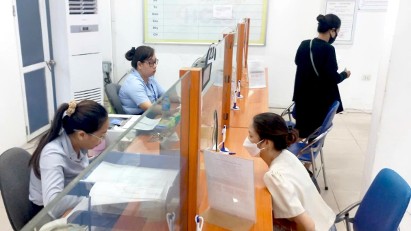
The capital city is actively strengthening career counseling, job placement, and vocational training initiatives alongside unemployment allowance payouts, aiming to help displaced workers quickly re-enter the labor market amid rising benefit claims.
With full implementation of the EU Carbon Border Adjustment Mechanism (CBAM) and stricter Environmental, Social, and Governance (ESG) standards, the green transition has become a matter of survival, rather than a voluntary choice, for enterprises in industrial zones.
Designed as a tech-driven nucleus for Ho Chi Minh City and the entire Southeast economic region, the flagship Strategic Technology Development Center project aims to realize the city's long-term vision of becoming a regional high-tech hub.
As Resolution No. 80-NQ/TW targets a 7% GDP contribution from cultural industries by 2030, Vietnam’s content creation sector is already estimated to account for nearly 5%, despite lacking official statistical recognition as a standalone economic industry.
Currently, Vietnam allows the import of various agricultural products from Chile, such as grapes, apples, cherries, cotton, soybeans, lily bulbs, seeds, and wood products. Vietnam is also considering opening its market to Chilean kiwis, blueberries, lemons, and some vegetable seeds.
The amended law removing 62 conditional business sectors and revising regulations governing another 14, representing a 28.28% reduction compared with the 2025 Investment Law.