


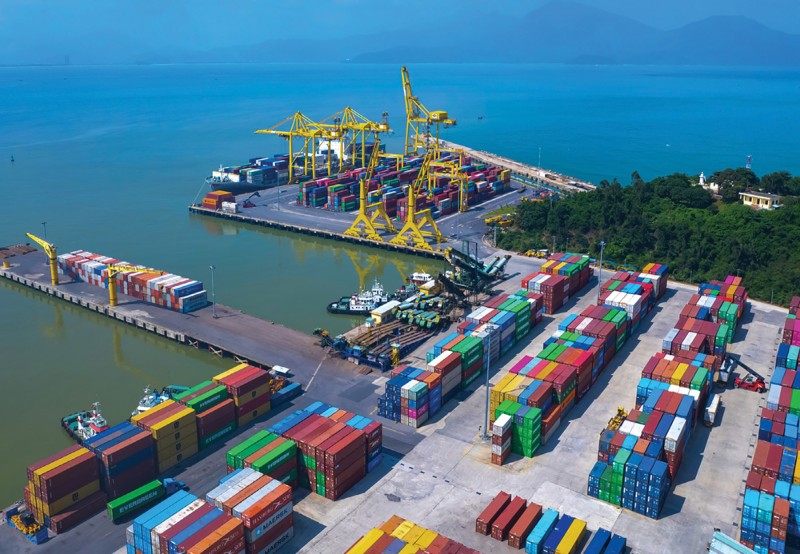
Figures from the Department of Customs at the Ministry of Finance put Vietnam’s seafood exports for June at $1.09 billion, up 20.7 per cent year-on-year. Export turnover in the first half totaled $5.75 billion, an increase of 12.7 per cent over the same period of 2025.
Against this backdrop, the seafood industry is diversifying its export markets while maintaining growth in key product categories. Industry representatives are also calling for regulatory changes to simplify origin certification procedures for fishing vessels under six meters in length, aiming to ease raw material shortages and support the sector’s goal of achieving double-digit export growth.
Shifting dynamics
According to the Department, China remained Vietnam’s largest seafood export market in the first half, with shipments totaling $1.39 billion, up 38.6 per cent, while the US ranked second at $890 million, down 0.7 per cent. Other major export markets also posted growth.
Exports to the US, meanwhile, continue to face mounting challenges. The country has tightened requirements for wild-caught seafood under the Marine Mammal Protection Act (MMPA), including additional Certificates of Analysis (COAs), which involve complex approval procedures. Vietnamese shrimp also continues to face high anti-dumping duties. At the same time, rising inventories in the US and more cautious consumer spending have increased demand for lower-priced seafood products.
According to the Vietnam Association of Seafood Exporters and Producers (VASEP), the sector’s first-half growth reflects not only improving global demand but also exporters’ ability to adapt by diversifying markets and adjusting product portfolios. However, overseas buyers are increasingly placing smaller and shorter-term orders while demanding more competitive pricing, stricter quality standards, certifications, and traceability, requiring businesses to become more flexible in production.
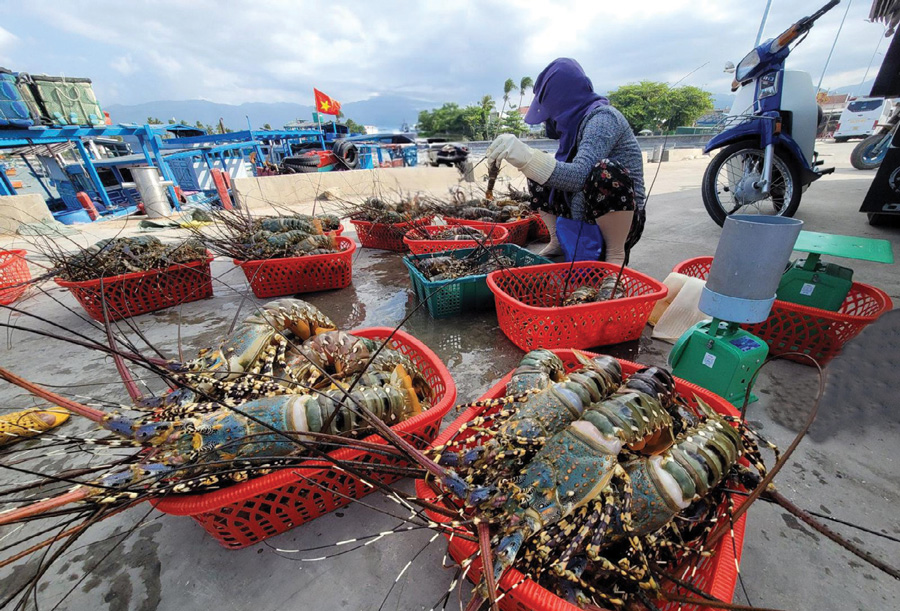
Shrimp remained Vietnam’s largest seafood export in the first half of 2026, generating $2.3 billion in export revenue, up 13.6 per cent and accounting for 40.5 per cent of total seafood exports. Growth was driven primarily by mainland China and Hong Kong (China), in particular strong demand for lobster.
In the US market, however, Vietnamese shrimp continues to face stiff competition from suppliers in Ecuador, Indonesia, and India, which benefit from lower production costs and larger-scale operations.
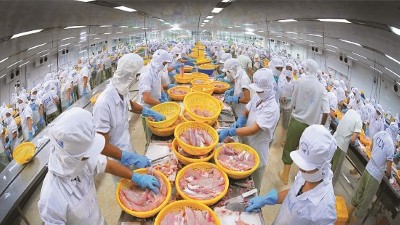
Pangasius (catfish) remained the country’s second-largest seafood export, with shipments reaching $1.1 billion, up 12.1 per cent and accounting for 19.4 per cent of total seafood export value. According to VASEP, Vietnamese pangasius continues to enjoy competitive advantages thanks to its affordable price, stable supply, flexible processing capabilities, and suitability across retail, food service, institutional catering, and reprocessing channels, particularly as consumers in many markets increasingly seek lower-cost protein options.
Tuna exports, meanwhile, totaled $452 million during the first half, down 2 per cent from a year prior, as weaker demand, rising raw material prices, higher canned food processing costs, and stricter sustainable fishing requirements weighed on shipments.
Meanwhile, squid and octopus exports reached $380.2 million, up 18.8 per cent and supported by stable demand from South Korea, Japan, Thailand, and China. Exports of crab and other crustaceans rose 26.2 per cent to $206.2 million, while mollusk exports jumped 33.1 per cent to $155.3 million, helping sustain overall industry growth.
Shinhan Securities Vietnam (SSV) has forecast that Vietnam’s pangasius exports will grow by around 5 per cent year-on-year in the second half of 2026. However, limited raw material supplies are expected to pressure processors, underscoring the need to expand higher-value processed products and strengthen partnerships with fish farmers to secure fingerling supplies.
Solving bottlenecks
To support agricultural, forestry, and fisheries exports and achieve the country’s 2026 export growth target, VASEP said authorities in Vinh Long, An Giang, and Dong Thap in the Mekong Delta, central Quang Ngai province, and Thanh Hoa in the north-central region have recently responded to the Association’s recommendations regarding aquaculture development and origin certification procedures for seafood caught by fishing vessels under six meters.
VASEP previously urged local governments to maintain and expand aquaculture areas on land, rivers, and coastal waters while reviewing underutilized allocated areas for potential recovery and redevelopment.
The Association also called for measures to unlock supplies from small-scale fisheries, including krill and crab, by introducing simplified catch certification procedures under Circular No. 81/2025/TT-BNNMT, issued by the Ministry of Agriculture and Environment (MAE). It argued that such a mechanism would better reflect actual fishing practices while meeting traceability requirements and supporting efforts to combat illegal, unreported, and unregulated (IUU) fishing.
Shrimp remained Vietnam’s largest seafood export in the first half of 2026, generating $2.3 billion in export revenue, up 13.6 per cent and accounting for 40.5 per cent of total seafood exports. Growth was driven primarily by mainland China and Hong Kong (China), in particular strong demand for lobster.
Local authorities acknowledged that origin certification procedures for vessels under six meters remain difficult because current regulations and documentation requirements are inconsistent.
An Giang authorities said Form No. 02 under Circular No. 81 lacks guidance on vessel registration numbers, fishing logs, and fishing port information for vessels under six meters, and that they would recommend the MAE issue clearer instructions.
Quang Ngai has yet to issue origin certificates for this category of vessels because current documentation still requires a port inspection report, which is not suitable for small fishing boats. The province also noted difficulties verifying vessel information because vessels under six meters are not subject to fishing license requirements.
Thanh Hoa believes the issue is common nationwide, as vessels under six meters are not required to register and are therefore absent from the National Fisheries Database. Without official registration records, authorities lack the legal basis to certify the origin of catches, limiting the ability of products from small-scale fisheries to enter export supply chains.
Regarding aquaculture planning, local administrations said they are continuing to review and adjust development plans based on provincial planning and local conditions. Vinh Long plans to maintain existing aquaculture areas while converting suitable land to higher-value species and reclaiming delayed projects for new investment.
An Giang will study expanding areas with aquaculture potential while implementing its 2030 plan to reorganize river and marine-based cage farming. Meanwhile, Quang Ngai is reviewing land and water-use planning following revisions to its provincial master plan and the decentralization of planning approval to commune-level authorities, providing a framework for future aquaculture development.
Thanh Hoa will maintain around 19,200 ha of aquaculture and approximately 5,740 fish cages, including around 14,000 ha of freshwater farming and 5,200 ha of marine and brackish-water aquaculture. The province also plans to continue investing in infrastructure and expanding high-tech farming of shrimp, clam, and marine fish.






 Google translate