

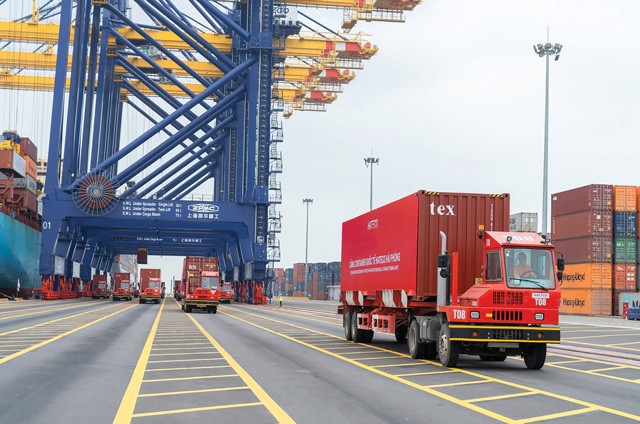
Attracting foreign investment stands out as a bright spot in Vietnam’s overall positive economic picture. In the first nine months of 2026, total registered FDI in the country reached $50.36 billion, an increase of 76.4 per cent year-on-year, while disbursed capital hit $21.07 billion, up 12.1 per cent to a five-year high, according to the Ministry of Finance (MoF).
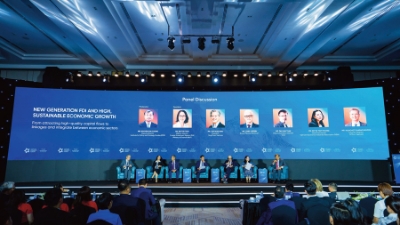
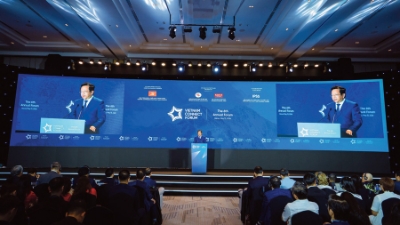
“This brings the total FDI Vietnam has attracted over the past four decades to more than $570 billion; a remarkable figure that reflects foreign investors’ confidence in the country’s investment and business environment as well as its potential for economic growth,” Deputy Minister of Finance Tran Quoc Phuong told the “Reaching Out to Innovative Global Supply Chains” seminar held on October 8 in Hanoi. “Foreign investment flows into Vietnam have recently seen not only a rapid increase in volume but also a significant improvement in quality.”
Nearly 40 years of FDI attraction, he went on, have demonstrated that the foreign-invested economic sector has continuously developed, not only supplementing vital investment resources but also driving economic restructuring, transforming growth models, establishing key industries, expanding export markets, and gradually integrating Vietnam more deeply into global production networks and value chains.
Refining institutions
However, the quality and effectiveness of attracting, managing, and utilizing FDI have not yet matched the country’s potential and advantages, nor have they met the development requirements of the new phase. In particular, links between the domestic and FDI sectors remain limited, while outcomes in technology transfer and R&D have fallen short of expectations. Furthermore, the rate of Vietnamese enterprises participating in global supply chains remains low.
This is one of the reasons the Politburo decided to issue Resolution No. 10-NQ/TW dated June 8, 2026, on developing the foreign-invested economic sector, marking a strategic turning point in Vietnam’s approach to attracting foreign investment in the new era.
Mr. Phuong noted that Politburo Resolution No. 10-NQ/TW marks a significant shift in how external resources are attracted. “Rather than focusing solely on the number of projects or the volume of investment capital, Vietnam will prioritize the creation of a high-quality FDI ecosystem, emphasizing quality, efficiency, economic value-added, and links with the domestic sector,” he said. “Vietnam will not pursue FDI at any cost; instead, it will selectively partner with investors to enhance its position within the global value chain. The goal of attracting FDI is not to replace domestic capacity but to strengthen it, thereby boosting productivity, technological capabilities, and the economy’s overall competitiveness.”
Notably, to realize these goals, the government issued Resolution No. 280/NQ-CP dated September 22, 2026, outlining an action plan to implement Politburo Resolution No. 10. Specific tasks and solutions have been assigned to various ministries, sectors, and localities. Accordingly, the MoF and relevant ministries and agencies are continuing to institutionalize mechanisms and policies regarding the development of the private and State economic sectors. The growth of all three sectors - private, State, and foreign-invested - will serve as a crucial foundation for fostering stronger domestic-foreign links and creating momentum for Vietnam’s economic development during the upcoming period of targeted double-digit growth (2026-2030).
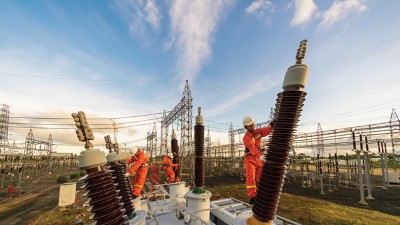
In addition, Vietnam has continued to improve its investment and business environment as well as its institutional and policy frameworks. The National Assembly has passed and promulgated amendments to the Law on Investment. Numerous procedures have been streamlined, and “green lanes” are set to be established to accelerate strategic technology projects. These efforts are essential for Vietnam to maintain its status as a preferred investment destination, alongside rapid improvements in power infrastructure, logistics, and the availability of high-quality human resources.
According to Ms. Bui Thu Thuy, Deputy General Director of the Foreign Investment Agency at the MoF, draft amendments to the Law on Investment are also being studied with a view to providing mechanisms to support FDI companies in allocating resources and time for training, consulting, and technical assistance to Vietnamese companies selected to participate in their supply chains.
Furthermore, the recent decision by FTSE Russell to upgrade Vietnam’s stock market from “Frontier” to “Secondary Emerging” status serves as a crucial foundation for the country to expand its capacity to mobilize international resources through both direct and indirect channels in the near future.
“Vietnam holds immense opportunities,” Mr. Phuong said. “With the issuance of Resolution No. 10, the Politburo has prioritized the development of the foreign-invested economic sector, moving beyond the mere attraction of FDI. The strategic combination of Politburo Resolution No. 10 with Politburo Resolution No. 68-NQ/TW on private sector development and Politburo Resolution No. 79-NQ/TW on State sector development will establish a solid foundation, enabling Vietnam’s economy to achieve breakthroughs.”
Connecting Vietnamese businesses
The policy is clear. The next question is how to ensure that these investment flows create stronger links with domestic businesses. If Vietnamese companies lack the capacity to participate, FDI may bring capital and technology but still struggle to generate the expected spillover effects.
Ms. Thuy said one of the priorities is to strengthen links between FDI companies and Vietnamese businesses. In addition to policy measures, Vietnam is also studying the experience of other countries in supporting costs incurred by FDI companies when they provide training, consulting, and technical assistance to domestic businesses. The new approach is to shift from input-based support toward support based on specific results and commitments, such as technology transfer or bringing Vietnamese companies into supply chains.
From a business perspective, however, Ms. Truong Thi Chi Binh, Deputy Chairwoman of the Vietnam Association for Supporting Industries (VASI), said Vietnamese companies still face limitations in both scale and capability, making it difficult to join established FDI supply chains. FDI companies, especially those focused on exports, often bring their global suppliers with them, leaving limited room for local firms unless they can meet requirements for quality, cost, and delivery. By contrast, FDI projects targeting the domestic market tend to create greater opportunities for localization. She cited Vietnam’s motorcycle industry as an example, while noting that the automotive sector still faces challenges from fragmented production and insufficient scale.
“Vietnamese companies need to gradually move from producing individual components to producing component assemblies and OEM (Original Equipment Manufacturer) products,” she continued. “By taking greater responsibility for the final product, companies can better understand requirements for components, standards, costs, and quality, creating more opportunities to participate in supply chains.”
From another perspective, Ms. Nguyen Thu Ha, National Director of Executive Search & Selection and Hanoi Total HR Solutions Business Development at Talentnet, said the ability of the workforce to adapt will become increasingly important as technology changes rapidly. Education systems therefore need to work more closely with businesses so that graduates from universities and training institutions better match real-world requirements.
Greater emphasis should also be placed on English proficiency, enabling workers to access knowledge, understand partners, and work more effectively. In addition, support must be strengthened to facilitate technology transfer from FDI enterprises to Vietnamese businesses. Closer coordination between the government, regulatory bodies, and the business community will create favorable conditions for domestic companies and the workforce to better adapt to future changes.
From the perspective of testing, inspection, and certification, Dr. Jackson Woo, Managing Director of SGS Vietnam, said the key to being selected by global buyers is building trust. This trust must first be demonstrated through compliance with international standards, from quality management systems such as ISO 9000 to requirements covering chemical management, health and safety, and corporate governance. “Pricing and production capacity are considered only after a company meets the basic conditions to qualify as a supplier,” he added. “Companies also need to demonstrate product quality through test results from reputable independent organizations and maintain transparency in sharing data with buyers.”





 Google translate