


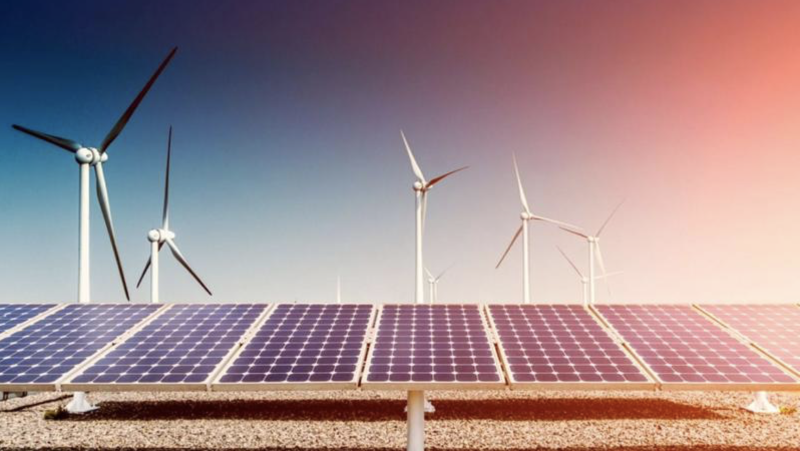
Vietnam’s Direct Power Purchase Agreement (DPPA) mechanism, introduced under Decree No. 57/2025/ND-CP and effective from March 3, 2025, was once expected to become a breakthrough tool for accelerating Vietnam’s renewable-energy market. Within this policy, businesses can proactively access green electricity, reduce their dependence on the national grid, and drive clean-energy projects in a more flexible and efficient manner.
However, nine months after its introduction, reality shows that those initial expectations have yet to materialize. Numerous obstacles and operational challenges in implementing the mechanism have created significant barriers for many businesses. These and other issues were brought to the forefront at the recent Green Economy Forum (GEF) 2025.
High risk, high return
Mr. Alessandro Antonioli, CEO of Copenhagen Offshore Partners Vietnam, identified several factors that continue to shape investment decisions in Vietnam’s renewable-energy sector. He said that what investors look for is actually quite straightforward. “In our market, decisions depend on having both price and volume guaranteed; that’s what gives investors the confidence to commit.”
But the path forward is not without complications. Mr. Antonioli noted that tracking financial flows has become increasingly difficult, especially as many renewable-energy projects in Vietnam have been built in a highly-localized and fragmented manner. “It’s getting harder to trace where money goes and how projects are structured,” he explained, adding that this lack of transparency can slow capital inflows.
As the energy landscape shifts, he agreed that current models may no longer be enough. The sector is moving quickly, and with it comes a need for fresh ideas and more sophisticated investment approaches. He stressed that the industry must be ready for this next stage. “With the market changing, we need to rethink the financial framework and bring in investors who are prepared for more complex, modernized opportunities,” he said.
Mr. Antonioli also emphasized that Vietnam will only keep up with rising digital and technical demands if it can attract capable developers - those who understand how to operate, integrate, and scale advanced renewable systems. Without this talent, he warned, the country could struggle to capture the full potential of its clean-energy transition.
According to Ms. Phan Thi Thu Thuy, Deputy Head of the Electricity Market and Power System Department at the Electricity Regulatory Authority under the Ministry of Industry and Trade, the DPPA mechanism is opening significant space for growth for both investors and large electricity consumers. “The potential for DPPA is tremendous, but every transaction must comply with the Power Purchase Agreement (PPA) and the strict regulations of the electricity market,” she emphasized.
However, she also noted that the DPPA mechanism is not a playground for risk-averse investors; rather, it is a space for those willing to embrace a “high-risk, high-return” model. “This is a high-risk investment area, but it offers substantial rewards for those who are willing to lead,” she believes.
Despite these hurdles, Mr. Huynh Buu Quang, Vietnam Chief Country Officer at Deutsche Bank, underscored that the existing PPA framework generally serves its purpose. “The PPA is typically used to manage the direct relationship between the power generator and the consumer, and we have not seen significant issues with this structure,” he said, suggesting that the underlying agreement remains strong.
Mr. Andrew Khan, Managing Director at Carlsberg Vietnam, noted that while the company has been sourcing renewable electricity through I-RECs (International Renewable Energy Certificates) since 2022, these are only an initial step. To achieve net-zero production emissions by 2028, Carlsberg Vietnam plans to expand its use of renewable energy through DPPA participation and on-site solar projects, in line with both Vietnam’s net-zero roadmap for 2050 and the group’s global targets.
“The DPPA mechanism help makes renewable sourcing more meaningful and impactful,” said Mr. Khan. “It strengthens Vietnam’s clean energy infrastructure, supports long-term sustainability goals, and signals a clear commitment to modernizing the power market and attracting high-quality green investment. It also opens the door for deeper technology and expertise exchange between Vietnam and Europe. European enterprises can bring innovation, technical know-how, and financing solutions that support Vietnam’s climate agenda.”
Financial concerns
From a financial perspective, Mr. Quang noted that although the DPPA market holds substantial potential, it is unlikely to expand rapidly due to the inherent complexity of its mechanisms and project structures. “There is a lot of complexity, so DPPAs cannot break through in a short period of time,” he believes.
The mechanism is, however, increasingly seen as a key pathway that enables businesses to buy and use renewable energy directly, unlocking new opportunities for both sustainability goals and long-term energy security. Thanks to the mechanism, businesses now have the opportunity to purchase and use renewable electricity directly, supporting both their growth and long-term sustainability commitments.
However, Mr. Quang also emphasized that the current price of renewable electricity remains relatively high, causing many businesses to hesitate. “Renewable electricity prices are still high, so it is understandable that companies are cautious,” he said.
Regarding typical financial considerations, he noted that “a lot depends on the execution capability of the project developer and the consumer’s ability to pay, which is standard in any credit agreement.” He went on to emphasize that “the real challenges are not with the overall structure of the DPPA, but with the finer details spelled out in the contracts.” Even so, he affirmed that Deutsche Bank remains ready to support projects that meet the bank’s risk-management standards.
Ms. Thuy also suggested an approach for power producers to better explain their offered prices, particularly when using renewable energy combined with BESS (Battery Energy Storage Systems). She emphasized that when sellers propose higher offers, they should clearly outline the environmental benefits, operational stability, and load-optimization potential that BESS provides. “When buyers understand why the price is higher, and recognize the value of BESS and renewable energy, they will be more likely to consider investing,” she said.
Against the backdrop of Vietnam’s goal to achieve net-zero emissions by 2050, the government has pledged to work alongside the business community in the energy transition. “We will continue to strive to create the most supportive mechanisms for businesses,” Ms. Thuy added. “The DPPA therefore represents an opportunity for those willing to take the lead and lay the first stones in this emerging market.”





 Google translate