


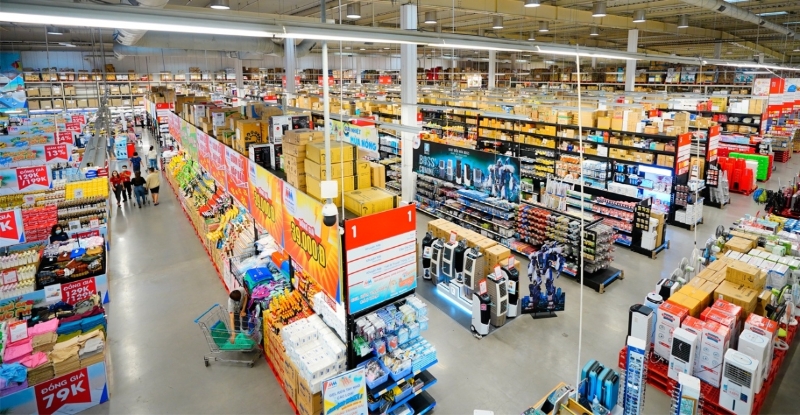
According to SHS Research, the period from 2025 to 2030 will be the “golden years” for Vietnam’s retail sector, with a compound annual growth rate (CAGR) of up to 12.05 per cent per year - among the highest in the region - expected to be recorded. The main drivers are the country’s large population, young demographic structure, and improving income levels.
Prime Minister Pham Minh Chinh issued Decision No. 2326/QD-TTg on October 21, 2025, approving the Strategy for the Development of Vietnam’s Retail Market to 2030, with a Vision to 2050, aiming to make retail a driving force of economic growth. The goal is to achieve an average annual increase of 11-11.5 per cent in total retail sales of goods and consumer service revenue from 2025 to 2030.
Information transparency
However, counterfeit goods, imitations, and trade fraud have caused significant damage to businesses and eroded consumer confidence in the industry. In this context, the market has witnessed growing demand for clear validation of product quality, alongside increasingly deep integration of technology into traceability and information verification systems.
Information transparency is playing an increasingly important role in market management, combating commercial fraud, and enhancing the competitiveness of Vietnamese enterprises. Transparency in traceability is not only a condition for gaining customer trust but also a mandatory legal requirement as new management frameworks are gradually forming.
Amid numerous scandals related to counterfeit, imitation, and low-quality products, consumer trust is being significantly eroded. In this context, building a clear and transparent traceability system not only helps prove the actual quality of products but also provides a basis for consumers to make informed choices. Transparency in origin and quality control thus becomes a prerequisite, helping businesses restore market trust and promote the development of modern consumption.
Through the application of digital technologies, businesses are now able to present transparent and verifiable information on raw materials, production processes, certifications, and the unique strengths of their products. At the same time, consumers gain easier and more comprehensive access to the true value of goods and services, strengthening their trust in product authenticity at the point of purchase and use. This shift not only reinforces market confidence but also empowers consumers to make more informed and responsible purchasing decisions.
Faced with increasing demand for information transparency, many businesses have pioneered the implementation of high-tech traceability solutions, which enable companies to standardize and disclose product data while also helping consumers easily access the information necessary to make informed decisions.
For example, the product traceability solution developed by the Checkee Technology Joint Stock Company has been evaluated and certified by the National Numbering and Barcodes Center as successfully connected to the national product and goods traceability information portal. By digitizing the entire product journey - from planting, production, inspection, and packaging to distribution - the system allows data to be stored and managed in electronic records, thereby supporting consistent tracking, comparison, and authentication of each product’s information.
Mr. Pham Van Quan, CEO of Checkee, observed that, in recent years, large enterprises, particularly in the food and industrial sectors, have been the most active in successfully implementing traceability systems, both in the domestic market and internationally. He added that this trend reflects not only regulatory requirements but also growing consumer expectations for transparency and safety.
According to an analysis by Emergen Research, in the food sector alone, the global traceability market is projected to reach $9.75 billion by 2028, underscoring the accelerating role of traceability as a critical pillar of modern consumption and sustainable business development.
In Vietnam, Vinamilk has been among the early adopters of Enterprise Resource Planning (ERP) systems, implementing the platform as early as 2007. Its ERP system enables the dairy company to comprehensively manage its operations - from production, finance, warehousing, and distribution to human resources - while establishing a centralized, synchronized data foundation with full end-to-end traceability.
By integrating its ERP platform with a product traceability system, Vinamilk is able to store and manage data throughout the entire product lifecycle, covering everything from raw materials and manufacturing processes to packaging, transportation, and points of sale. This integrated approach ensures that product information is systematically controlled and transparently disclosed, allowing consumers, regulatory authorities, and business partners to verify and authenticate product data whenever necessary.
According to Mr. Nguyen Quoc Khanh, Executive Director of Research and Development at Vinamilk, transparency in product origin is not merely a regulatory requirement but an integral part of the company’s sustainable development strategy. “Transparency and traceability are not just about compliance, they represent a long-term commitment to sustainability,” he affirmed. “We believe that every product should carry a ‘transparency passport’, one that safeguards consumer trust and reinforces the standing of Vietnamese brands in the global marketplace.”
Meanwhile, the Khanh Hoa Bird’s Nest Company has adopted a closed-loop production management model covering the entire value chain, from harvesting bird nests in natural island caves and purpose-built birdhouses to preliminary processing, refined production, packaging, and distribution.
Each product batch is assigned a dedicated production dossier linked to a centralized traceability database, while products are affixed with anti-counterfeit labels and QR codes, enabling consumers to independently verify origin and authenticity. “In the future, I hope businesses will recognize that product traceability is not simply a box to be checked, but a commitment to brand credibility and product quality in the marketplace,” Mr. Quan said.
Consumers at the center
Markets with strong consumer protection mechanisms consistently demonstrate higher competitiveness indices. Businesses in these markets not only comply with the law but also view respect for consumers as a sustainable brand development strategy.
In Vietnam, many businesses are shifting towards publicizing product information, implementing traceability systems, deploying multi-channel customer care centers, and proactively recalling defective products. These measures not only help strengthen customer trust but also create long-term competitive advantages.
Raising awareness of product quality is crucial. Being vigilant in every purchasing decision, prioritizing products with clear origins, refusing to use low-quality goods, and being ready to report and denounce violations not only help protect consumers’ rights but also demonstrate support for businesses that comply with the law and maintain transparency in their production and business activities, thereby contributing to the filtering and sanitizing of the market.
From a business perspective, several brands have taken a proactive role in coordinated efforts to raise public awareness in the fight against counterfeit goods. In Vietnam, Unilever has partnered with the Market Surveillance Agency at the Ministry of Industry and Trade to conduct training programs and capacity-building initiatives, helping improve consumer skills in identifying counterfeit products and goods that infringe intellectual property rights.
Alongside these efforts, product display and comparison programs showcasing genuine versus counterfeit household care products have also been implemented. These initiatives provide consumers with practical information and essential skills, empowering them to more confidently distinguish authentic products during purchasing decisions.
At the core of the market ecosystem, consumers remain the most critical link in the entire supply chain. As Associate Professor Pham Ngoc Linh, Vice President of the Vietnam Union of Science and Technology Associations (VUSTA), aptly observed: “If we view the market as a living organism, consumers are its ‘heart’ - the force that keeps it functioning.”
Every activity in production, business, and service provision ultimately exists to meet consumer needs. When consumer rights and interests are properly safeguarded, trust in the market is reinforced, allowing the economy to operate in a healthier, more transparent, and sustainable manner. This perspective underscores a fundamental truth: a transparent and trustworthy market begins, and ends, with the consumer.








 Google translate