


Mr. Denzel Eades, Chairman of the British Chamber of Commerce Vietnam (BritCham)
From the perspective of a chamber representing over 250 organizational members, we have observed a significant surge in confidence among British investors, particularly following the elevation of our bilateral relationship to a Comprehensive Strategic Partnership in 2025. These improvements are clearly demonstrated through three primary pillars.(*)Mr. Denzel Eades, Chairman of the British Chamber of Commerce Vietnam (BritCham)
First is the legal framework and trade connectivity. Vietnam is one of the few countries in the region to possess a dual advantage from large-scale trade agreements with the UK, including the UK-Vietnam Free Trade Agreement (UKVFTA) and the Comprehensive and Progressive Agreement for Trans-Pacific Partnership (CPTPP). This combination creates a superior tariff corridor and transparent investment protection standards for businesses.

Second is the development of financial centers and legal systems. We greatly appreciate the Vietnamese Government’s efforts in establishing International Financial Centers (IFCs) in Ho Chi Minh City and Da Nang. The UK’s active support in helping Vietnam build a regulatory framework based on common law principles is a pivotal factor. This alignment of legal principles not only creates a sense of familiarity but also builds a solid foundation of trust for British financial institutions and enterprises when deploying capital into Vietnam.
Third is constructive dialogue mechanisms. The government’s receptive approach is clearly evidenced through the Vietnam Business Forum (VBF) and direct dialogue between the Prime Minister and the foreign business community. Many of BritCham’s recommendations regarding taxation and technical barriers have been acknowledged and addressed, demonstrating a substantive commitment to partnership from regulatory authorities.
Despite positive shifts, the British business community expects more practical and synchronized improvements in some areas.
Regarding administrative complexity, the process of authenticating and legalizing documents from the UK has historically been a major hurdle, incurring significant time and opportunity cost for investors. Streamlining these procedures is a top priority to ensure international capital flows more efficiently.
In approval processes for key projects, particularly in priority sectors such as renewable energy and pharmaceuticals, the pace of licensing does not always match expectations. Overlapping regulations between ministries remain a factor causing large corporations to be cautious in accelerating their capital appraisal and disbursement.
With requirements for sustainable infrastructure, British businesses today adhere to stringent environmental, social, and governance (ESG) standards. Therefore, the availability of green energy infrastructure and a modern logistics network is a prerequisite for expanding production scales in Vietnam.
To enhance competitiveness and attract high-quality UK capital, Vietnam should prioritize reforms that strengthen its financial ecosystem while investing in long-term human capital.
The development of the IFC should be a central pillar. The UK business community welcomes Vietnam’s ambition to promote green finance, fintech, capital markets, and global trade under a strong risk management framework. For success, the IFC must be integrated with the broader economy, supporting exports, energy transition, and pensions while drawing on London’s experience.
Vietnam should establish a London-Vietnam regulatory bridge by aligning IFC regulations with international best practices, including common law principles, English as a working language, and international financial reporting and capital standards, supported by strong governance. Policymakers should also leverage both domestic institutions and established UK financial players with proven expertise.
The IFC model should be inclusive, extending incentives to the wider ecosystem, including brokers, advisors, auditors, and training institutions, to maximize national benefits. Key reforms such as improvements to work permits and personal income tax should also be scaled economy-wide to enhance investment attractiveness.
Beyond finance, education and skills are critical. Promoting English as a second language, strengthening vocational training, and aligning higher education with global standards will help build a future-ready workforce, with strong potential for UK partnerships.
With the right reforms, Vietnam can enhance its competitiveness and position itself as a leading destination for high-quality UK investment.
BritCham Vietnam remains committed to acting as a strategic bridge, supporting the Vietnamese Government in building a transparent, modern, and sustainable business environment.
Mr. Tsuchibashi Akito, Chairman of the Japanese Chamber of Commerce and Industry in Vietnam (JCCI)
Vietnam’s investment and business environment has steadily improved in recent years, and Japanese companies hold a highly positive view of the country as a key Asian destination. Though global uncertainties continue to pose risks to the global economy, Vietnam stands out for its strong political and social stability. This stability enhances its appeal as a reliable and predictable destination for Japanese investment.
Vietnam is now recognized as an important manufacturing base and as an increasingly attractive consumer market. According to the latest survey conducted by the Japan External Trade Organization (JETRO), 67.5 per cent of Japanese companies in Vietnam expect to be profitable in 2026, marking the highest level in a decade. Furthermore, 56.9 per cent of these companies intend to expand their business operations within the next one to two years, positioning Vietnam as the top ASEAN country in terms of expansion intentions.
Vietnam’s integration into global supply chains is bolstered by its participation in multiple economic partnership agreements that aim for high levels of trade liberalization. Furthermore, Vietnam is increasingly positioning itself as a strategic hub that combines manufacturing, consumption, and innovation. Opportunities are expanding in areas such as high technology and digital and green transformation, which are of particular interest to Japanese investors.
Though the overall outlook is quite positive, Japanese enterprises in Vietnam continue to face several significant challenges, as also reflected in the JETRO survey. First, administrative procedures and institutional issues remain key concerns. The survey indicated that “complex administrative procedures” and “a lack of transparency in legal systems and their implementation” pose the greatest risks. Companies often encounter lengthy procedures, inconsistent regulatory interpretations between central and local authorities, and limited predictability due to frequent policy changes.
At the same time, it is important to emphasize that Japanese companies recognize and greatly appreciate the Vietnamese Government’s strong commitment to reform. Initiatives such as the National Digital Transformation Program, including Project 06, as well as ongoing administrative restructuring efforts are seen as important steps toward improving efficiency, transparency, and governance. These reforms are widely welcomed by Japanese companies.
Second, human resources constraints have become increasingly significant. According to JETRO, approximately half of Japanese companies report growing difficulties in recruiting employees. The situation is particularly challenging in manufacturing sectors, especially in northern Vietnam, where competition for skilled workers has intensified. However, shortages of mid-level managers, engineers, and skilled workers are becoming more pronounced. At the same time, labor costs have been rising steadily, reflecting Vietnam’s overall economic growth and improving living standards.
Third, companies are facing rising costs and intensifying competition. Competition from local companies and foreign investors has intensified. For example, around 30 per cent of Japanese manufacturing companies view foreign-invested enterprises (FIEs) from major neighboring countries as their main competitors, reflecting the Vietnamese market’s growing dynamism.
Finally, infrastructure and energy supply are areas where improvement is needed. Though Vietnam has made significant progress in infrastructure development, challenges remain in logistics efficiency, and concerns about power supply stability have been raised, particularly in certain regions.
To strengthen its competitiveness and attract high-quality investment from Japan, Vietnam should consider the following priorities.
First, it is essential to enhance the transparency and predictability of legal and regulatory frameworks. Consistent implementation across regions, clear guidelines, and robust public-private dialogue mechanisms will boost investor confidence and enable long-term planning.
Second, continuing and deepening administrative reforms will be important. The further simplification and digitalization of administrative procedures will significantly improve efficiency. Fully integrating online processes and reducing reliance on paper-based systems will be particularly beneficial for businesses.
Third, the development of human capital should be a central priority. Strengthening education, vocational training, and industry-academia cooperation will help address the shortage of skilled labor and support Vietnam’s transition toward higher value-added industries.
Fourth, continued improvements in infrastructure and energy supply will be critical. Ensuring a stable and sustainable electricity supply while accelerating the development of transportation and logistics infrastructure will enhance Vietnam’s competitiveness as an investment destination.
Additionally, promoting investment in emerging sectors such as high technology, digital transformation, green energy, and supply chain upgrading will further enhance Vietnam’s ability to attract high-quality investment from Japan.
Japan continues to view Vietnam as an indispensable partner and a highly promising long-term investment destination. The strong performance and expansion intentions of Japanese companies reflect this confidence.
At the same time, addressing remaining challenges through continued reforms will be essential to realizing Vietnam’s full potential. We sincerely hope that through close cooperation between the Vietnamese Government and the business community, Vietnam will continue to advance toward sustainable, high-quality growth, bringing mutual benefits to both countries.
Mr. Vu Tu Thanh, Acting Regional Managing Director & Chief Country Representative of Vietnam, US-ASEAN Business Council (USABC)
From the perspective of the US business community, the signals coming out of Vietnam today are very clear. Growth is back at the center of the agenda, accompanied by a strong push to move faster and improve execution.
What stands out is not only policy direction but also a shift in governing mindset. The government is placing greater emphasis on implementation, cutting procedures, accelerating decision-making, and addressing bottlenecks that have persisted for years. For US businesses, this is critical. In today’s environment, countries are not only competing on cost or geography, but increasingly on operating speed and policy responsiveness.
At the same time, Vietnam is repositioning itself as a more innovation-driven economy. The focus on digital transformation, AI, and higher-value industries aligns closely with the strengths of US companies. This creates opportunities not only for capital investment but also for deeper partnerships in technology, workforce development, and long-term growth.
The fundamentals remain strong, including macro-economic stability, a dynamic workforce, and growing openness to public-private dialogue. These factors reinforce confidence that Vietnam is entering a new phase of higher-quality growth.
The challenge now is less about direction and more about execution, predictability, and compliance costs. While policies are increasingly forward-looking, implementation on the ground can still be uneven. Businesses may encounter differences in interpretation across ministries or local authorities, leading to delays or uncertainty. From an investor’s perspective, unpredictability is often more difficult to manage than risk.
Administrative procedures remain an area for improvement. In sectors such as energy, healthcare, and digital services, approval processes can be lengthy and inconsistent. As Vietnam moves up the value chain, the ability to make timely and consistent decisions will become a key competitive factor.
One growing concern is the level of compliance costs. In practice, many companies need to dedicate significant time, personnel, and financial resources to meet reporting, inspection, licensing, and administrative requirements. In some cases, businesses are asked to provide documentation or follow procedures that are not well aligned with modern business models.
In taxation, companies continue to face challenges in accessing double taxation relief, including complex documentation requirements and lengthy processing times. In customs, post-clearance reclassification of HS codes, in some cases applied retrospectively, can create unexpected financial liabilities. These issues not only increase costs but also affect business planning and confidence.
In the digital space, requirements related to data localization and restrictions on cross-border data flows can further increase operational costs. Companies may need to invest in additional local infrastructure or adjust global systems, while the benefits are not always clear.
Energy is another critical constraint. Projects, particularly in renewables, can face delays in permitting and contract negotiations, affecting both investment timelines and expansion plans.
These compliance costs are often not immediately visible, but they accumulate over time and can significantly impact the overall attractiveness of the investment environment.
Vietnam’s opportunity now is to translate strong policy direction into consistent, predictable, and timely outcomes.
First, improving consistency in implementation should be a priority. Second, administrative reform needs to go deeper, with a focus on reducing compliance costs in a meaningful way. Third, Vietnam has an opportunity to build a more enabling regulatory framework for the digital economy. Fourth, addressing energy bottlenecks should be a priority. Fifth, continued investment in innovation and human capital will help Vietnam move further up the global value chain. And finally, maintaining and deepening public-private dialogue is essential. The government’s openness to engagement is highly valued, and structured, solutions-oriented dialogue will help ensure that policies are both practical and aligned with international best practices.
The next phase will depend on how quickly and consistently advantages can be translated into real outcomes on the ground, with reasonable and predictable compliance costs.
Mr. Tan Quee Peng, President of the Singapore Chamber of Commerce Vietnam (SingCham Vietnam)
In recent years, Vietnam has made significant strides forward in reforming its investment and business environment. The government’s commitment to regulatory reforms has been evident in its policy direction and reform intent, with efforts to streamline administrative procedures, reduce unnecessary licensing requirements, and enhance the transparency of business processes.
Notably, the implementation of the new Law on Investment 2025 and the Law on Enterprises 2025 has created a clearer and more predictable framework for foreign investors, instilling greater confidence among Singaporean companies seeking to enter or expand within the Vietnamese market.
Infrastructure development has also been a cornerstone of Vietnam’s recent progress. Ongoing upgrades to transport networks, logistics hubs, and digital infrastructure have improved connectivity between key economic regions, facilitating smoother supply chains and the more efficient movement of goods and services. Singaporean logistics, manufacturing, and technology firms, in particular, have benefited from these advancements, leveraging Vietnam’s strategic location within ASEAN and its burgeoning domestic market.
Another notable initiative from Vietnam is the recent institutional overhaul, including administrative mergers and the reorganization of administrative units and government agencies. Through this large-scale undertaking, Vietnam aims to enhance efficiency in administrative management and procedures, which in turn would further support businesses, in ease of doing business and investment in Vietnam.
Despite these noteworthy improvements, Singaporean businesses continue to encounter several obstacles.
Chief among these are administrative hurdles and regulatory inconsistencies that persist across various sectors and localities. While national-level reforms have been introduced, their implementation at the local level can vary, leading to delays, uncertainty, and increased compliance costs for foreign investors. Navigating these complexities often requires significant resources and local partnerships, which may not be readily available to all Singaporean firms, particularly SMEs.
Additionally, market access challenges remain a concern, especially in sectors where foreign ownership restrictions still apply or where licensing processes are protracted and opaque. Singaporean businesses have also reported difficulties in acquiring land use rights and permits, which can hinder the timely establishment or expansion of operations. In addition, the competitive landscape in Vietnam is evolving rapidly, with local enterprises becoming more sophisticated, heightening the need for foreign businesses to continuously innovate and adapt.
Practical challenges regarding the merger and acquisition (M&A) approval process in Vietnam still persist. In many cases, authorities require approval solely due to a change in investor nationality. There is also a lack of guidance on resolving discrepancies between projected and actual M&A transaction prices. These inconsistencies highlight the need for clearer guidance and streamlined procedures to ensure predictability and efficiency in Vietnam’s M&A regulatory framework.
Regarding the energy sector, an ongoing challenge for investors is licensing and regulatory clarity for renewables. Companies report that despite Vietnam’s clean energy ambitions, complex and inconsistent procedures slow the process of obtaining permits, particularly for rooftop solar projects. Differing interpretations by authorities and unclear requirements make long-term investment risky. The rollout of the Direct Power Purchase Agreement (DPPA) mechanism has also been delayed due to a lack of detailed guidelines on fees and pricing frameworks. These unresolved issues continue to hinder progress and foreign investment in Vietnam’s clean energy transition.
Lastly, the sudden enforcement of Decree No. 46/2026/ND-CP and related food safety rules caused major disruption, leading to thousands of containers being stuck at ports. Although implementation has been postponed, this highlights the need for clear transition periods, practical guidance for enforcement, and stable regulations. Food imports have been affected despite meeting international standards, as many food and beverage (F&B) manufacturers rely on 10-30 per cent imported ingredients.
Unpredictable procedures threaten production and supply chains, undermining investor confidence and slowing investment in Vietnam’s F&B sector. As such, it is important that Vietnam maintain regulatory stability, recognize global food safety certifications, and avoid abrupt changes without adequate preparation.
To further enhance Vietnam’s competitiveness and its attractiveness to high-quality Singaporean capital, Vietnam should consider implementing the following policy recommendations.
First, continued efforts to streamline regulations and eliminate bureaucratic red tape are essential.
Second, it is crucial to enhance the transparency and predictability of the legal and regulatory environment. Regular stakeholder consultations, public disclosure of draft regulations, and effective feedback mechanisms will ensure that the voices of foreign investors, including Singaporean businesses, are heard and considered in the policymaking process.
Third, Vietnam should prioritize policies that foster innovation, technology transfer, and sustainable investment. Incentivizing R&D, supporting startups, and facilitating public-private partnerships in emerging sectors such as digital transformation, renewable energy, and smart manufacturing will position Vietnam as a regional leader in the industries of the future.
Furthermore, Vietnam’s recent initiative to establish an International Financial Center (IFC) is another step in the right direction.
Mr. Bruno Jaspaert, Chairman of the European Chamber of Commerce in Vietnam (EuroCham)
The start of 2026 has been incredibly dynamic, anchored by the elevation of the EU-Vietnam relationship to a Comprehensive Strategic Partnership (CSP) during European Council President António Costa’s visit to Vietnam in January.
For European firms, the continuing leadership of Party General Secretary and State President To Lam signals the one thing companies value more than anything else: stability. However, stability must be paired with flexibility and agility. We are seeing today a major shift by authorities toward “systemic efficiency.” The government’s latest reform push, to abolish 184 administrative procedures and 890 business conditions, is more than just a policy shift. It represents the opportunity to finally realize economic liberation from many administrative bottlenecks that plagued companies in Vietnam.

Every administrative procedure carries a hidden economic cost, which is why the new Directive’s push to reduce compliance costs and time is so encouraging. By requiring ministries to handle no more than 30 per cent of total procedures and targeting a 50 per cent reduction in compliance costs and time by the end of 2026, Vietnam can effectively inject resources back into the private sector and allow for more optimal resource allocation.
The estimated savings of VND23 trillion ($873 million) a year from these cuts may still be debated, but even if the actual savings amount to only half of this figure, it would still be a huge boost for all businesses involved.
Despite geopolitical turbulence, the latest data shows Vietnam continues to stand out. EuroCham’s latest Q1 2026 Business Confidence Index (BCI) reveals a confidence level of 72.7, which is well above the past six years’ average. Notably, 93 per cent of our members stated they would recommend Vietnam as an investment destination.
It is a powerful signal that despite global turmoil, Vietnam retains a deep, unique attraction for FDI. Why? Because resilience is Vietnam’s superpower. This country has repeatedly shown an ability to absorb global shocks like no other in the region.
I have witnessed the incredible feat of what government leaders call “days and nights” of rapid effort. When an ambitious goal is set, the Vietnamese people pull out all stops. For European businesses, stability is key, as stated before. But the “safe harbor” they are looking for is not just a place where nothing happens; it is a place that knows how to move with purpose when the seas gets rough. The long-term outlook here remains bright, according to the results of the BCI survey.
While the opportunities in Vietnam are still very real, converting those into signed deals is simply taking longer and costing more than we anticipated at the end of 2025. We have moved past the era of simply “opening the gate” to FDI. We are now in the era of “building the house (or factory).” Investors no longer ask if they can enter Vietnam; they ask if they can move efficiently once they are inside.
Currently, that building process is cluttered with what we may call an “administrative tax.” Our latest BCI report shows that 61 per cent of businesses identify administrative procedures and paperwork as a top challenge. We frequently see “regulatory fragmentation,” where different localities interpret the same central decree in different ways. For a multinational trying to scale across 34 cities and provinces, this creates a maze of complexity that siphons off management resources and slows down execution.
Liquidity is another pressing issue. In a volatile global trade landscape, capital efficiency is everything. This is why we are advocating for faster VAT refunds. Despite new regulations, the refund process remains slow, troublesome, and not transparent across different provinces. Faster refunds allow companies to absorb rising logistics costs driven by geopolitical tensions without cutting production or delaying new projects.
Furthermore, we are seeing a shift in the labor market. Concerns over talent shortages have risen from 23 to 33 per cent. As we move into high-tech manufacturing and the semiconductor space, the “human resources crunch” is becoming a bottleneck. To truly rise, Vietnam must ensure its workforce evolution keeps pace with its industrial ambition.
European companies invest with a long-term lens. We look at integrated value chains, not just low-cost assembly. To sustain this, we see three strategic priorities.
First, consistency in implementation. We need to untangle overlapping regulations and empower local authorities to make faster, technically-sound decisions. The make-or-break factor for 2026 is speed and decentralization. Whether it is customs clearance in Hai Phong or a work permit in Binh Duong, the rules must be applied with technical clarity and regional uniformity.
Second, infrastructure synchronization. Vietnam is building at a breathtaking pace. However, ports, roads, and energy grids must evolve in a coordinated way. We cannot have world-class factories powered by an intermittent energy supply. To support the 10 per cent growth ambition, energy reliability is non-negotiable.
Third, regulatory alignment. With the CSP, we have a golden opportunity to align Vietnam’s standards with international benchmarks. This reduces the barrier to entry for high-quality European small and medium-sized enterprises (SMEs) that bring specialized technology but lack the large legal departments needed to navigate fragmented local rules.
Ultimately, we find great reassurance in Prime Minister Le Minh Hung’s five strategic priorities for the 2026-2031 term, particularly the focus on a “people-serving government” and “systemic efficiency.” These align closely with our goals.
We want to be a constructive, outspoken partner of the Vietnamese Government. We believe that the coined “era of the nation’s rise” has indeed arrived for Vietnam. We are here to help build this country and provide expert insights to ensure that this rise will be sustainable, inclusive, and unstoppable.
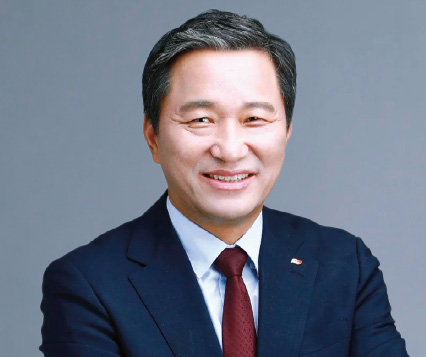
Mr. Ko Tae Yeon, Chairman of the Korean Chamber of Business in Vietnam (KOCHAM)
Vietnam’s investment and business environment has continued to improve in a generally positive direction. Stable economic growth and continued efforts to improve the business environment are encouraging signs for South Korean businesses.
Vietnam is already a very important investment partner for South Korean businesses. As of 2025, South Korean investment in Vietnam had exceeded 10,000 projects, with accumulated investment of approximately $94 billion. South Korea is the largest investor among 144 countries and territories investing in Vietnam, and bilateral trade has expanded to around $94.6 billion.
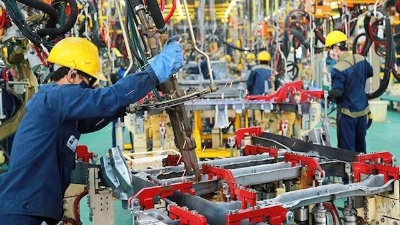
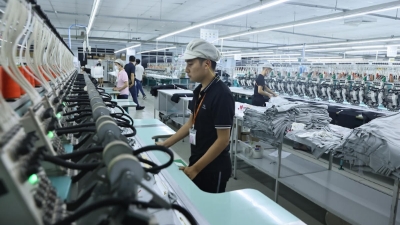
What is particularly meaningful is that Vietnam is moving beyond its role as a production base and is now pursuing industrial upgrading, digital transformation, and the development of advanced industries. South Korean businesses now see Vietnam not only as a manufacturing base but also as a strategic industrial partner within global supply chains.
When companies make investment decisions, they do not look only at market size or cost competitiveness. They also place great importance on whether policies are implemented in a stable and predictable manner on the ground.
Continued improvements at both the central and local levels will further strengthen investor confidence. If Vietnam continues to strengthen both institutional stability and industrial competitiveness, it will remain one of the most important investment cooperation partners for South Korean businesses.
Though Vietnam has made significant progress, South Korean businesses still face several practical challenges on the ground. The most important issue is the consistency of policies and regulations, as well as the predictability of administrative implementation.
Investment decisions are made from a long-term perspective. Therefore, companies pay close attention to how laws and regulations are interpreted and applied in practice, and which authorities will respond responsibly when issues arise.
In practice, there are still cases where interpretations and procedures differ depending on the region or authority. Procedures related to investment approvals, land, taxation, customs, and work permits directly affect business operations. When delays or uncertainties arise, companies inevitably face higher costs and greater operational burdens.
Another important challenge is infrastructure and human resources. As South Korean investment expands into higher value-added sectors such as semiconductors, electronics, batteries, logistics, energy, and smart manufacturing, stable power supply, efficient logistics infrastructure, competitive industrial parks, and skilled technical workers are becoming increasingly important.
Global changes such as supply chain restructuring and stronger environmental, social, and governance (ESG) requirements are also creating new challenges. Companies now need greater institutional trust, faster administrative processing, and practical long-term support systems.
I believe the standard for attracting investment should now move to a higher level. Going forward, what matters more is which industries investment goes to, what technologies and human resources are developed together, and what kind of industrial ecosystem is created.
This aligns well with the strengths of South Korean companies, including manufacturing experience, technological capabilities, and supply chain management know-how.
The first priority should be strengthening trust in institutions. Companies look closely at whether laws and regulations are operated in a stable manner, whether administrative procedures are fast and clear, and whether central government policies are implemented consistently at the local level.
It is also important to support deeper links between Vietnamese and South Korean companies within supply chains. For more Vietnamese local companies to participate in South Korean companies’ supply chains, it is necessary to improve quality management, production management, technical standards, and workforce training together. Technology transfer should also develop into deeper on-the-ground cooperation, joint research, and talent development.






 Google translate