


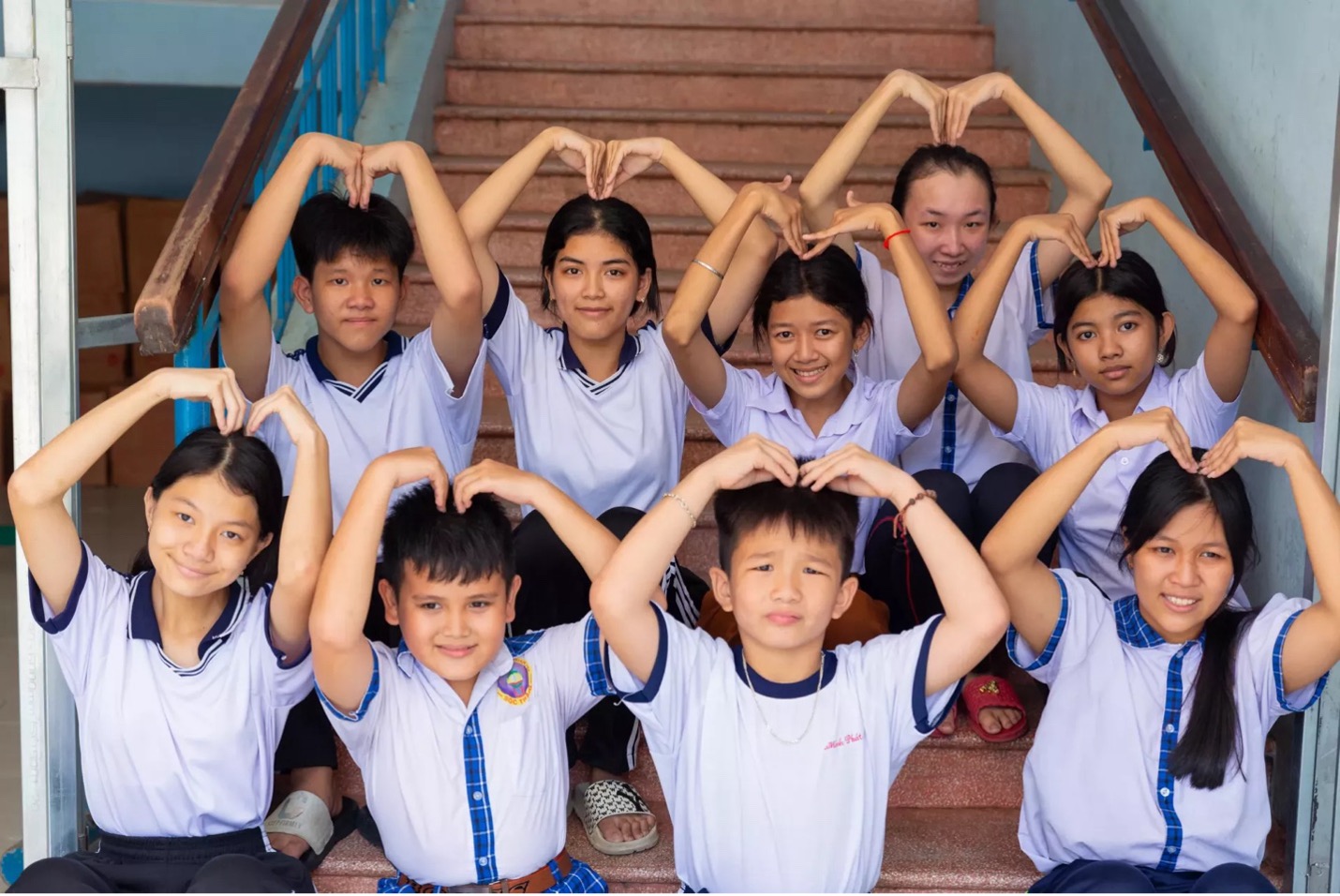
As challenges around education, digital access, and future skills become more complex, business partnerships with UNICEF are moving beyond financial contributions toward practical, scalable solutions for children and young people.
Vietnam’s 28.5 million children will come of age as the country’s demographic, environmental, and technological transitions begin to converge (Source: Survey Measuring Vietnam Sustainable Development Goal Indicators on Children and Women (SDGCW), 2020–2021).
Population aging is set to tighten labor supply, climate disruption is placing greater strain on schools and communities, and artificial intelligence is reshaping how people learn and work.
Investing in the next generation is therefore a matter of economic preparedness as much as social responsibility. Philanthropy can address immediate needs, but it cannot by itself build the skills, infrastructure, and support systems required for the decades ahead. That will depend on sustained investment, practical solutions that can be tested and scaled, and closer cooperation among government, development organizations, and businesses.
From contribution to practical solutions
Corporate support for children in Vietnam has traditionally focused on donations, scholarships, community programs, and emergency relief. These forms of assistance have improved conditions in many communities, yet the challenges now facing children extend across education, health, infrastructure, and climate resilience. Their complexity places greater emphasis on long-term programs that address several constraints at once and can be integrated into existing public systems.
Children should therefore be explicitly considered in business and sustainability strategies. Corporate decisions influence the conditions in which they grow up through the products and services companies provide, their employment and supply chain practices, and their investment in local communities. Effective partnerships align relevant business capabilities with clearly defined public needs and establish measurable outcomes that can inform wider application.
The partnership between Masterise Group and UNICEF Vietnam reflects this approach. It combines climate-resilient education with safer infrastructure, access to clean water, and opportunities for children to participate in climate action. More than 250,000 children and adolescents have benefited from digital learning tools and future-ready skills, while improvements to school facilities and renewable energy-powered water systems have improved access to safe water and sanitation for more than 54,000 people.
Children and young people also have a role in shaping the response. Youth-led climate initiatives and innovation clubs enable them to examine local challenges and develop solutions within their schools and communities. The Net Zero Toilet model brings sustainability into the daily school environment, while support for the Global Digital Library is intended to widen access to learning materials for ethnic minority children and children with disabilities.
For Masterise Group, the program draws on capabilities closely connected to its business in infrastructure, urban development, and community building. For UNICEF, it provides an opportunity to assess how these approaches perform under local conditions and whether they can be adapted elsewhere. The partnership derives its strategic value from this alignment between corporate expertise and public need.
Matching business strengths with public priorities
Corporate participation is most effective when the issue addressed is relevant to the company’s expertise, the implementation pathway is clear, and the expected outcomes are measurable. Such discipline shifts attention away from the visibility of a partnership and toward the substance of its contribution.
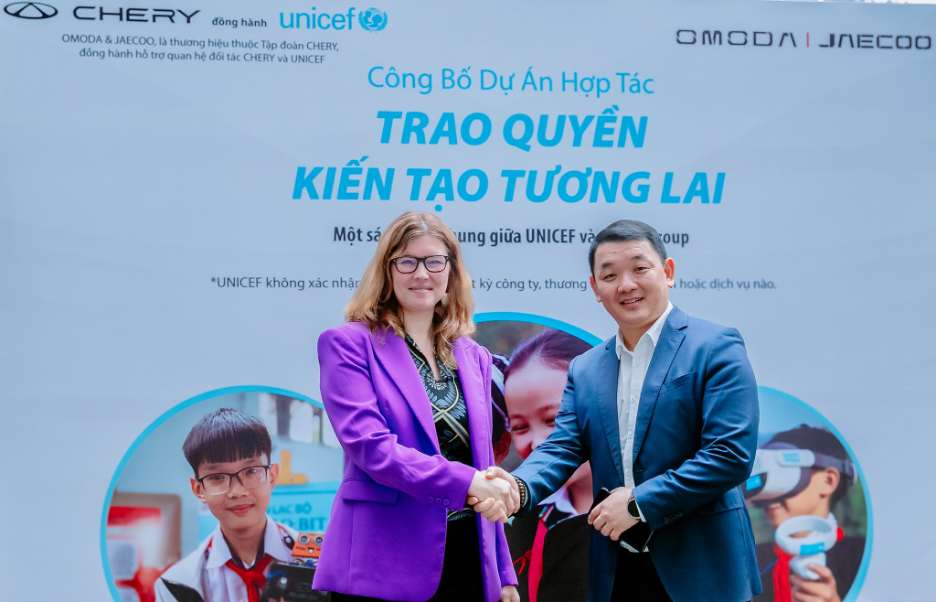
The three-year partnership between Omoda & Jaecoo and UNICEF Vietnam follows this model through the Empower Futures initiative. The program aims to strengthen inclusive and innovative education, enabling children and adolescents to develop the skills required to continue learning, respond to technological change, and move into employment.
The initiative forms part of UNICEF’s wider relationship with Chery Group, Omoda & Jaecoo’s parent company. In 2025, Chery committed a further US$6 million to the global education partnership after an earlier contribution of the same amount. Since 2023, the partnership has helped UNICEF reach nearly 40 million children and adolescents with access to quality education, including about 17 million living in emergency settings.
In Vietnam, the program is being implemented with the Ministry of Education and Training, with particular attention to disadvantaged groups. Its emphasis on digital, transferable, and green skills, including AI literacy, is intended to support both current learning and the transition from school to work. The broader objective is to strengthen the human capital required by an economy becoming more digital and increasingly exposed to environmental pressures.
Mr. Simon Liu, Chief Executive Officer of Omoda & Jaecoo Vietnam, said investment in the next generation aligns closely with the company’s long-term strategy.
“We believe real progress is reflected in how societies invest in the next generation. Through our partnership with UNICEF Vietnam, we aim to contribute resources, technological expertise, and innovation to help equip children and young people with the skills they need for the future,” he stated.
Building models for wider change
The significance of corporate partnerships extends beyond the number of people reached. Their wider value depends on whether they produce models that can be assessed, refined, and applied beyond the original project. A new learning approach, climate-resilient school facility, or digital resource becomes more consequential when evidence shows how it performs in practice and what is required for wider adoption.
Such evidence matters when social and economic change is moving faster than many existing systems can respond. Schools are preparing children for jobs that continue to evolve, while communities are already facing more severe climate risks and unequal access to technology. Well-designed partnerships can support experimentation while remaining aligned with public standards and national priorities.
The government provides policy direction and public systems, while development organizations such as UNICEF contribute evidence, technical expertise, and implementation experience, and businesses bring resources, innovation, and the capacity to operate at scale. Partnerships provide a structure through which these distinct roles can be brought together around a defined problem without weakening institutional accountability.
For companies, this approach creates a credible route from sustainability commitments to measurable outcomes. For children, it can lead to safer learning environments, broader access to technology and essential services, and stronger preparation for the economy they will inherit. The most enduring partnerships will be those that leave behind a model capable of being trusted, adapted, and expanded.




 Google translate