



Dien Bien Province has been chosen to develop a controlled pilot scheme for the "low-altitude economy." The selection is based not only on its unique mountainous and fragmented terrain but also on the province’s potential to serve as a national reference model for other localities.
During a working session on March 4 regarding the development of the "Controlled pilot scheme for low-altitude economic eevelopment and unmanned aerial vehicle (UAV) applications," the Ministry of Science and Technology (MoST) emphasized a key principle: the project is not intended to test UAV technology itself, but rather to trial practical application models to measure efficiency and refine the national policy framework.
Speaking at the meeting, Deputy Minister of MoST Bui Hoang Phuong highlighted that the low-altitude economy is a nascent field with high interdisciplinary potential and significant room for growth. He noted that selecting Dien Bien was a strategic move—leveraging its challenging geography to build a blueprint that other provinces can follow in the future.
According to the official, UAV technology is already well-established and widely used. Therefore, the focus of this scheme is to build specific application models to evaluate the economic impact of integrating drones into commercial activities.
The pilot must be implemented at a sufficient scale, addressing practical challenges such as freight transport while simultaneously collecting data for production, business, and administrative management. The project requires clear metrics to measure added value and operational improvements, said Mr. Phương.
Regarding safety and security, Senior Lieutenant General Pham Truong Son, Deputy Chief of the General Staff of the Vietnam People’s Army, stated that all UAV testing must strictly comply with current regulations. This includes adhering to no-fly zones, restricted areas, and following established flight licensing and monitoring procedures.
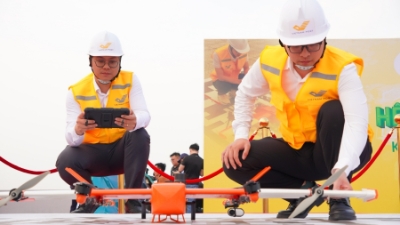
During the session, representatives from VNPost proposed a model for cargo transportation via UAVs in Dien Bien. They also recommended the removal of certain regulatory bottlenecks to ensure the feasibility of the project.
The pilot implementation in Dien Bien is expected to provide critical practical data. This data will serve as the foundation for building a comprehensive legal framework and shaping the future of the low-altitude economy in Vietnam.





 Google translate