


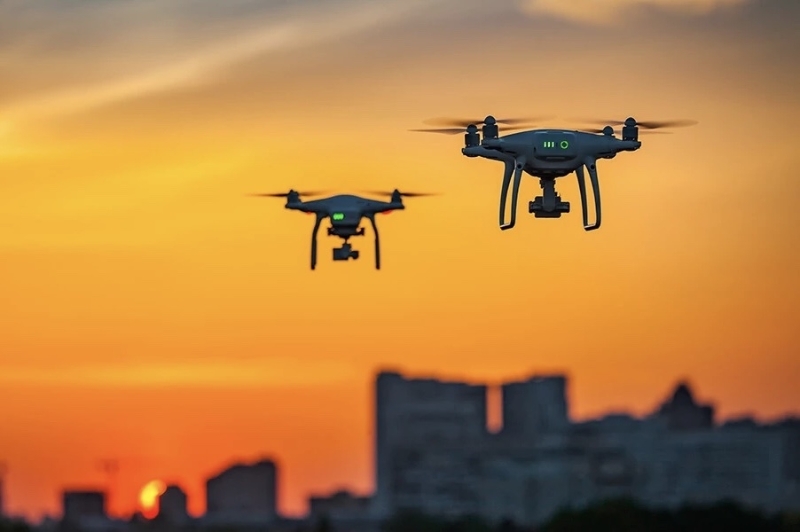
The Ho Chi Minh City People's Committee has officially issued a plan to develop the city's low-altitude economy through 2030, aiming to establish a new economic-technical sector and build the nation’s first industrial ecosystem and research and manufacturing center in this field.
The city expects the low-altitude economy to become a new growth driver that will enhance productivity across traditional industries.
According to the roadmap, the 2026–2027 period will focus on pilot programs to refine institutional frameworks and lay the necessary foundations.
From 2028 to 2030, the city will expand implementation and promote commercialization, which includes evaluating experimental mechanisms, proposing a finalized legal corridor, and upgrading the Unmanned Aircraft System Traffic Management (UTM) system toward full automation and data integration.
Beyond 2030, the city intends to accelerate large-scale commercialization and diversify low-altitude services, while focusing on mastering platform technologies to build a synchronized technical infrastructure ecosystem.
Priority sectors for pilot testing include agriculture, logistics, transportation, healthcare, tourism, urban management, surveillance, emergency response, and national security and defense.
To achieve these goals, the city will emphasize mastering core technologies and developing a robust ecosystem for research, testing, and technology transfer to ensure sovereignty over data, technology, and airspace.
In its spatial development strategy, HCM City is shifting from a purely administrative management mindset to treating low-altitude airspace as a strategic economic resource, creating new room for growth in industry, services, logistics, and smart city development.






 Google translate