


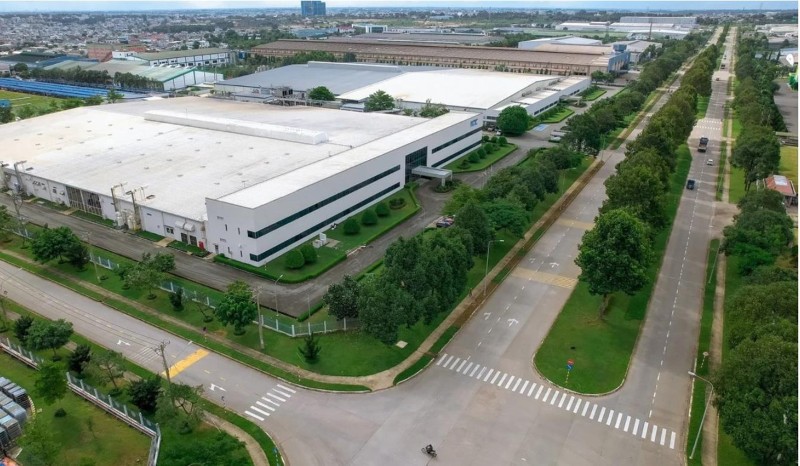
To achieve strategic goals for the 2026–2030 period, Vietnam's economy requires a transformational shift in its development model. In this shift, eco-friendly and smart industries will serve as the new growth engines.
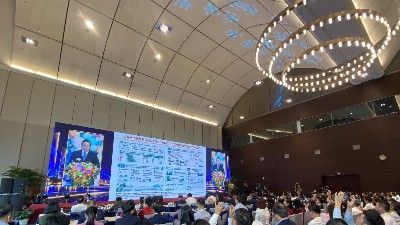
In this scenario, southern Dong Nai city is identified as a vital growth pole, making significant contributions to the nation’s overall objectives, Dr. Nguyen Duc Hien, Deputy Head of the Central Commission for Policy and Strategy, told the forum "Building Eco-Smart Industrial Parks – A Driver for Investment Attraction and Green Economic Development in the Southeast Region” in Dong Nai City on July 28.
"Dong Nai's economic scale is projected to reach approximately $44 billion by 2030, accounting for nearly 5% of the national GDP by then—a substantial increase from the current $27 billion. With a growth of nearly 1.5 times in just 4 to 5 years, this locality bears a massive responsibility in the national strategy to elevate the country's GDP from approximately $514 billion in the 2021–2025 period to a target of $900 billion for 2026–2030," said Dr. Hien.
Analyzing Dong Nai’s strengths, Dr. Hien highlighted the convergence of eight favorable conditions for the development of eco-industrial parks: large industrial scale, a strategic gateway location, multimodal logistics infrastructure, green growth orientation, digital and technological foundations, an innovative and creative workforce, and practical experience.
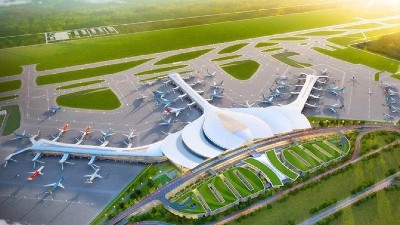
In particular, the "airport city" (aerotropolis) model, combined with the connectivity between Bien Hoa, Long Thanh, and key regional axes in the South, creates a distinctive development space compared to many other localities in the region. This serves as the foundation for Dong Nai to not only maintain its role as a traditional industrial hub but also to reshape its growth model toward high technology and higher added value.
According to the official, a Law on Industrial Parks and Economic Zones is currently under study. The proposed law aims to implement a chain-based management model to avoid fragmentation among ministries and sectors, thereby helping businesses access land and resources more efficiently.
Speaking at the forum, Assoc. Prof. Dr. Ho Sy Hung, Vice Chairman of the Vietnam Chamber of Commerce and Industry (VCCI), affirmed that transitioning industrial park models toward green and smart development is a key factor for deep integration into global value chains.
To achieve the Net Zero target by 2050, Vietnam aims to maintain double-digit growth in 2026 and the following periods. Studies show that adopting green, eco-friendly, and smart industrial models can boost labor productivity by 15% to 25%. Furthermore, the application of high technology not only improves the working environment but also helps localities attract high-quality human resources.
In Vietnam's Southeast region, Dong Nai is recognized as a pioneering locality in approaching and directing the transition to eco-industrial parks. The city is currently focusing on high-tech sectors such as aviation, semiconductors, artificial intelligence (AI), and information technology, with a development roadmap closely linked to green, clean, and high-value-added goals.
Representing the local government, Permanent Vice Chairman of the Dong Nai People's Committee, Mr. Nguyen Kim Long, said "In our upcoming strategy, Dong Nai will implement selective investment attraction, prioritizing clean technology projects and efficient resource utilization. We will gradually convert existing industrial parks, promote circular economy models—such as water reuse and waste recycling—and foster industrial symbiosis among enterprises."



 Google translate