



FDI inflows into Vietnam this year are projected to continue expanding, with a clear shift toward high-tech industries, electronics, semiconductors, clean energy, and environmentally-friendly production models. At the same time, digital transformation is emerging as a powerful catalyst, enabling businesses to improve operational efficiency, optimize supply chains, and generate higher value across global networks.
Within this evolving landscape, both foreign-invested enterprises (FIEs) and leading domestic corporations are accelerating the integration of environmental, social, and governance (ESG) standards, circular economy principles, and digital technologies into their long-term strategies. This “dual transformation” - green transition and digitalization - is positioning Vietnam as a strategic destination in the restructuring of sustainable global value chains.
Digitalization as the backbone
According to Mr. Tao Duc Thang, Chairman and General Director of the Viettel Group, the giant is “step-by-step affirming a pioneering approach by linking technological development with sustainability goals.” This approach is reflected in a series of strategic investments in data infrastructure, energy efficiency, and digital platforms serving both economic and social development.
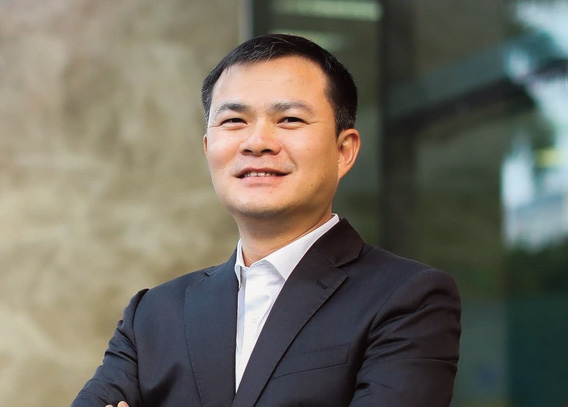
As a key digital infrastructure enterprise, Viettel is steadily affirming its pioneering approach by aligning technological development with sustainability goals.
A notable example is the Viettel IDC Hoa Lac Data Center, which has a capacity of 30 MW and houses 60,000 servers, making it the largest such center in Vietnam. The facility is designed to meet rapidly-increasing demand for data processing, particularly in the context of AI and advanced analytics. It operates with a Power Usage Effectiveness (PUE) of approximately 1.4-1.45, which is lower than the domestic average, and utilizes high-efficiency cooling systems. The center complies with multiple international standards on energy management, environmental impact, and occupational safety, while committing to renewable energy for 30 per cent of its electricity consumption.
Looking ahead, Viettel plans to deploy five large-scale data centers under an “AI Factory” model between 2026 and 2030 in key localities such as Ho Chi Minh City, Hanoi, Khanh Hoa province, and Dong Thap province. With a total projected capacity of around 350 MW, these facilities are expected to play a foundational role in developing Vietnam’s digital economy and emerging AI ecosystem. Beyond infrastructure, Viettel is also working with domestic partners to create a broader digital platform that supports innovation, productivity, and long-term growth.
Digital transformation is also reshaping FIEs in the logistics sector. Mr. Bernardo Bautista, General Director and Country Manager of DHL Express Vietnam, noted that “sustainable development is no longer merely a compliance requirement but is becoming a competitive advantage,” especially as global markets impose stricter environmental standards. In response, DHL is accelerating the adoption of automation, digital platforms, and advanced analytics to optimize operations and improve customer service.
The company’s GoGreen Plus solution exemplifies this shift, offering tools to measure and manage carbon emissions across supply chains. Through carbon reporting systems and online dashboards, businesses can assess environmental impact, identify inefficiencies, and optimize costs through data-driven decision-making. At the same time, DHL continues to invest in smart logistics infrastructure and workforce development, ensuring that digital transformation is accompanied by improvements in service quality, safety, and operational resilience.
Together, these initiatives highlight how digitalization is not only enhancing productivity but also enabling more transparent, efficient, and sustainable supply chain management; an increasingly important factor in attracting high-quality FDI.
Green transition as competitiveness
As sustainability standards tighten globally, integrating environmental considerations into business operations is no longer optional but essential for maintaining competitiveness and long-term growth.
DHL Express Vietnam has set a target of achieving net-zero emissions by 2050. Its roadmap includes transitioning to alternative fuels, deploying electric vehicles, and optimizing transport networks to reduce emissions. Notably, all warehouse operations in Vietnam have already reached carbon neutrality, reflecting early progress in reducing the environmental footprint of logistics activities. The next major challenge lies in cutting emissions from transportation, which accounts for the largest share of the sector’s total emissions.

As markets increasingly prioritize environmental factors, sustainable development is no longer merely a compliance requirement but is becoming a competitive advantage. With tightening green standards, integrating sustainable practices into business operations is now essential in maintaining market position.
At the same time, DHL is developing a broader ecosystem of sustainable logistics services, enabling businesses to access global delivery networks while choosing low-emission shipping options. Environmentally-friendly packaging solutions and carbon tracking and offsetting tools are also integrated, allowing companies to align operational efficiency with sustainability objectives.
In the brewery sphere, AB InBev Southeast Asia provides a clear example of how sustainability is being embedded into production processes. Mr. Craig MacLean, Regional Managing Director of AB InBev for Southeast Asia, emphasized that the company is aligning “production efficiency with environmental protection,” particularly in a market like Vietnam, where competition is intensifying and environmental standards are steadily rising. He noted that sustainability initiatives, especially those related to water resource management, are central to the company’s long-term strategy in the country.
AB InBev has implemented a range of advanced solutions to optimize water usage, including recirculation systems, water source segregation, and highly-automated Clean-in-Place (CIP) processes. Wastewater is treated using advanced biological and filtration technologies to ensure compliance with environmental standards before reuse or discharge.

With a long-term vision, AB InBev aims to build a sustainable production and consumption ecosystem where water resources are used efficiently and environmental factors are carefully considered throughout operations. This approach supports a balance between production activities and resource protection, contributing to sustainable value for communities and society.
In addition, the company applies real-time digital monitoring tools to track water consumption and detect inefficiencies early, enhancing overall resource management. These efforts have delivered measurable results. Between 2017 and 2025, AB InBev Vietnam improved water recirculation by 59 per cent, demonstrating a significant step toward more sustainable production.
As Mr. MacLean highlighted, this approach contributes to “a balance between production activities and resource protection,” supporting not only operational efficiency but also long-term value for communities and society.
Vietnam’s evolving FDI landscape underscores the convergence of green transition and digitalization as two mutually-reinforcing drivers. These trends are redefining competitiveness in the FDI sector, positioning Vietnam as a key hub for sustainable, technology-driven value chains and reinforcing its role in the global shift toward greener and more digitalized economic models.


 Google translate