


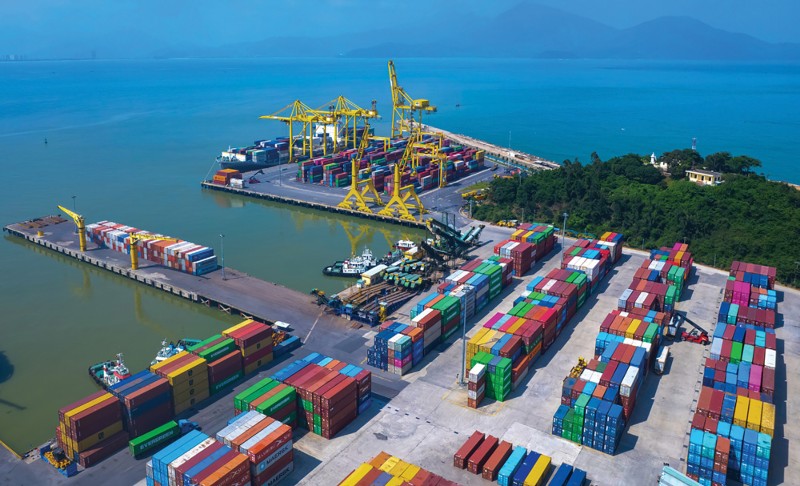
The US’s shift to a new tariff framework for Vietnamese exports has led to widespread confusion among many exporters. Some believe Vietnamese goods now face only an additional 12.5 per cent tariff when entering the US market, while others argue that the total tariff burden has risen above 30 per cent or even exceeds 40 per cent.
In reality, neither interpretation fully reflects the new policy. The tariff burden for each exporter is no longer determined by a single fixed rate but by multiple layers of duties, including the Most Favored Nation (MFN) tariff, additional duties under Section 301, trade remedy measures, and compliance with rules of origin.
More importantly, the US is shifting away from a “country-based” tariff approach toward a regulatory model centered on supply chain transparency and compliance with trade standards. This represents the more significant long-term change for Vietnamese exporters.
Understanding the new framework
One of the most common misconceptions is that the US has imposed a uniform tariff on all imports from Vietnam. In practice, the new framework does not operate this way. The tariff applicable to each exporter is determined by a combination of factors, including the product’s Harmonized Tariff Schedule of the US (HTSUS) classification, the applicable MFN tariff, anti-dumping (AD) duties, countervailing duties (CVD), Section 232 measures related to national security, as well as rules of origin and forced labor requirements.
As a result, two companies exporting the same product to the US may face entirely different tariff rates if they use different sources of raw materials, have different supply chain structures, or are subject to different trade remedy investigations. For that reason, the claim that “the US has imposed a 12.5 per cent tariff on Vietnamese goods” captures only a small part of the overall picture.
Under the new framework, businesses can no longer focus solely on the tariff schedule for individual products. They must evaluate the entire structure of their supply chains. Factors once considered internal business matters, such as raw material sourcing, supplier documentation, and the ability to verify product origin, can now have a direct impact on the tariff costs of exporting to the US market.
By focusing only on the additional 12.5 per cent tariff, many businesses risk overlooking the most important aspect of the new policy: its complete shift in legal foundation. Throughout 2025, US tariff policy toward Vietnamese goods was primarily based on the International Emergency Economic Powers Act (IEEPA). However, as of July 24, 2026, that framework has been replaced by measures implemented under Section 301 of the Trade Act of 1974.
According to the legal timeline outlined, the 20 per cent reciprocal tariff imposed under Executive Order 14257 expired following Executive Order 14389, issued on February 20, 2026. During the transition period, the US applied a temporary 10 per cent import surcharge under Section 122. That surcharge also ended when the Office of the US Trade Representative (USTR)’s final Section 301 determination officially took effect on July 24, 2026.
This means that after July 24, exporters no longer need to include either the 20 per cent IEEPA tariff or the temporary 10 per cent Section 122 surcharge when calculating their current tariff obligations.
Instead, the most common additional tariff is now the 12.5 per cent tariff imposed under Section 301, which is added to the applicable MFN tariff for each product classification unless the product qualifies for an exemption. The change demonstrates that the US is doing more than simply adjusting tariff rates. It is establishing a new legal framework for regulating imports, one that places greater emphasis on supply chain integrity, labor standards, and product origin.
Part of the equation
The current tariff calculation can be understood through a basic formula: Import tariff = Applicable MFN tariff for the product + the 12.5 per cent Section 301 tariff.
However, this represents only the baseline tariff obligation. After determining that initial rate, exporters must still assess whether their products are subject to AD duties, CVDs, Section 232 measures, or other sector-specific trade restrictions.
For example, a product with a 5 per cent MFN tariff would face a baseline tariff of 17.5 per cent. If the applicable MFN tariff is 20 per cent, the total baseline tariff rises to 32.5 per cent. For products already subject to a 27.5 per cent MFN tariff, the baseline rate immediately reaches 40 per cent, even before any additional trade remedy measures are applied.
It is important to stress, however, that these higher tariff levels do not apply across all Vietnamese exports. Such rates occur only for products with relatively high MFN tariffs or those subject to additional trade remedy measures. Rather than focusing solely on the 12.5 per cent Section 301 tariff, exporters need to review the full tariff obligations for each product line while reassessing rules of origin, supply chain structures, and compliance with US trade requirements before finalizing their export strategies.
Behind the tariff changes lies a broader shift in the US’s approach to international trade. Whereas tariffs were once used primarily as a tool for protectionism or revenue generation, the new framework suggests Washington is increasingly using tariff policy to reshape global supply chains.
According to the Office of the USTR, the latest Section 301 action reflects concerns that many trading partners have not established or effectively enforced mechanisms to prevent goods produced with forced labor, have failed to adequately curb illegal transshipments, and continue to have governance gaps in supply chain oversight.
As a result, the objective extends beyond raising import duties. The policy is designed to encourage trading partners to strengthen their regulatory frameworks, improve institutional governance, and adopt higher trade compliance standards. This also explains why the US is not applying a uniform tariff formula across all trading partners.
Some economies are subject to only a 10 per cent additional tariff. By contrast, the EU, Japan, South Korea, and Taiwan (China) operate under a “net of MFN” methodology, in which total tariff obligations are capped at a specified level rather than added directly to the MFN tariff.
Vietnam, however, remains subject to a system in which the additional 12.5 per cent Section 301 tariff is added directly to the applicable MFN tariff for each product category. While this may appear to be a technical distinction, it has significant implications for the competitiveness of Vietnamese exporters.
For products that already carry relatively high MFN tariffs, adding another 12.5 per cent directly results in a much steeper increase in total duties than that faced by competitors from the EU, Japan, or South Korea. The resulting gap in tariff costs is likely to widen, particularly in labor-intensive industries or sectors where baseline MFN tariffs are already elevated. In other words, Vietnam’s disadvantage lies not only in the additional 12.5 per cent tariff itself but also in the method by which the US calculates the overall tariff burden.
One of the biggest concerns among exporters since the new policy took effect has been reports that Vietnamese goods could face tariffs exceeding 40 per cent when entering the US market. While such claims are not inaccurate, they do not fully capture how the new tariff framework operates.
Tariff rates above 40 per cent arise only when multiple layers of duties apply to the same product. For example, if a product carries a 30 per cent MFN tariff, adding the 12.5 per cent Section 301 tariff raises the baseline tariff to 42.5 per cent. In many cases, exporters may also face AD duties, CVDs, or Section 232 measures related to national security, pushing the overall tariff burden even higher.
Crucially, these cumulative duties do not apply uniformly across all exporters or all products. The new framework suggests that competitive advantage will increasingly depend not only on production costs or labor expenses but also on companies’ ability to manage trade risks, ensure supply chain transparency, and comply with the legal and regulatory requirements of destination markets.
Exposed industries
Though the new tariff framework applies broadly to Vietnamese exports, its impact will vary significantly across industries. The textile and footwear sectors are expected to be among the hardest hit, because many product categories already carry relatively high MFN tariff rates. Adding the 12.5 per cent Section 301 tariff will substantially increase the total, eroding Vietnam’s price competitiveness in the US market.
Another disadvantage is that Vietnam does not currently benefit from tariff-rate quota (TRQ) arrangements linked to the use of US-sourced materials, unlike some competing exporters, including Bangladesh, Cambodia, Indonesia, and Malaysia. As a result, US importers may increasingly consider shifting orders to markets with more favorable tariff treatment.
For the wood and furniture industry, the challenge extends beyond higher tariffs. Exporters face increasingly stringent requirements for tracing the origin of raw materials, particularly in demonstrating the legality of timber sources. As sustainability standards and supply chain transparency requirements continue to tighten, compliance is likely to become a decisive factor in maintaining market share in the US.
Steel, aluminum, and other metal products remain the highest-risk categories. In addition to the Section 301 tariff, many products may also be subject to Section 232 tariffs as well as AD and CVD investigations. Even minor changes in the outcome of these trade cases could significantly increase tariff liabilities and undermine exporters’ competitiveness.
By contrast, electronics, machinery, and technology products are expected to face less direct impact because many already benefit from low or zero MFN tariffs. However, that advantage will be preserved only if companies can demonstrate sufficient value-added in Vietnam, provide full traceability for components, and avoid being classified as transshipment points for goods originating in third countries.
When focusing solely on the additional 12.5 per cent tariff, many businesses may conclude that rising export costs are the biggest challenge ahead. In reality, the new policy reflects a much broader restructuring of global supply chains, with tariffs representing only one element of that transformation.
According to economists, the US is seeking to build more transparent supply chains, reduce dependence on suppliers considered high risk, and require trading partners to strengthen oversight of forced labor, raw material traceability, and illegal transshipment. This also explains why Washington is not applying a uniform tariff framework to all trading partners. Economies viewed as having stronger institutional compatibility and more robust supply chain governance are afforded more favorable tariff treatment, while those that fall short of transparency and governance standards face higher tariff burdens and stricter regulatory scrutiny.
Global trade is therefore entering a new phase. Whereas businesses once competed primarily on labor costs, production efficiency, and export scale, competitive advantage is increasingly determined by the credibility of their supply chains.
In this environment, the ability to trace every shipment, document the origin of raw materials, maintain robust supplier management systems, and enforce internal compliance procedures will become competitive advantages on par with manufacturing capability. In other words, exporters must do more than sell a product, they must also demonstrate the integrity of the entire process behind it.
This trend extends well beyond the US. Other major markets, including the EU, Japan, and several other advanced economies, are also adopting increasingly stringent requirements related to environmental protection, labor standards, and sustainable development.
New trade environment
For Vietnamese businesses, the impact of the new US tariff framework will extend far beyond the additional duties imposed at the border. An even greater challenge will be the rising cost of compliance.
Exporters will need to invest more heavily in systems for managing rules of origin, maintaining supply chain records, auditing suppliers, tracing raw materials, and standardizing legal documentation to meet increasingly stringent US requirements. For many companies, particularly small and medium-sized enterprises (SMEs), these investments could represent a significant short-term cost. Yet failing to upgrade compliance systems early may ultimately prove far more costly if it results in the loss of access to key export markets.
The new requirements also demand a fundamental shift in corporate strategy. Whereas exporters once focused primarily on pricing, delivery schedules, and production capacity, they will increasingly need to incorporate legal risk management, supply chain due diligence, and data transparency into their core business strategies.
Industry associations will also need to play a more proactive role by helping businesses stay abreast of policy changes, improving access to information, establishing early-warning mechanisms, and sharing practical experience in responding to trade remedy investigations.
At the macro level, economists argue that Vietnam should develop a comprehensive risk map for its major export sectors, strengthen early-warning systems for trade remedy cases, and continue improving regulations governing forced labor, illegal transshipment, and supply chain transparency.
Such measures would not only help mitigate the impact of the US’s new tariff policy but also better position Vietnamese exporters to meet increasingly demanding standards in other major export markets.
Over the longer term, the most significant aspect of the new US tariff policy is not the additional percentage points exporters must pay, but the fact that Washington is changing the criteria by which it selects and evaluates trading partners. That shift also creates new priorities for Vietnam in future trade negotiations.



 Google translate