


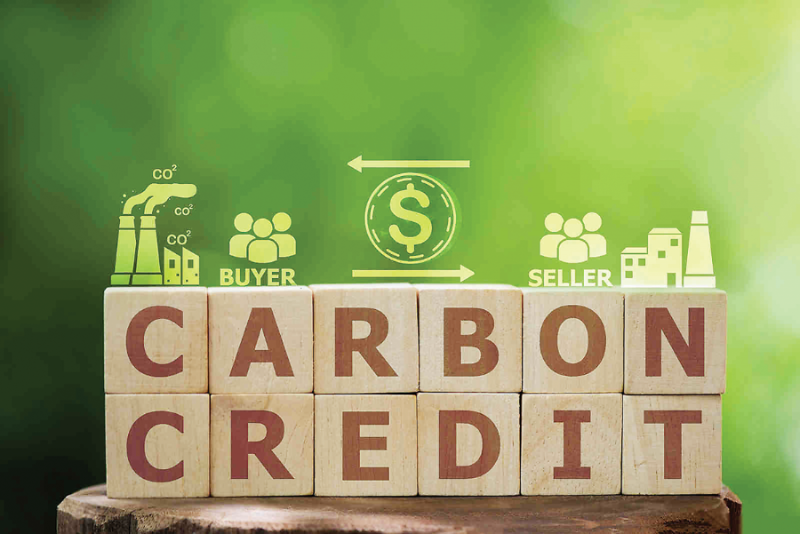
Vietnam is accelerating efforts to build a transparent, ethical, and internationally-linked carbon market as global standards tighten and economies across the Asia-Pacific region race to scale up green carbon solutions.
At the “Navigating the global & Vietnam’s carbon market: Post-COP30 insights and the way forward” policy dialogue, hosted by the University of Economics and Business at Vietnam National University, Hanoi (VNU-UEB) on November 25 and 26, policymakers, researchers, and private sector leaders from Canada, Australia, and multiple APEC (Asia-Pacific Economic Cooperation) economies examined the next phase of carbon market development after COP30 and the implications for Vietnam’s transition.
Shift towards quality
Vietnam’s ambition to shape a competitive carbon market comes at a moment of global transition. According to the World Bank’s “State and Trends of Carbon Pricing 2025” report, carbon pricing tools now regulate about 28 per cent of global emissions and generate more than $100 billion each year for climate action. This shift signals a new era in which carbon markets play a central role in national climate strategies, investment flows, and the broader green transition.
Vietnam has set 2029 as the year it will officially operate a domestic carbon market, following a pilot period from 2025 to 2028 under Decree No. 119/2025/ND-CP. During this pilot period, it will test a carbon credit exchange, strengthen technical guidelines, refine compliance tools, and prepare regulatory structures for eventual integration with international mechanisms. These efforts build on the 2020 Law on Environmental Protection, which established the legal foundation for carbon market development and positioned Vietnam to engage more deeply with global carbon governance.
Associate Professor Le Trung Thanh, Rector of VNU-UEB, noted that global carbon governance is undergoing a fundamental shift following COP30 in Brazil. With new guidance under Article 6.4 of the Paris Agreement and intensified scrutiny of credit quality, countries are being pushed towards stricter rules, more transparent systems, and greater accountability. For Vietnam, this global reset presents both an impetus and an opportunity. Dr. Thanh emphasized that updating knowledge, strengthening capacity, and engaging in policy dialogue have become essential for policymakers, businesses, and academic institutions alike.
Mr. Nguyen Tuan Quang, Deputy Director General of the Department of Climate Change at the Ministry of Agriculture and Environment, said Vietnam must build a carbon market that delivers credible, verifiable emissions reductions. With the world shifting from offsetting towards real contributions, investors and regulators are increasingly focused on environmental integrity, especially in forestry and nature-based credits. He stressed that Vietnam will focus on producing high-quality credits that can compete globally, avoid reputational risk, and ensure long-term benefits for the national interest.
He outlined three areas that Vietnam will prioritize as it prepares for full market operation. First, the country must bring its regulatory framework into line with the stricter global standards expected after COP32. Second, it must enhance the mobilization of private finance. Third, the development of a strong measurement, reporting, and verification (MRV) system will be a central requirement. Technology, financial rules, and transparency mechanisms will form the backbone of market credibility and ensure that Vietnam’s credits meet expectations from international buyers.
Vietnam’s strategic direction is also linked to its broader economic transformation. A well-functioning carbon market can encourage low-emission production models, promote energy efficiency, and draw investment into green sectors. By emphasizing quality and institutional integrity at the outset, Vietnam aims to avoid pitfalls that have weakened markets elsewhere and build a system aligned with both national priorities and global best practice.
Expanding global opportunities
Regional experience, especially from APEC economies, offers some of the most relevant guidance for Vietnam’s carbon market development. Professor Pham Thu Thuy from Flinders University in Australia presented research showing that APEC economies account for 60 per cent of global GDP, 70 per cent of greenhouse gas emissions, and 30 per cent of the world’s nature-based carbon credit supply.
Despite immense potential, the green carbon market in the region remains underdeveloped. Vietnam, Indonesia, and Myanmar host most of the world’s mangrove carbon projects, but only a fraction of these meet international standards. Many other ecosystems, including wetlands, reservoirs, coastal sediments, and marine vegetation have not been fully integrated into credit-generation strategies. According to Professor Thuy, this limited scope reflects uneven technical capacity, inconsistent definitions, and gaps in policy alignment across countries.
She emphasized that carbon flows from land to ocean are often overlooked, leading to miscalculations that overvalue terrestrial carbon stocks and undervalue marine systems. This gap represents a major obstacle in planning effective blue-carbon strategies. At the same time, there is significant potential for sectors such as food production, tourism, and transportation to support green carbon financing.
Policy integration remains uneven. Some APEC economies operate full compliance systems, such as Australia, while others rely entirely on voluntary frameworks, like Singapore, Taiwan (China), and Thailand. Countries such as Indonesia have adopted global standards, while others prioritize regional cooperation platforms. Advanced technologies, including AI-supported monitoring and satellite-based systems, are beginning to reduce project costs and increase data accuracy, but further development is needed before they can be used consistently across countries.
Meanwhile, Professor Terry Sunderland from the University of British Columbia in Canada examined market frameworks in his home country as well as Colombia and Tanzania. His analysis showed that institutional design is the determining factor in whether a carbon market earns investor trust. Examples of “paper carbon” in poorly-governed systems demonstrate the consequences of weak oversight. Canada has strong foundations but lacks long-term clarity; Colombia faces challenges with REDD+ risks such as leakage and permanence; and Tanzania has ambitious regulations but struggles with approval delays, high certification expenses, and transparency issues. For Vietnam, these examples highlight the importance of consistent enforcement, predictable rules, and adequate capacity.
Path forward
A successful carbon market will ultimately depend on private sector engagement, especially in nature-based solutions. Mr. Todd Berkinshaw, CEO of NatureCo, spoke of the company’s work supporting large-scale ecosystem-restoration projects across Africa, Asia and Latin America. It bridges investors, non-government organizations (NGOs), communities, and credit purchasers, using models that include blended finance, long-term credit-purchase agreements and multi-stakeholder partnerships. NatureCo’s approach is grounded in community engagement and equitable benefit-sharing; principles that resonate with Vietnam’s own priorities.
Vietnam has multiple avenues to attract investment. First, direct private investment in exchange for high-quality credits can support large restoration programs. Second, blended-finance structures can reduce early-stage risk and make projects more attractive to investors. Third, long-term purchase agreements from corporate buyers become feasible once Vietnam establishes a clear pricing mechanism. And fourth, public climate funds can support cases in which the State retains credits for compliance systems or bilateral climate agreements.
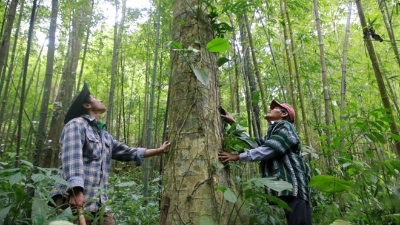
H.E. Jim Nickel, Ambassador of Canada to Vietnam, highlighted ongoing cooperation through the Carbon for Good project, led by CARE, CIFOR, and the University of British Columbia. The initiative supports inclusive forest carbon development in Lai Chau, Son La, and Phu Tho provinces in Vietnam’s north and connects provincial-level efforts with national policy frameworks. Canada’s expertise in sustainable forestry, monitoring technology and academic research is creating new pathways for collaboration with Vietnamese agencies, businesses, and researchers.
As global standards become stricter and expectations for environmental integrity rise, Vietnam faces a pivotal moment, as it is preparing not only to participate in global carbon markets but also to shape them in ways aligned with its national priorities and long-term development goals.





 Google translate