


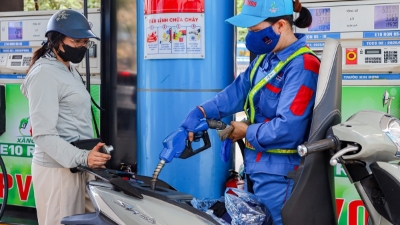
A new draft decree on fuel trading aims to operate under a market mechanism with state management, granting pricing authority to enterprises, enhancing the capacity of key traders, and ensuring a stable supply.
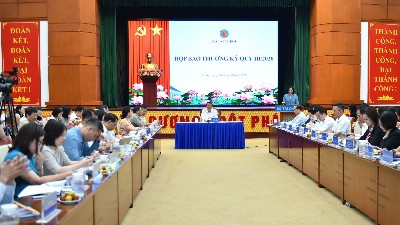
At a regular quarterly press conference held by the Ministry of Industry and Trade on October 7, Ms. Nguyen Thuy Hien, Deputy Director of the Domestic Market Management and Development Department (the Ministry of Industry and Trade), stated that fuel trading significantly impacts people's lives, business activities, and social welfare.
Following the Government's directives, the draft decree on fuel trading, which, upon its promulgation, will replace existing decrees, has undergone four rounds of consultation with government members and continues to seek input from affected parties for completion.
On September 30, the Ministry of Industry and Trade held a broad consultation conference with the participation of production enterprises, key traders, distributors, retailers, and related parties. The draft's content was thoroughly analyzed and discussed. Based on the maximum absorption of feedback, the Ministry is urgently finalizing the draft to submit to the Government.
Regarding control tools, monitoring the formation and management of fuel prices to be set by enterprises, especially when global prices fluctuate but enterprises have not promptly adjusted accordingly, Ms. Hien stated that the draft decree's overarching goal is for fuel prices to operate closely following a market mechanism with state management. The draft grants pricing authority to enterprises, but price calculations must adhere to the formula prescribed by the state.
Enterprises must declare the pricing formula, constituent factors, and explain cost fluctuations on the price database system built and managed uniformly nationwide by the Ministry of Industry and Trade.
Regarding the automatic warning mechanism, Ms. Hien mentioned that the software system is designed with features to alert unusual fluctuation factors. This data is promptly linked to local Departments of Industry and Trade and the Market Management force to serve regular inspections and promptly detect enterprises with unreasonable declarations or unexplained price increase/decrease factors.
Concerning the principles and basis for enterprises' price adjustments, the State will not regulate prices on a fixed weekly cycle as before. Enterprises are allowed to determine prices based on actual business costs and actual shipments.
However, price adjustments must have valid grounds when price-forming factors fluctuate (input costs, profits, standard costs, etc.). Among these, standard costs remain a factor managed by the state, being a framework for enterprises to apply in the formula. Additionally, enterprises must base their actions on the state's price stabilization scenarios when necessary.
Currently, retail fuel prices in the country are often calculated from purchase prices determined by traders based on actual business conditions. However, public opinion suggests that this calculation method leads to the principle of "buy high, sell high, buy low, sell low" according to reality and does not promptly reflect daily global price fluctuations, potentially causing discrepancies and the risk of fuel smuggling abroad.
Addressing this issue, Ms. Hien stated that fuel stored in tanks, reservoirs, and containers makes it challenging to rigidly regulate the precise tracking of each batch purchased and sold for pricing. The goal of fuel price management is to move towards a transparent, competitive market mechanism closely following global price signals, with the highest priority being energy security and supply assurance.
Regarding the regulation that key fuel traders must meet a minimum total supply of 300,000 m3/tons per year, and if not meet for two consecutive years, their licenses will be revoked, Ms. Hien stated that this regulation aims to enhance the actual capacity of key enterprises, ensuring national energy security.
Currently, more than half of the key traders meet this criterion. For those who have not yet met it, there is a roadmap until 2027 to allow time for investment in infrastructure, storage facilities, and expanding distribution networks. "The regulation does not aim to immediately eliminate enterprises but to motivate units to enhance their competitive capacity," Ms. Hien affirmed.
Regarding concerns that key traders might dominate prices to the detriment of retail businesses, Ms. Hien stated that the new draft decree not only grants pricing authority to key traders but also to independent distributors (estimated at over 10,500 enterprises), ensuring fair competition and diverse supply sources in the market. The draft is also designed to reduce intermediary levels from three to two, making the market more transparent and streamlined.
In response to feedback, the drafting committee has added specific regulations to prevent and strictly handle anti-competitive agreements and unfair competition practices in accordance with the Competition Law.
Regarding ensuring fuel supply amid complex geopolitical conflicts, especially in the Middle East, Ms. Hien stated that the Ministry of Industry and Trade has proactively developed response scenarios early (since the tensions in March-April). Currently, domestic supply is fully assured. Key enterprises closely follow the total supply allocation progress; inventory reserves at refineries and storage systems are at high levels.
Regarding current domestic fuel price management, it continues to closely follow global market developments. The Ministry of Industry and Trade and the Ministry of Finance will coordinate to flexibly manage tools: continue proposing and implementing tax reduction policies (such as environmental protection tax, value-added tax, import-export tax as directed by the Government), and use the Price Stabilization Fund flexibly and timely when the market experiences significant fluctuations.
"From now until the end of the year, the overall balance of fuel supply is fundamentally assured, fully meeting the needs for business production and people's daily life," Ms. Hien affirmed.

 Google translate