


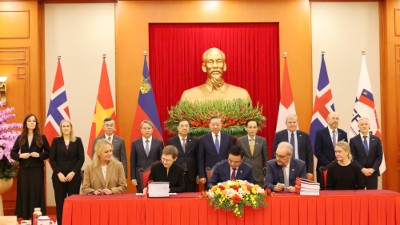
On October 18, Vietnam and the European Free Trade Association (EFTA) of which Norway is a member state, officially signed a Free Trade Agreement, marking a new milestone in economic and trade cooperation between the two sides.
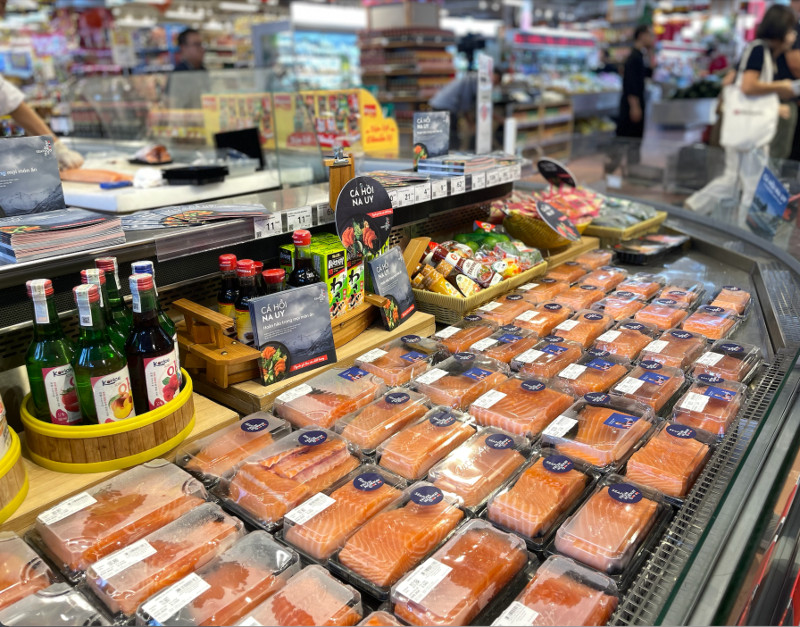
For Norway, this development is significant in terms of expanding the market for seafood exports, a category that currently accounts for the bulk of the country’s total commodity exports to Vietnam.
The signing of the agreement comes at a time when demand for high-quality seafood in Vietnam continues to rise, particularly for products with transparent origins that meet rigorous food safety standards. This creates a favorable environment for Norwegian seafood companies to strengthen their market position, develop distribution networks, and gain greater access to the Vietnamese market.
H.E. Ms Astrid Bergmål, State Secretary of the Norwegian Ministry of Foreign Affairs said that over the past 55 years, Vietnam and Norway have built a strong partnership that has evolved alongside Vietnam’s own development.
"Trade plays an increasingly important role in this relationship, with Norwegian salmon and seafood having become familiar staples in the Vietnamese market," she added. "The recently signed free trade agreement will reduce tariffs, facilitating smoother trade and making business operations more predictable. Consequently, Norwegian seafood, especially salmon, will become more competitive in Vietnam, and I hope this will ultimately bring high-quality Norwegian salmon to the tables of Vietnamese consumers."
In addition, the Norwegian Seafood Council (NSC) also welcomes the recently signed VEFTA. The NSC believes that the elimination of import duties on Norwegian salmon, the simplification of customs procedures, and enhanced cooperation between relevant authorities will yield greater benefits for both trade partners and Vietnamese consumers.
Specifically, the elimination of import duties will create a more level playing field for Norwegian salmon in Vietnam. Currently, competing suppliers already benefit from preferential treatment under various free trade agreements, whereas Norwegian salmon remains subject to import duties ranging from 10 per cent to 15 per cent.
Furthermore, the agreement will simplify import procedures and establish a clearer coordination mechanism among relevant authorities, facilitating smoother customs clearance for seafood and allowing businesses to plan their shipments and deliveries more proactively.
These changes will enable Vietnamese importers and distributors to plan logistics and deliveries more effectively, improve inventory management, and reduce costs incurred from delays.
A more stable supply will also assist retailers and restaurants in maintaining a consistent offering of Norwegian seafood, allowing them to be more proactive in planning promotional activities and developing their menus.
For consumers, more efficient import and distribution processes not only help ensure a consistent supply of Norwegian seafood but also help maintain product quality during transit. Lowering trade costs could also make it easier for more Vietnamese families to access seafood from reliable sources at more affordable prices.
According to Ms Åshild Nakken, Director for Southeast Asia, Norwegian Seafood Council, the agreement opens up new opportunities for Vietnamese partners and facilitates broader cooperation, bringing Norwegian seafood to a wider consumer base.
She noted that this is an opportune time to strengthen market connections, as Vietnamese consumers are increasingly focused on the nutritional value, origin, and quality of their food. Given its inherent strengths, Norwegian seafood is well-positioned to meet these consumer trends.
In fact, despite being subject to import tariffs, Norwegian salmon remains highly popular in Vietnam. Data from the NSC shows that imports of Norwegian salmon into Vietnam have reached over 22,400 tonnes—a figure exceeding the combined total of imports from all other major suppliers.
This outcome highlights the appeal of the Vietnamese market for Norwegian salmon, while also reflecting consumer confidence in the product’s quality, origin, and food safety control systems.






 Google translate