


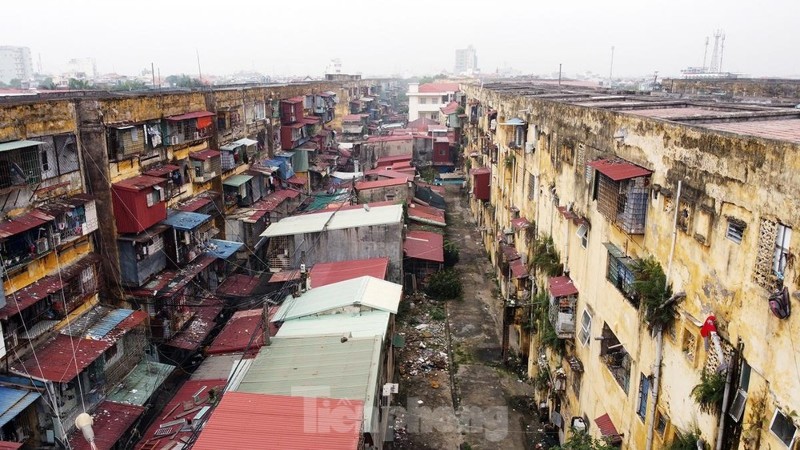
The Hai Phong City People's Council has officially approved a resolution focused on resident relocation, urban renovation, and the reconstruction of degraded apartment buildings. The project covers 177 aging apartment blocks, affecting approximately 9,193 households.
The initiative aims not only to move residents out of unsafe conditions but also to provide stable, secure housing. It seeks to combine reconstruction with urban beautification, spatial restructuring, and the optimization of land use while supplementing technical and social infrastructure.
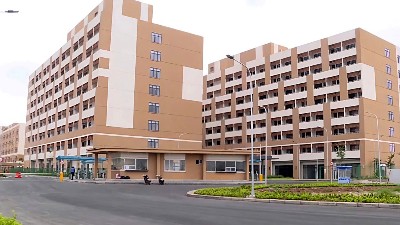
The project will be implemented in phases—from 2026 to 2028 and 2028 to 2030—with a vision toward 2030. Priority will be given to people with meritorious services to the national revolution, policy-beneficiary families, and vulnerable groups.
To achieve these goals, Hai Phong has outlined four primary solution groups:
First, incentivizing private investment for the renovation and reconstruction of old apartment buildings.
Second, leveraging and expanding existing policies issued by local authorities (Resolution 04 and Scheme 05) to link urban renewal with the development of social housing specifically for resettlement purposes.
Third, developing a local housing fund for lease under Decree 302/2025/ND-CP, which includes rental subsidies for specific target groups.
Fourth, in cases where other supplies are insufficient, the city will use public funds to build rental housing. This will prioritize State-managed land and serve households requiring emergency relocation or those unable to afford buying or rent-to-own options.
According to assessments by the Hai Phong People’s Committee, the majority of the city’s old apartment blocks are only two to five stories tall and lack elevators. Units are typically cramped, ranging from 15 to 30 square meters, with outdated functions and a lack of self-contained facilities.
The report also highlighted that unauthorized "iron cage" balcony expansions are widespread. These additions have increased the weight load on already weakened structures, severely compromising fire safety and emergency exit routes. Furthermore, the electrical, water, and drainage systems, along with internal roads, have significantly deteriorated or are no longer fit for use.




 Google translate