


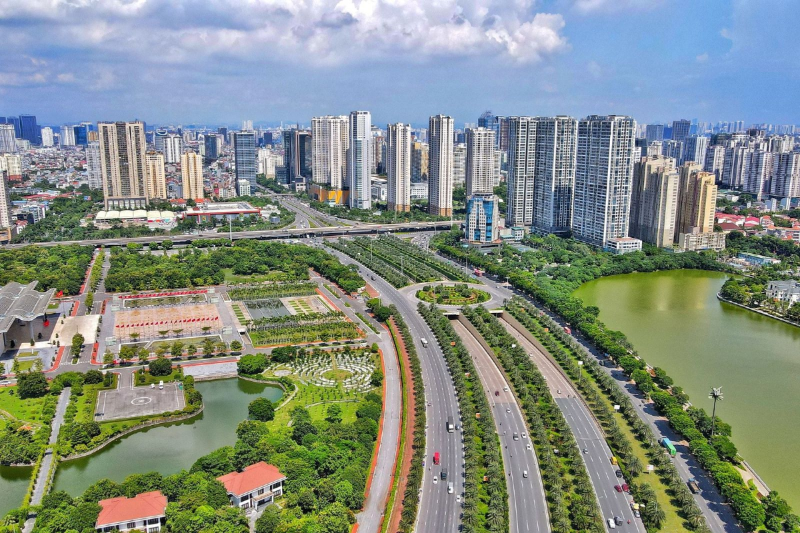
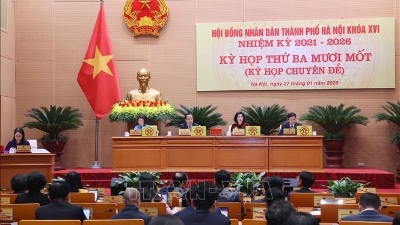
The 17th Hanoi People's Council has officially passed a Resolution regarding the city's five-year public investment plan for the 2026–2030 period.
According to the Resolution, Hanoi will concentrate its public investment capital on large-scale projects with high spillover effects. Key priorities include the urban railway (metro) system, inter-regional transport infrastructure, and national key projects. Significant funding will also be channeled into science and technology, innovation, digital transformation, education, training, and culture.
The city aims for public investment to account for approximately 20% of the total social development investment, while striving to achieve a 100% disbursement rate of the assigned plan. Resource allocation must align strictly with the Planning for the capital city development with a long-term vision, ensuring that investments are concentrated rather than fragmented, enhancing capital efficiency, and maintaining tight control over investment objectives.
A core focus of this strategy is to resolve developmental "bottlenecks," particularly in transport, dike systems, and irrigation to adapt to climate change. Simultaneously, the plan promotes a multi-center urban development model and strengthens regional and inter-provincial connectivity.
The total medium-term public investment for Hanoi during 2026–2030 is set at nearly VND864.7 trillion (nearly $32.7 billion).
Funds will be allocated according to a clear order of priority: national priority projects, urgent projects, and target programs.; repayment of advanced capital and payments for completed projects; and official Development Assistance (ODA) programs and Public-Private Partnership (PPP) projects.
For new projects, the city will prioritize breakthrough works capable of resolving major "bottlenecks," specifically the urban railway system, regional connectivity projects, science and technology development, digital transformation, and high-quality human resource training.
To ensure funding, the city will implement solutions to mobilize resources, such as the efficient management of public assets, land fund development, and the promotion of PPP models. Additionally, Hanoi plans to practice thrift in recurring expenditures to prioritize capital for development investment.

 Google translate