



The Hanoi-Moscow Business Forum took place on December 1 in Hanoi as part of the program “Moscow Days in Hanoi” and in celebration of the 75th anniversary of diplomatic relations between Vietnam and Russia.
The forum focused its discussions on economic and investment cooperation between Vietnam and Russia in general, and between the two capital cities in particular.
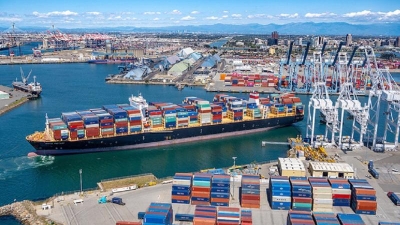
According to the latest data, Vietnam-Russia trade volume reached $4.59 billion in 2024, up 26% from 2023. This strong rebound demonstrates the high complementarity and resilience of both economies, particularly in industrial technology and logistics.
HANOI PRIORITIZES HIGH-TECH INVESTMENT FROM RUSSIA
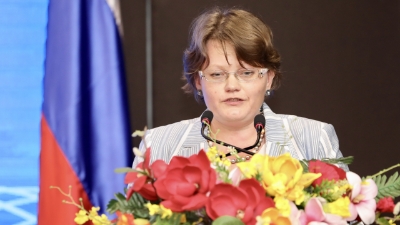
Speaking at the forum, Mr. Nguyen Manh Quyen, Vice Chairman of the Hanoi People’s Committee, affirmed that Hanoi highly values Russian businesses and is committed to providing the most favorable conditions for their long-term operations in Vietnam's capital city. "As the nation’s political and administrative center and one of Vietnam’s two largest economic hubs, Hanoi offers a transparent business environment, synchronous infrastructure, and a dynamic young workforce," he said.
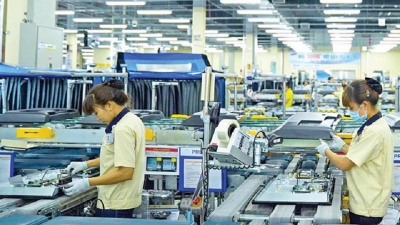
According to Mr. Quyen, to date, Hanoi has attracted $167.5 million in FDI from Russia, mainly in manufacturing, information technology, accommodation and trade services, and construction. While the current scale remains modest compared to potential, the figure lays an important foundation for the next phase of cooperation.
The city is giving priority to high-tech industries, digital transformation, and AI-powered smart electronics, precision engineering, automation, biotechnology, cybersecurity, and digital data systems - areas in which Russia has considerable strengths.
Hanoi also proposes restoring and expanding direct flights between the two cities, simplifying trade and tourism procedures, and enhancing the movement of goods, talent, and investment between the two sides. Green investment and environmentally friendly projects with strong commitments to technology transfer and workforce development are especially encouraged. “Hanoi stands ready to act with the highest political determination to accompany Russian enterprises throughout their operations in the capital,” Vice Chairman Quyen emphasized.

MOSCOW SEEKS TO EXPAND COOPERATION IN TRADE, TECHNOLOGY, AND LOGISTICS
Mr. Sergey Cheremin, Minister of the Moscow Government and Head of the Department for External Economic and International Relations, noted that Moscow has maintained stable economic growth despite global geopolitical volatility, while dramatically reducing its reliance on oil and gas - from about 40% to below 5% of the city’s economic structure. With accumulated FDI exceeding $250 billion, Moscow continues to be a leading financial and technological hub in the Eurasian region.
Trade between Moscow and Vietnam grew by nearly 30% in 2024 to approximately $2.5 billion, signaling substantial cooperation opportunities for 2025-2030. Mr. Cheremin underscored Moscow’s economic shift toward high-tech industries, creative sectors, pharmaceuticals, aerospace, logistics, and artificial intelligence.
A highlight of his remarks was Moscow’s advanced smart-city model. The city operates one of the fastest-growing metro systems in the world, having added 120 new stations since 2011, with plans to reach 517 stations by 2030. Moscow also runs Europe’s largest electric-bus fleet, significantly reducing CO₂ emissions and advancing green mobility.
The development of a full 3D digital twin of the city enables transparent, accurate monitoring and planning of urban growth. More than 100 public services currently integrate AI, covering healthcare, transportation, education, and social welfare - forming a highly efficient urban digital ecosystem.
Mr. Cheremin emphasized that cooperation between Hanoi and Moscow has deepened from traditional ties to economic and technological collaboration, becoming one of Russia’s most effective interregional partnership models. Beyond trade, Moscow is eager to expand cooperation in logistics, aviation hubs, digital transformation, and high-tech manufacturing - aligning with Hanoi’s urban-economic development priorities.

STRENGTHENING GOVERNMENT–BUSINESS LINKAGES FOR BREAKTHROUGH RESULTS IN 2025–2030
Mr. Ivan Nesterov, Minister-Counselor of the Russian Embassy in Vietnam, affirmed that Vietnam remains a priority partner in Russia’s Asia-Pacific cooperation strategy. Two-way trade rose over 20% last year, reflecting strong political trust and economic recovery on both sides.
Mr. Nesterov highlighted several key pillars for expanded cooperation: energy-particularly clean-energy transition and civil nuclear technology; science and technology with a focus on high-quality human-resource training; industrial production, including opportunities related to GAZ-brand vehicles; and new logistics corridors to reduce transportation risks and costs. Both sides are also enhancing the use of local currencies in trade, which he described as a strategic step toward greater commercial autonomy.
During thematic sessions, representatives from Moscow’s Central and Western Administrative Districts presented major achievements in urban planning, infrastructure modernization, housing redevelopment, and public-space design. The Central District shared updates on its large-scale “Renovation” program replacing outdated housing blocks with modern residential complexes, while the Western District - home to leading research institutes and universities - highlighted its potential for scientific and educational cooperation with Hanoi.
The Moscow Department of Labor and Social Protection introduced the “Professions of the Future” program, forecasting high-growth occupational fields over the next 10-20 years and proposing vocational-training collaboration with Vietnam. Moscow’s healthcare sector presented its “Flagship Medical Centers,” where AI is widely used in diagnostics, emergency care, and health-record management - a model that attracted significant interest from Vietnamese delegates.
In the business-matching session, Vnukovo International Airport outlined its plan to expand logistics links with Southeast Asia and proposed new cargo routes connected to Vietnam. Pacific Land JSC introduced a high-tech biotechnology park project in Hanoi, while Antey-Sever discussed cooperation opportunities in seafood processing, cold-storage technology, and export.
MOVING TOWARD A NEW STAGE OF SUBSTANTIVE AND EFFECTIVE COOPERATION
At the conclusion of the forum, Vietnamese and Russian agencies and businesses agreed to enhance cooperation across several key pillars, including increased exchange of government and business delegations, the establishment of sector-specific working groups on high-tech, smart cities, logistics, and healthcare, the early restoration of direct flights between Hanoi and Moscow, the expansion of human-resource training and educational partnerships, and the organization of regular thematic business-matching events to facilitate market entry.
The Vietnam-Russia Business Forum 2025 in Hanoi was not only a symbolic anniversary event but also a strategic milestone that positions the two capitals - and the two nations - for deeper, more practical, and more effective cooperation in the coming years.
With 75 years of trusted partnership and a shared vision centered on technology and innovation, Hanoi–Moscow cooperation is poised to enter a new phase-more dynamic, more substantive, and more conducive to regional stability and prosperity.
 Google translate