


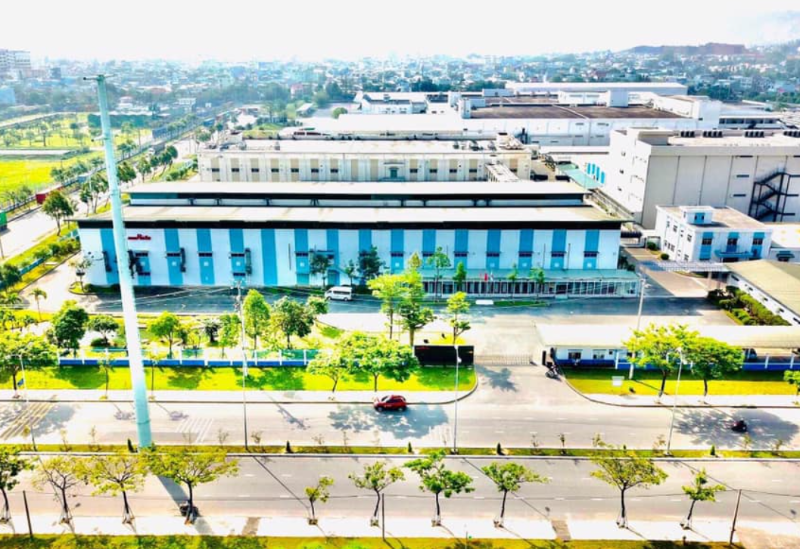
Da Nang will focus on attracting Japanese investment into several strategic sectors, including the international financial center, a free trade zone, high-tech industries, semiconductors, Artificial Intelligence (AI), the Internet of Things (IoT), logistics, high-tech agriculture, and premium education, healthcare, and tourism.
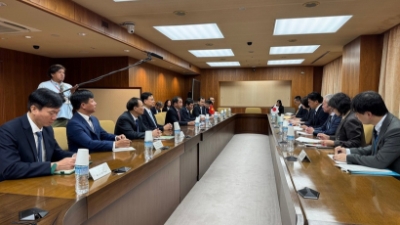
Mr. Pham Duc An, Chairman of the Municipal People’s Committee, shared these priorities during the "Meeting with Japanese Businesses – Spring 2026" event held on the evening of March 13 in the central city.
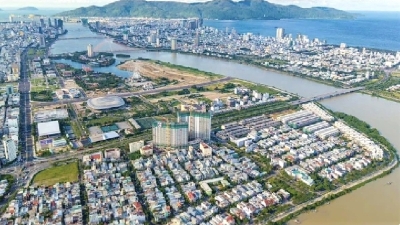
The city aims to become a major socio-economic hub for both Vietnam and Southeast Asia by 2030. Looking further ahead to 2045, Da Nang envisions itself as a smart, ecological urban area and a regional center for innovation.
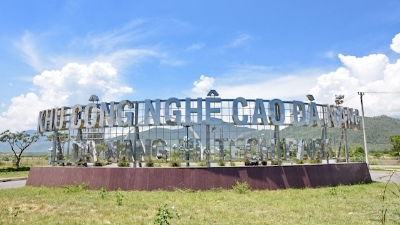
Japan is currently one of the top three foreign direct investment (FDI) contributors to Da Nang, with 301 active projects totaling more than $1.22 billion in registered capital. Notably, the Da Nang Hi-Tech Park and various industrial zones host 69 Japanese projects with a combined investment of approximately $835 million.
The Japanese business community has had a presence in Da Nang since the early 1990s and continues to expand. One of the pioneering investors is the Vietnam-Japan Chip Corporation (Vijachip), which has operated successfully since 1993.
In recent years, several large-scale Japanese corporations have become hallmarks of the city’s investment landscape. These include Murata Manufacturing, which produces electronic components at the Da Nang Hi-Tech Park; Mabuchi Motor, a global leader in electric motor manufacturing; and the Mikazuki Group, the developer behind the landmark Mikazuki Japanese Resorts & Spa.
Japanese enterprises are active across diverse sectors—including high-tech manufacturing, Information Technology (IT), services, tourism, and real estate.
To maintain a favorable investment climate, Da Nang has implemented various support mechanisms, such as developing specialized industrial parks, maintaining regular dialogues to resolve business grievances, and fostering cooperation in human resource training. The city has also expanded its direct partnerships with Japanese localities, including Nagasaki, Sakai, Yokohama, Kawasaki, Kisarazu, and Kinokawa.
Beyond FDI, Japan remains a vital partner in major Official Development Assistance (ODA) projects. Strategic infrastructure such as the Hai Van Tunnel, Tien Sa Port, and the Da Nang – Quang Ngai Expressway were made possible through Japanese cooperation, significantly enhancing the logistics capacity of Central Vietnam.
Looking toward the future, the trade and service sectors are expected to receive a boost from the upcoming AEON Mall in Thanh Khe District. Furthermore, plans to launch direct flights connecting Da Nang with Narita and Osaka are anticipated to provide fresh momentum for bilateral economic cooperation.


 Google translate