



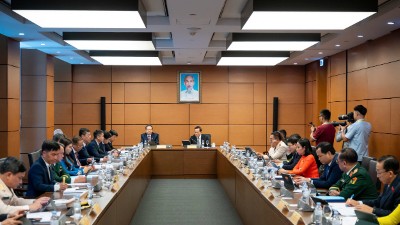
The Hanoi City Police on December 8 organized a workshop to seek opinions on finalizing a draft project for the development of Hanoi as a smart city by 2030, with a vision toward 2045.
Accordingly, the draft project is built upon a modern four-layer architecture comprising: smart infrastructure; centralized urban data; digital platforms; and a smart application ecosystem, with the Intelligent Operation Center (IOC) serving as the "brain."
"If implemented in the right direction, the Project will create a solid foundation for digital government, foster innovation and sustainable development for the Capital, and contribute to the effective realization of the goals of Politburo's Resolution 57," said Lieutenant General Nguyen Thanh Tung, Director of the city Police.
Presenting a general report on the draft, Mr. Nguyen Tuan Huy, Deputy Head of the Technology Department at Mobifone Corporation, stated that the project is developed based on the Smart City 3.0 model. It adheres to Decree 269, views data as the center, considers citizens and businesses as the primary beneficiaries, and aligns with green and sustainable development goals.
The project aims to fully establish the four-layer architecture by 2030; put into operation a two-tier IOC (at both City and ward/commune levels); standardize and integrate data; and prioritize resolving five groups of urgent issues: flooding, traffic congestion, environment, security and order, and food safety. It also seeks to build appropriate mechanisms, organizational models, and implementation roadmaps through 2045.
However, the existing challenges Hanoi faces in implementing the project include traffic congestion, flooding, environmental pollution, infrastructure overload, urban safety and order, and food safety. The draft also analyzes the experiences of leading cities such as Singapore, Seoul, Dubai, and Zurich, as well as domestic localities like Ho Chi Minh City, Da Nang, and Hue.





 Google translate