


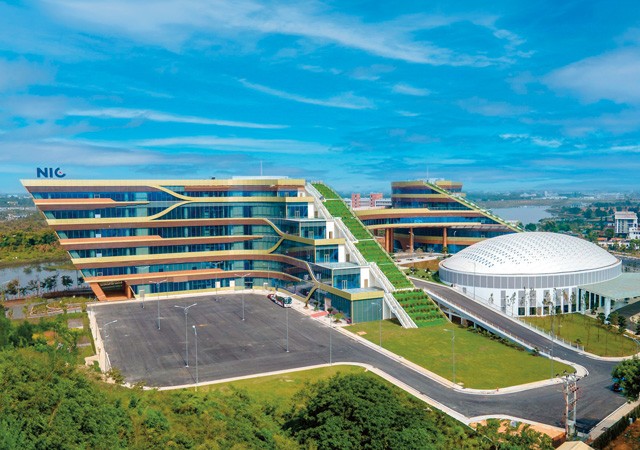
The world is entering a new era of development, in which science, technology, and innovation increasingly determine a nation’s competitiveness and standing. Technologies such as AI, semiconductors, quantum computing, robotics, and cybersecurity, among others, are opening up new avenues for growth while simultaneously necessitating enhanced capabilities in research, technological mastery, and commercialization.
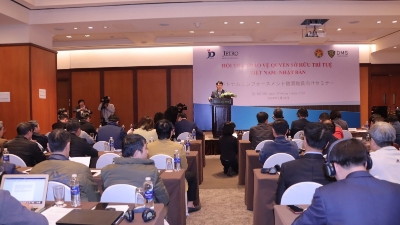
Addressing the Vietnam-Japan Innovation Forum, held on August 13 at the Vietnam National Innovation Center (NIC) in Hanoi, Mr. Hoang Trung Hieu, Deputy Director of the Center, said Vietnam is accelerating the development of science, technology, innovation, and digital transformation, establishing these fields as key drivers of economic growth. Along this journey, Japan stands as one of Vietnam’s most important partners. “Vietnam-Japan cooperation in science, technology, and innovation will increasingly deepen, evolving from mere connection to collaboration, and from collaboration to joint development and the co-creation of new value,” he said.
Heart of cooperation
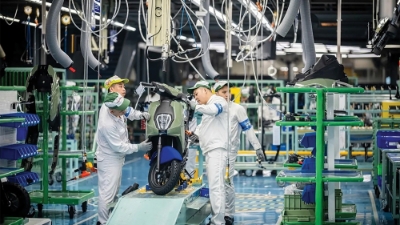
Covering an area of 1,500 ha, the Hoa Lac High-Tech Park (HHTP), which houses the NIC, has attracted more than 100 investment projects, including 16 foreign projects with total investment of $9.5 billion, creating jobs for approximately 25,000 workers, according to the Management Board of Hanoi High-Tech and Industrial Parks. In line with Hanoi’s strategic vision, the HHTP is positioned not merely as a high-tech manufacturing zone but also as a national innovation hub, a growth engine for the capital’s western region, and a core center for high-tech knowledge.
Hanoi has also identified seven key prerequisites to develop the HHTP into a facility comparable to international high-tech parks: clustering leading universities and research institutes; attracting corporate R&D centers; developing intermediary organizations alongside manufacturing and testing facilities; bringing together public, private, and venture capital funds; establishing a legal framework for testing and regulation; developing modern, sustainable infrastructure; and enhancing comprehensive transport connectivity.
The HHTP’s outstanding advantages include its favorable location, open administrative procedures, modern and synchronized infrastructure, a science and technology ecosystem, and a high-quality workforce, according to Mr. Vu Quoc Huy, Deputy Head of the Management Board of Hanoi High-Tech and Industrial Parks. “This is also the foundation for Hoa Lac to attract investment interest from Japanese partners,” he said.
Hoa Lac has attracted five direct investment projects from Japanese enterprises with total investment exceeding $270 million, in fields such as automotive R&D, electronics, precision components, electric motors, and industrial manufacturing based on Japanese standards.
The Japanese Government has supported the NIC through the “Vitalizing the Vietnam National Innovation Center” project, in cooperation with the United Nations Development Programme (UNDP).
Ms. Ramla Khalidi, UNDP Resident Representative in Vietnam, said that, at its heart, the project is about building connections, by connecting government, academia, and business; connecting startups with investors and markets; and connecting innovators in Vietnam and Japan so that ideas, knowledge, and technology can move more quickly from the lab to the marketplace. “Through the NIC and the wider HHTP, we are helping to build the infrastructure, skills, and partnerships that make these connections possible,” she added. “We also want the benefits to extend well beyond the HHTP, supporting innovation centers, businesses, and entrepreneurs across Vietnam.”
As part of the project, the Vietnam-Japan Innovation Hub is to be launched at the NIC. “We envision this becoming a platform for substantive Vietnam-Japan technology collaboration - a space where enterprises, research institutes, universities, and experts from both nations can engage in joint research, testing, training, incubation, and investment networking, ultimately leading to the development of specific R&D programs and technology projects,” Mr. Hieu said. “We aim for the NIC at HHTP to become a convergence point for Vietnamese and Japanese technology, intellect, and resources, building upon an ecosystem that already boasts extensive collaborative ties with Japan.”
Promoting partnership
Vietnam and Japan have elevated their relationship to a Comprehensive Strategic Partnership, with innovation, green transformation, and high-quality human resources at its core. At the same time, Politburo Resolution No. 57 placed science, technology, innovation, and digital transformation at the heart of the country’s next stage of development.
Ms. Khalidi noted that the direction is clear: for Vietnam to sustain rapid growth and compete in an increasingly technology-driven global economy, knowledge and innovation must become stronger drivers of productivity and value creation. “That requires investment, skills, and strong institutions, but above all, it requires partnerships,” she said.

The UNDP is proud to accompany the Government of Japan and Vietnamese partners, serving as a bridge between policy and markets, between startups and established enterprises, between national ambition and local innovation, and ultimately between technology and sustainable development impact.

According to the UNDP, there are three areas where cooperation can make a real difference. The first is strategic technology cooperation: building new networks, developing talent, and creating shared innovation infrastructure between Vietnam and Japan. The second is knowledge transfer and local innovation. And the third is deep-tech commercialization: connecting startups with investors and giving innovators access to the research, testing, and technical capabilities they need to turn promising ideas into viable projects.
Mr. Ishikawa Isamu, Deputy Ambassador of Japan to Vietnam, affirmed that as the Vietnamese Government pushes forward with bold reforms, an increasing number of Vietnamese enterprises are successfully competing on the international stage. Some have even become member companies of the Japan Business Federation (Keidanren). “I hope that by making the most of the opportunities, we can further strengthen the networks connecting industry, government, and academia in both countries, and give concrete shape to an innovation ecosystem spanning Japan and Vietnam,” he added. “I also hope that the human networks and innovation ecosystem connecting Japan and Vietnam will continue to grow and develop.”
He also said that the Japanese Government will continue to work with Vietnamese Government to support startups and the creation of an innovation environment, thereby contributing to Vietnam’s economic growth and social development.
Meanwhile, Mr. Huy proposed shifting the model from Japan merely supporting the construction of Hoa Lac to a collaborative endeavor where Vietnam and Japan jointly create a technology ecosystem there, focusing initially on five key tasks: establishing the Vietnam-Japan Innovation Hub at HHTP; prioritizing attracting R&D centers from Japanese corporations while simultaneously developing shared infrastructure; developing a Vietnam-Japan high-tech workforce development program at Hoa Lac; developing Hoa Lac into a controlled environment for technology testing; and exploring investment cooperation to build the “Japan-Hoa Lac Road,” a project that would not only symbolize the friendship between Vietnam and Japan but also serve as a venue for future international cultural exchange activities.
If the first phase can be characterized as Japan partnering with Vietnam to lay the foundation for the HHTP, he continued, then the second phase should aim for the two nations to jointly transform the HHTP into a science, technology, and innovation ecosystem of regional and international stature. “Within this ecosystem, Japanese technology would combine with Vietnam’s human resources, enterprises from both countries would participate in the value chain, and research institutes and universities would collaborate on R&D activities,” he explained. “Technologies researched and developed at HHTP could serve the markets of Vietnam, Japan, and ASEAN.”








 Google translate