


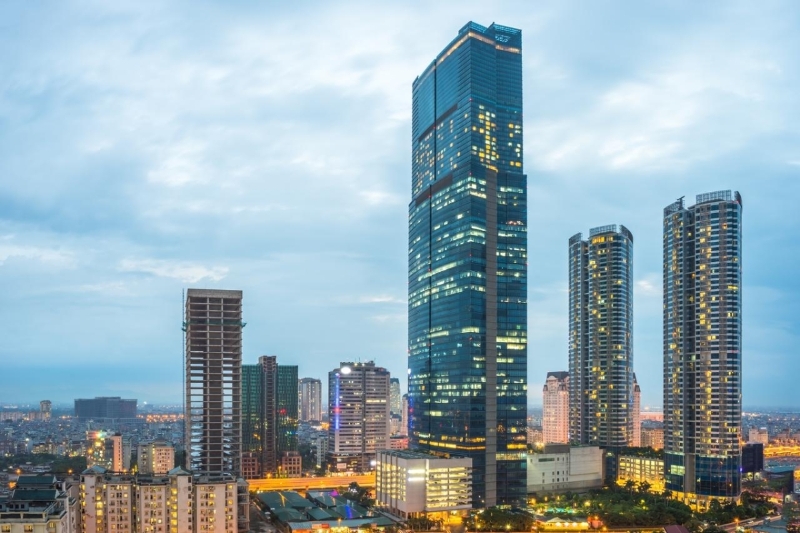
After ten years of rapid expansion, Hanoi’s office market is entering a new development phase. This period is characterized by a strong shift toward quality, decentralization from the city center, and a tenant-centric approach.
According to Cushman & Wakefield Vietnam, the total office supply in Hanoi has surged by approximately 160% over the last decade, reaching an estimated 1.74 million square meters by 2025. Grade A supply has led this growth, outpacing Grade B and providing tenants with more high-end options in the market’s premium segment. Despite this growth, Hanoi’s Grade A supply remains one of the smallest in the Asia-Pacific (APAC) region, even though its rental rates are among the highest.
This reflects a relatively limited supply of premium space compared to regional peers. However, the market continues to draw strong interest from tenants seeking high-quality, efficient, and "future-ready" workspaces.
Mr. Nguyen Phuoc Thuan, head of Leasing at Cushman & Wakefield Vietnam, noted that the Hanoi office market is no longer defined solely by scale. Instead, there is a visible shift in the factors tenants value most. Tenants are becoming increasingly selective, prioritizing quality, operational efficiency, strategic location, and ESG (Environmental, Social, and Governance) standards. These factors are now reshaping leasing decisions across the market.
A significant structural trend highlighted by Cushman & Wakefield is the movement of supply away from the city center. While Hoan Kiem remains the traditional Central Business District (CBD), office supply is now more widely distributed across former districts such as Ba Dinh, Dong Da, Cau Giay, and Tay Ho.
Furthermore, recent market movements reflect a clear "flight to quality." Notably, there is a rising supply of green-certified office spaces. Demand remains driven by core sectors, including information technology (IT), banking and finance, and manufacturing.
Forecasts suggest that Hanoi will welcome a significant wave of supply over the next three to five years, with more than 120,000 square meters of new office space entering the market annually. This growth is expected to come primarily from Grade A projects located outside the traditional Central Business District (CBD).
Echoing this sentiment, Mr. William Gramond, Director of Commercial Leasing at Savills Hanoi, noted that while supply is rising, leasing demand is expected to remain positive. However, it is becoming increasingly selective, with a clear preference for products that offer superior quality, operational efficiency, and a better user experience.
This trend is driving the formation of office clusters integrated with modern infrastructure and new urban areas outside the city center. Meanwhile, the core city center will continue its role as a hub for corporate headquarters and high-value functions.
According to Mr. Gramond, expanding beyond the city center is no longer just a cost-saving measure; it has evolved into a strategic decision. This shift is being fueled by rapidly improving infrastructure, the rise of high-quality supply, and the need for businesses to access talent and essential daily amenities.
Experts believe that as the market matures, the next chapter of Hanoi’s office sector will be defined by multipolar development, flexible workplace design, operational efficiency, and an ESG-oriented growth strategy.


 Google translate