


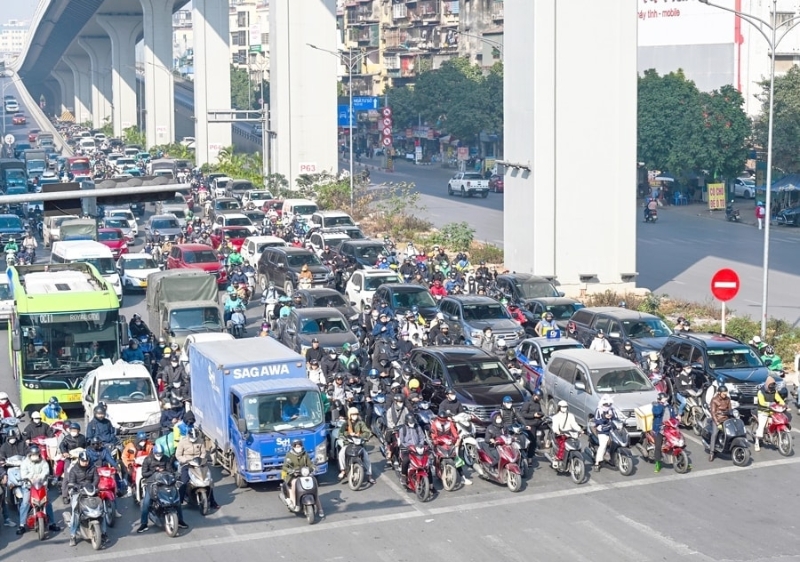
Hanoi is steadfast in its goal to complete its green transport transition by 2030 at the latest, with the majority of the conversion expected to be finalized as early as 2029.
Vice Chairman of the Municipal People’s Committee Nguyen Manh Quyen emphasized this commitment during a recent meeting with relevant departments, agencies, and enterprises. The meeting was held to review the progress of city-level directives on transitioning to "green" transport and to launch the implementation plan for 2026.
Reporting on the progress, Mr. Dao Viet Long, Deputy Director of the Department of Construction, stated that the department has been collaborating with various sectors and businesses to phase out fossil-fuel vehicles in favor of electric and clean-energy alternatives. For the 2025-2026 period, the city is focusing on finalizing support mechanisms for businesses, expanding the electric bus network, investing in charging station infrastructure, and enhancing technology-driven management.
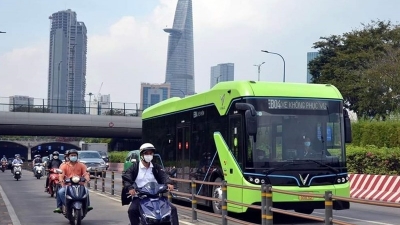
According to the roadmap, the ratio of electric and green-energy buses is projected to reach approximately 10% in 2025 and 20-23% in 2026, before hitting the 100% mark by 2030.
Practical data shows that by the end of 2025, the city is expected to have 23 electric bus routes with approximately 367 vehicles, representing nearly 20% of the total fleet. In 2026, Hanoi plans to convert an additional 200 buses as scheduled.
In the taxi sector, the Department of Construction has worked with the Hanoi Taxi Association and transport firms to reach a consensus on the transition timeline. Currently, there are over 14,300 active taxis in the city, of which nearly 8,800 are already electric. Another 13,600 vehicles are currently inactive, awaiting replacement.
The total number of taxis slated for conversion by 2030 is nearly 28,000. Businesses have agreed on a goal to fully transition from gasoline and diesel taxis to electric or green-energy vehicles by 2030, with the conversion rate increasing annually to reach 100%.
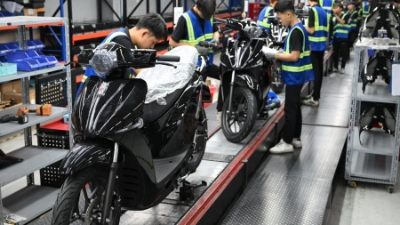
Regarding motorbikes and app-based ride-hailing services, major tech firms support the green transition policy and the implementation of Low Emission Zones. However, stakeholders noted that a suitable roadmap and specific financial support policies are necessary, as the majority of riders are low-income earners who operate personally owned vehicles.








 Google translate