


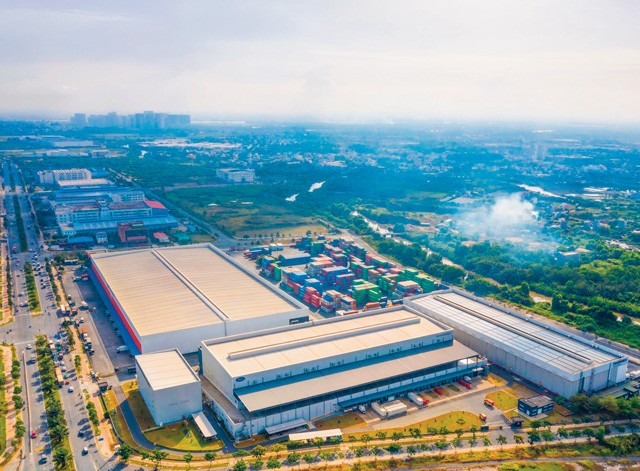
The latest data from the National Statistics Office (NSO) at the Ministry of Finance (MoF) shows that Vietnam attracted $38.06 billion in registered FDI during the first seven months of 2026, up 58 per cent year-on-year, while disbursed FDI totaled $15.2 billion - the highest seven-month figure for the past five years. The results reinforce Vietnam’s position as one of Asia’s most attractive, stable, and strategically-important destinations for international investment.
Vietnam’s traditional competitive advantages in attracting FDI, including low labor costs and tax incentives, are gradually losing their appeal as the global economy enters an era defined by AI, semiconductors, and the green economy. Recognizing this shift, Politburo Resolution No. 10-NQ/TW, issued on June 8, 2026, on the development of the foreign-invested sector, calls for attracting investment that brings core technologies, innovation, advanced management capabilities, and stronger domestic value creation, while fundamentally repositioning the country’s investment incentive framework.
Repositioning investment incentives
One of the biggest challenges facing Vietnam is the implementation of the Global Minimum Tax, which has significantly reduced the effectiveness of traditional tax incentives that served as the country’s primary investment attraction tool for decades. In response, the MoF is shifting its strategy away from tax-based incentives toward support mechanisms based on companies’ actual investment costs.
Under the new approach, the government will share the burden of infrastructure investment, provide financial support for developing high-quality human resources, and expand subsidies for R&D, innovation, and high-tech transfer. The strategy aims to directly reduce operating costs and investment risks for multinational corporations.
Financial support measures are being complemented by sweeping administrative reforms. Authorities are simplifying procedures, improving coordination across agencies, and shortening processing times while removing barriers related to visas and work permits for foreign experts and engineers. Dedicated fast-track mechanisms are also being established for large-scale projects in sectors such as semiconductors, AI, and data centers, with the goal of making Vietnam one of the region’s most business-friendly investment destinations.
The strategic shift reflects the reality that multinational investors today place greater value on a comprehensive business ecosystem than on short-term financial incentives alone.
Mr. Richard Barnsley, Head of Global Network Banking at HSBC Vietnam, said Politburo Resolution No. 10 marks an important milestone in Vietnam’s investment attraction strategy. Alongside new evaluation criteria that prioritize technology transfer, human capital development, and innovation, the country’s broader FDI policies are also evolving. Such changes, he said, are essential if Vietnam is to strengthen its position as a global strategic base for multinational corporations, particularly leading technology companies.
Infrastructure and talent bottlenecks
To attract the next generation of highly-selective FDI, the MoF has identified two critical priorities: strategic infrastructure and high-quality human resources.
On the infrastructure front, Vietnam is moving beyond standalone industrial parks toward integrated industrial-urban-service clusters in key economic regions. The model is designed not only to provide large, fully-serviced industrial sites for major investment projects but also to create high-quality living and working environments for foreign experts and engineers.
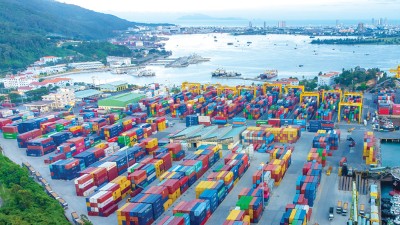
At the same time, the government is accelerating investment in strategic transport infrastructure, including expressways, deep-water ports, international airports, and logistics hubs. The objective is to lower logistics costs, shorten transportation times, and strengthen supply chain connectivity.
Energy infrastructure has become another critical competitive advantage as multinational corporations face increasingly stringent environmental, social, and governance (ESG) commitments. Global companies such as Apple, Samsung, and Nike are requiring their suppliers to use clean energy. Ensuring a stable electricity supply while expanding renewable energy sources, including wind and solar power, has therefore become a national priority to support the green transition of FDI.
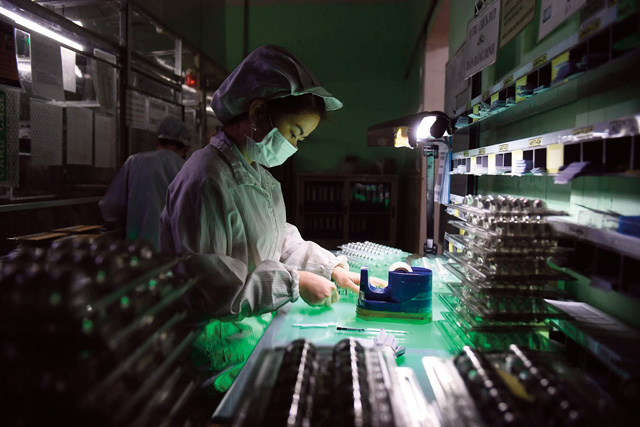
However, even world-class infrastructure cannot function effectively without skilled workers. Vietnam continues to face shortages of highly-qualified technical talent, particularly in emerging industries such as semiconductors and AI, delaying several major investment projects.
To address this challenge, policymakers are promoting closer collaboration between universities, vocational institutions, and foreign-invested enterprises (FIEs). Demand-driven training programs tailored to industry needs are being expanded nationwide.
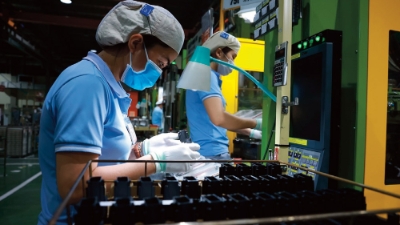
At the same time, upskilling and reskilling the existing workforce has become increasingly urgent. Workers who once performed traditional assembly-line tasks now need the skills to operate robots, CNC (Computer Numerical Control) machinery, and automated production systems. As labor costs continue to rise, productivity and workforce quality are becoming the decisive factors in retaining major investors.
Strengthening domestic value creation
Over the past four decades, the FDI sector has become a cornerstone of Vietnam’s economy, accounting for roughly three-quarters of the country’s exports and helping establish major industrial hubs in Bac Ninh, Thai Nguyen, Hai Phong, and Dong Nai. Yet stronger integration between FIEs and domestic enterprises remains an unfinished task.
Localization rates in many key industries remain relatively low. Most Vietnamese companies continue to participate primarily in lower value-added activities such as packaging, basic support services, assembly, and contract manufacturing, while higher-value activities - including R&D, product design, core component manufacturing, technology ownership, and global distribution - remain concentrated within multinational corporations.
Mr. Phan Huu Thang, former Director of the Foreign Investment Agency at the Ministry of Planning and Investment (now under the MoF), said that although FDI has become a major driver of Vietnam’s economic growth and exports over nearly four decades, links between FIEs and domestic companies remain limited, while technology spillover has fallen short of expectations. “That is why Vietnam must urgently shift from pursuing FDI quantity to prioritizing investment quality and value creation,” he said.
Mr. Nguyen Bich Lam, former Director General of the General Statistics Office (now the NSO), also said that measuring FDI solely through registered capital, disbursed capital, or export value no longer provides a complete picture of investment quality. Rather, the key question is how effectively FDI strengthens Vietnam’s domestic capabilities. The limitations, he noted, stem not only from foreign investors but also from Vietnamese companies’ relatively limited technological absorption capacity, small scale, and management capabilities.
To break this cycle, Politburo Resolution No. 10 introduces a fundamentally new approach to building Vietnam’s investment ecosystem. Rather than simply inviting foreign companies to invest, the government is emphasizing long-term partnerships. Companies seeking preferential treatment and special support will be expected to commit to technology transfer, establish R&D centers in Vietnam, and implement concrete programs to develop local supplier networks.
During the 2026-2030 period, Vietnam aims not only to attract between $200 billion and $300 billion in newly-registered FDI, with 75 per cent expected to come from developed economies, but also to integrate around 10,000 domestic companies directly into the supply chains of FIEs. The country also hopes to attract at least three of the world’s leading technology companies to establish regional headquarters or R&D centers; a move expected to significantly reshape the country’s economic landscape.
By building a comprehensive investment ecosystem supported by transparent rules and long-term partnerships, Vietnam is positioning itself to attract a new generation of FDI capable of delivering sustainable and broad-based economic growth.





 Google translate