


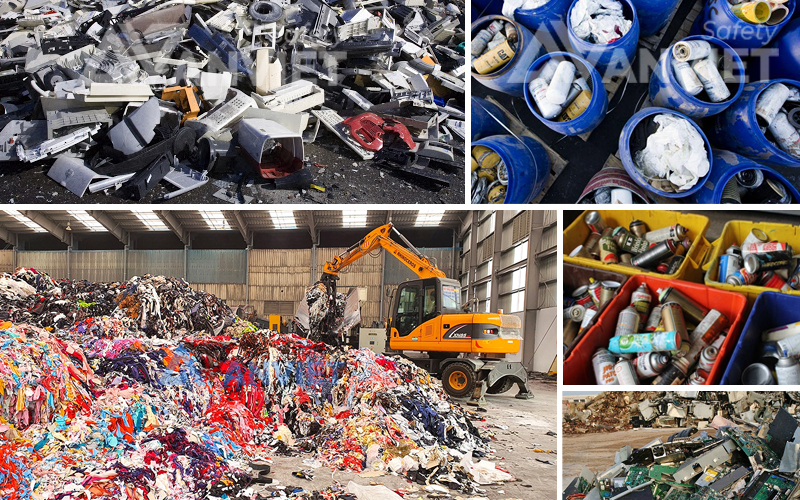
All industrial solid waste generated in high-tech parks, industrial parks, and industrial clusters must be collected and treated; all scrap collection, storage, and recycling facilities must be cataloged for monitoring; and industrial solid waste must be strictly controlled to prevent the emergence of spontaneous, polluting scrap yards and recycling sites.
Thess requirements were outlined in Plan No. 354/KH-UBND on strengthening the management of industrial solid waste and the operations of scrap collection, aggregation, and recycling facilities across the capital, recently signed by Hanoi People's Committee Vice Chairman Bui Duy Cuong.
The plan seeks to establish a unified, synchronized regulatory mechanism for industrial solid waste and all facilities engaged in scrap collection, gathering, sorting, pre-processing, and recycling.
It also aims to eradicate illicit dumping of industrial solid waste or scrap into the environment, while maximizing sorting and recycling potential to feed recovered waste and scrap back into manufacturing supply chains as raw materials.
Furthermore, the plan mandates that all scrap collection, storage, sorting, preliminary processing, and recycling establishments strictly comply with environmental technical standards as well as fire prevention and explosion safety regulations.
To achieve these targets effectively, the plan outlines five core tasks and solutions:
First, conduct comprehensive reviews, inventories, and classifications of all scrap aggregation and recycling establishments across the city.
Second, focus inspections and enforcement on high-risk and non-compliant operations. For scrap facilities that fail to meet operating conditions, operate in non-conforming locations, or pose environmental pollution and safety hazards, the municipal administration requires shutdown orders, relocation, or statutory penalties. Cases involving serious infractions, repeat violations, deliberate non-compliance, or indications of criminal conduct must be promptly referred to competent authorities for prosecution under the law.
Third, strengthen oversight to prevent the emergence of new non-compliant facilities.
Fourth, advance industrial solid waste treatment and recycling investment projects.
Fifth, enhance coordination and inter-agency management efficiency.
According to official reports, Vietnam generates an average of roughly 23 to 25 million metric tons of ordinary industrial waste and around 800,000 metric tons of hazardous waste each year, expanding at an annual rate of 10% to 12%.




 Google translate