


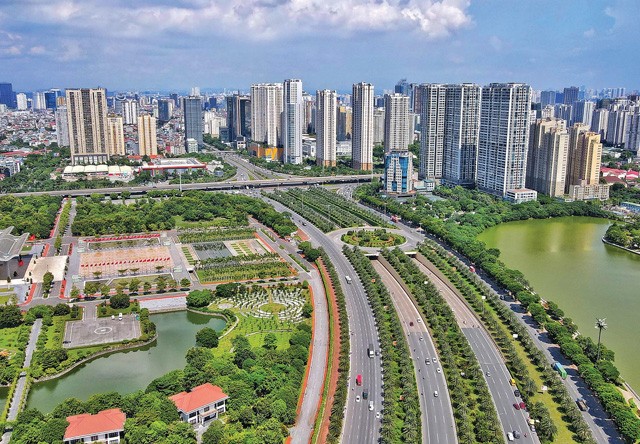
As Vietnam enters a new phase of development, its goal of double-digit GDP growth reflects an aspiration to achieve rapid and sustainable development and lay a solid foundation for the country’s objectives to 2030 and 2045. This is first and foremost an economic challenge, but viewing it solely through an economic lens is not enough.
To sustain high growth for many years, Vietnam cannot rely primarily on higher investment, resource extraction, low-cost labor, or expanded production. Growth must increasingly be driven by productivity, science and technology, innovation, digital transformation, high-quality human resources, modern institutions, and the more efficient allocation of resources.
Yet behind all these factors are people. Every percentage point of growth reflects millions of decisions on investment, production, work, consumption, learning, and innovation by citizens, businesses and other social actors. Even a sound policy becomes a material force only when people understand and support it, businesses have confidence in it, and the implementation apparatus acts responsibly.
Double-digit growth therefore cannot be the sole responsibility of the government, ministries, localities, and the business community. It must become a shared goal, aspiration, and endeavor across society.
Consensus for growth
Rapid growth inevitably brings major changes. Organizational restructuring, digital transformation, AI, automation, green transition, infrastructure development, urbanization, and the reallocation of resources create opportunities while also affecting the interests and livelihoods of different groups.
New technologies may create industries while displacing some jobs. Infrastructure can expand economic opportunities while affecting land, livelihoods, and communities. Administrative reform can improve efficiency while also affecting the employment and benefits of some public sector workers.
If these impacts are not identified early, people’s concerns are not heard and the interests of the State, businesses and citizens are not reconciled, the social costs of reform will rise. Social consensus therefore cannot be an afterthought; it must be built into the policymaking process.
The public consultation on the draft resolution amending and supplementing several provisions of the 2013 Constitution offers a notable example. Within a short period, the Vietnam Fatherland Front (VFF) system, political and social organizations, and member organizations held 61,791 conferences and collected more than 51.19 million opinions, including more than 48.6 million from individuals and nearly 2.6 million from organizations.
The significance lies not only in the scale of participation but in the mechanism created for people to directly contribute to a matter of national importance. The same approach can be applied to major development policies and projects, particularly those affecting livelihoods and living conditions.
The VFF should therefore be involved at an early stage by providing information, organizing dialogue, gathering opinions, identifying differences, and conveying them accurately to the Party and State. In this sense, it should be more than a “bridge”; it should become a platform for building consensus around development.
Great national unity is a strategic policy of Vietnam’s revolution, but its meaning in the new period needs to be translated more directly into development.
Unity is not simply about bringing together different social forces. It is about connecting and harnessing their resources: the knowledge of intellectuals and scientists; the capital and management capabilities of entrepreneurs; the skills and creativity of workers; the production experience of farmers; the technological dynamism of young people; the growing economic and social role of women; the experience and credibility of veterans, older people, religious dignitaries and community figures; and the economic potential, knowledge, and international networks of Vietnamese people overseas.
This requires a shift from “mobilizing forces” to “organizing resources”; from “launching movements” to “delivering development outcomes”; and from “mobilizing people to participate” to “creating conditions for people to become actors in development.” That would represent a new stage in translating great national unity into a development resource.
Double-digit growth will not come solely from major investment projects. It will also be the cumulative result of millions of improvements, innovation, and productivity gains at businesses, cooperatives, production facilities, and communities.
Unlocking resources
Rapid growth requires the reduction of unnecessary costs created by institutional bottlenecks, cumbersome procedures, and inertia. This is another area where the VFF and mass organizations can make a direct contribution.
Under its 2025 work program, the VFF system set specific oversight targets, including at least three nationwide programs by the Vietnam Fatherland Front Central Committee, at least two oversight areas for each political and social organization, and at least two for provincial VFF committees. Social criticism was also required for draft laws and legal documents at different levels.
The next challenge is choosing issues with the greatest impact on people and development. Priority should include administrative procedures, investment projects, land, housing, the environment, policies affecting businesses and cooperatives, vocational training, social welfare, and the disbursement of national target programs.
Double-digit growth will have meaning only if living standards improve and development gains are shared fairly. The transition to a new growth model may create groups that benefit quickly while leaving others vulnerable, including workers displaced by automation, people forced to change livelihoods, farmers affected by urbanization, older people, people with disabilities, the poor, and communities with limited access to technology.
The VFF and its member organizations need to identify these risks early. Experience from the “For the Poor” Fund, Great Unity houses, and the housing program shows that substantial social resources can be mobilized, but the next step should be to shift from “supporting hardship” to “building development capacity.”
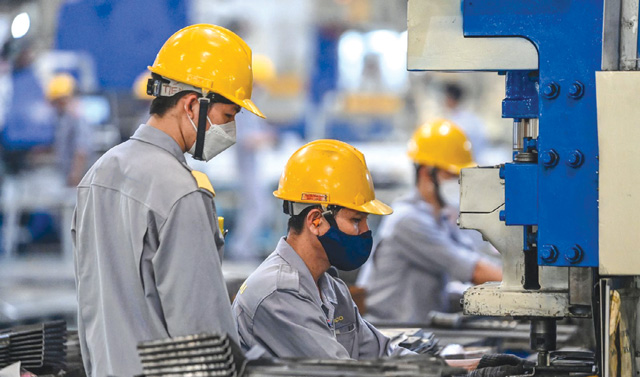
A poor household may need a home, but the next priority must be a livelihood. A worker who loses a job needs immediate assistance, but also retraining for new employment. A disadvantaged young person may need a scholarship, but should also have access to vocational training, entrepreneurship opportunities, and the labor market.
Social welfare is therefore not separate from growth. Effective welfare policies help people participate in growth and make that growth more inclusive and sustainable.
Utilizing ideas
The experience of collecting more than 51 million opinions on constitutional reform shows the potential for broader mechanisms to harness public intelligence for socio-economic development.
Regular forums, both in person and on digital platforms, could give intellectuals, entrepreneurs, scientists, workers, farmers, young people, and Vietnamese people overseas opportunities to propose development initiatives. But gathering ideas is only the first step: proposals must be categorized, directed to the relevant agencies, followed by feedback, and effective models should be tested and scaled up. This would help turn dispersed knowledge and experience across society into a shared national resource.
These ambitions ultimately require the VFF and its member organizations to change themselves. A digital society cannot be mobilized primarily through meetings and documents, nor can people be effectively represented if activities remain distant from the grassroots.
The focus should shift from activities to outcomes; from one-way communication to dialogue; from broad campaigns to targeted priorities; from reporting to forecasting and solutions; and from managing members to serving members and the people.
Digital transformation should become a fundamental operating model. The 2025 target for 100 per cent of VFF committees at all levels to implement digital transformation and apply information technology should go beyond digitizing documents to building real-time channels for understanding public concerns, receiving petitions, conducting consultations, and measuring satisfaction.
VFF officials will consequently need not only public mobilization skills but also greater knowledge of economics, law, technology, digital communications, social governance, and public policy. Organizational streamlining should similarly mean fewer layers but faster responses, less administration but stronger representation, and greater ability to reach and serve the people.
National advantage
Financial resources can be mobilized from markets and technology can be researched, transferred, or imported. Trust and social consensus, however, cannot be bought.
A society with high trust can implement policies at lower cost. Communities capable of cooperation can mobilize resources faster, while people confident in the future are more willing to invest, work, innovate, and contribute.
The VFF’s record of mobilizing tens of trillions of VND for the poor, thousands of billions of VND for disaster relief, bringing society together to eliminate more than 334,000 temporary and dilapidated homes, and collecting more than 51 million opinions on a matter of national importance demonstrates that this strength is real.
The challenge now is to turn what has often been mobilized in moments of crisis or major campaigns into a permanent capacity for development.
Achieving double-digit growth is a major challenge, but behind more than 100 million Vietnamese people lies an enormous reservoir of knowledge, labor, creativity, capital, culture, patriotism and aspiration. The mission of the VFF, political and social organizations, and mass associations is to connect these resources and enable them to reinforce one another.
When the country’s development aspirations become the aspirations of citizens; when workers see productivity as a contribution to national competitiveness; farmers see the value of their products as part of growth; entrepreneurs see business expansion as intertwined with national development; intellectuals see their creativity valued; and Vietnamese at home and abroad find opportunities to contribute, great national unity will become more than a political and social foundation.
It will become a resource for development and a distinctive competitive advantage for Vietnam - and a practical foundation for achieving double-digit growth and building a prosperous and happy country in the new era.
(*)Dr. Nguyen Minh Chung is a Member of the Standing Committee and Head of the Propaganda and Mass Mobilization Commission of the Party Committee of the Vietnam Fatherland Front and Central Mass Organizations.


![[Interactive]: Economic overview - September 2026](https://premedia.vneconomy.vn/files/uploads/2026/10/06/9e0f403040dd4384ad690004bc1911ab-124594.png?w=400&h=225&mode=crop)


 Google translate