


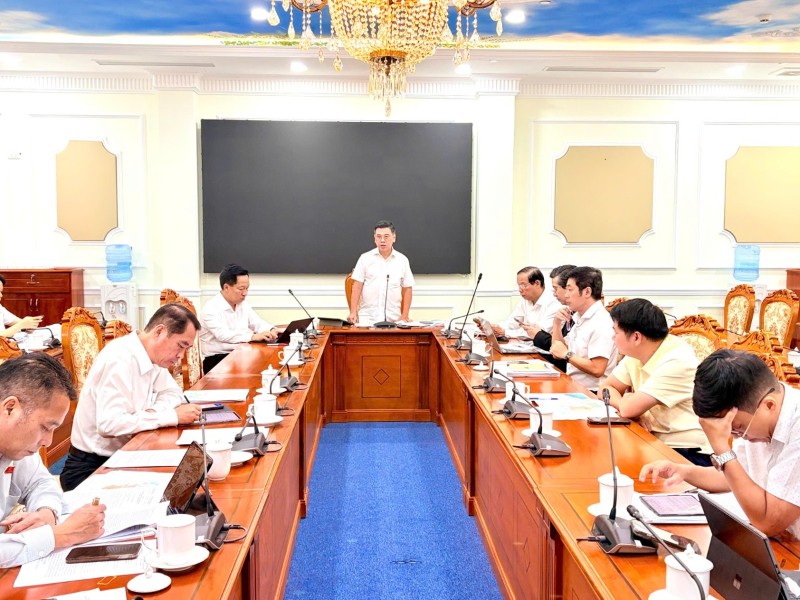
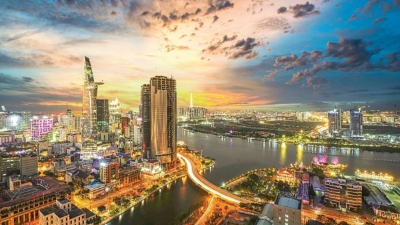
The Urban Affairs Committee of the Ho Chi Minh City People's Council on October 26 held a session reviewing a draft Resolution on the Master Plan of the city for the 2025–2050 period, featuring a 100-year vision.
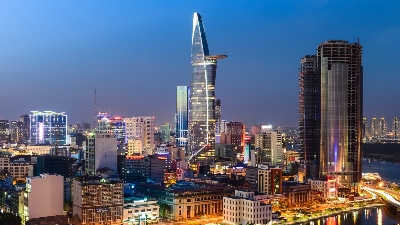
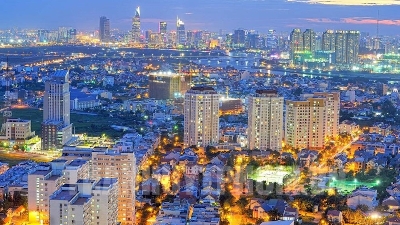
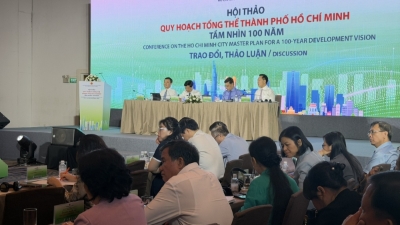
According to Document No. 1449/TTr-UBND dated October 22, 2026, submitted by the Municipal People's Committee to the People's Council, the master plan is formulated under a long-term strategic orientation to transform HCM City into a global metropolis with international competitiveness. The planning scope encompasses the city's entire administrative area, spanning approximately 6,772.59 sq.km across 168 commune-level administrative units. defining feature of the plan is its spatial organization based on a "multi-polar, polycentric megacity" model. The overarching framework comprises 5 dynamic poles, 5 strategic connectivity networks, 5 satellite centers, and 10 development management zones.
The five dynamic poles include: the international financial services central core; the eastern innovation pole; the northern industrial, high-tech, and logistics pole; the southern seaport, free trade, international logistics, and clean energy pole; and the western urban, educational, and healthcare pole.
Regarding infrastructure strategy and the enhancement of residents' living standards, the master plan sets a target for the city's GRDP to reach approximately $2,000 to 2,500 billion by 2050, aligned with coordinated investments in technical and social infrastructure. Key development targets include a 100% clean water coverage rate for the population, an urban wastewater collection and treatment rate of 90% or higher, and a 100% urban solid waste collection and treatment rate.
A major focus of the plan lies in developing an advanced public transport system anchored by urban rail transit as its backbone. By 2050, HCM City plans to complete a network of 18 urban rail lines totaling around 961 km, alongside approximately 450 km of light rail transit and trams, aiming to raise the public transport market share to 55–65%.
Furthermore, the plan places special emphasis on preserving green spaces, water bodies, river corridors, the Can Gio mangrove biosphere reserve, coastal ecosystems, and Con Dao. The city will bolster water regulation capacity, flood management, and climate change resilience against rising sea levels.
Looking further ahead, the master plan outlines a long-term vision toward 2075, targeting a minimum GRDP per capita of $100,000 and a Human Development Index (HDI) exceeding 0.9. The city strives to become a globally competitive, smart, modern, and comprehensively developed metropolis.
During the session, Vice Chairman of the Municipal People's Council Nguyen Van Dung affirmed that the master plan must comprehensively institutionalize the overarching views, objectives, and major directions established in the Politburo’s Resolution No. 09-NQ/TW dated May 19, 2026 on the development of HCM City in the new era. Accordingly, the plan must ensure holistic, synchronized planning and robust spatial connectivity, effectively unlocking new growth poles while decisively resolving the city's existing urban bottlenecks.
 Google translate