


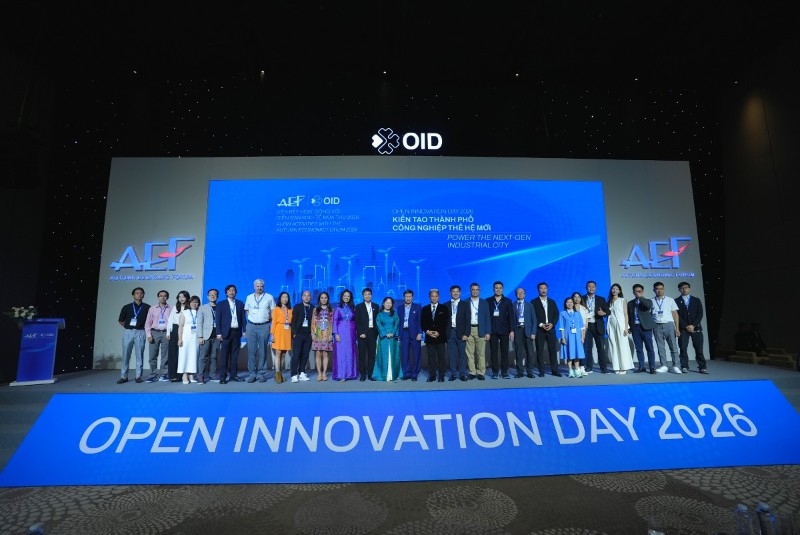
Open Innovation Day (OID) 2026 and the final round of the Next Wave of Startups Accelerator, held in Ho Chi Minh City on October 26 as part of the Autumn Economic Forum 2026, focused on connecting startups with investors, businesses and industrial partners while exploring ways to strengthen the city’s innovation ecosystem.
Speaking at the OID, Mr. Truong Minh Huy Vu, Vice Chairman of the Ho Chi Minh City People’s Committee, said the city was moving towards a growth model increasingly driven by innovation and technology. The city currently has more than 40 incubation and innovation centres, providing a foundation for connecting businesses, universities, research institutes and investors.
The final round of the Next Wave of Startups Accelerator also gave startups opportunities to engage with investors and seek partners to support market expansion. The program was organised by WorkFlow, the Open Innovation and Technology Incubator (OITI), and other ecosystem partners.
Mr. Nguyen Dinh Quy, co-founder and chief executive of the WorkFlow platform, told VnEconomy that this year’s programme had shifted from a competition format to a startup acceleration model. It focuses on helping startups refine their business models, connect with enterprises and expand into new markets, built around three pillars: policy support, investment connections and commercialisation.
Once startups enter the commercialisation and fundraising stages, they continue working with corporate partners to test products in real-world settings, pursue commercial contracts and engage with investors.
The approach highlights how, beyond technological capabilities, the ability to acquire customers, generate revenue and scale a business model has become increasingly important for startups.
Connecting startups with investment funds through the accelerator offers not only fundraising opportunities but also access to resources for the next stage of growth. As investors place greater emphasis on business performance and sustainability, real-world implementation data, commercialisation results and clear plans for using capital will be crucial to demonstrating a startup’s potential to scale.
Corporate partnerships also allow startups to test solutions in practical environments, collect data and refine products before expanding. These results help investors assess market fit and capital efficiency, rather than relying solely on the promise of an idea.









 Google translate