


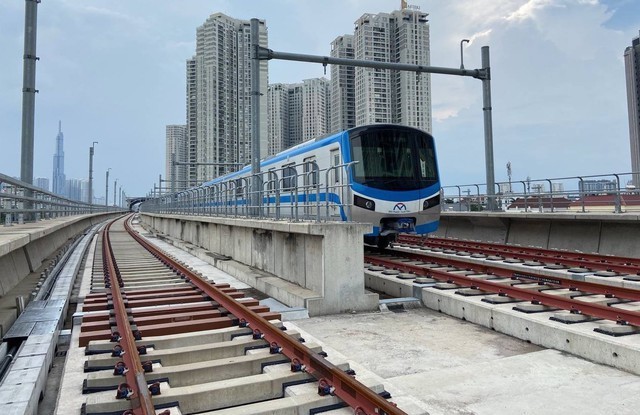
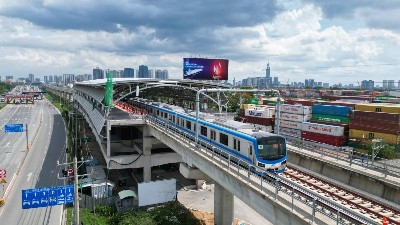
Ho Chi Minh City is executing transit-oriented development (TOD) master plans tied to Metro Line 1, Metro Line 2, Thu Thiem Station, Binh Khanh Station, and the Ben Thanh – Can Gio rail link, with multiple focal areas slated to secure planning approvals within 2027.
According to the City Department of Planning and Architecture, TOD preparatory work linked to railway networks is currently underway across key areas.
For Metro Line 2 (Ben Thanh – Tham Luong section), project dossiers are being finalized and are scheduled for appraisal and planning approval submission in December 2026.
At the Thu Thiem Station area, TOD boundary delineations have been approved, with appraisal and planning clearance anticipated between December 2026 and January 2027.
Meanwhile, Binh Khanh Station and the Tham Luong – Cu Chi section are expected to complete their boundary review reports in the fourth quarter of 2026, followed by formal master plan approvals between the first and third quarters of 2027.
For Metro Line 1 (Ben Thanh – Suoi Tien section), municipal authorities are gathering feedback on TOD perimeter delimitations, targeting approval submissions in October 2026 and official planning sign-offs during Q1–Q2 2027.
The Ben Thanh – Can Gio express rail line is also undergoing boundary delineation reviews, with TOD plan formulation and approval slated for completion within Q1–Q3 2027.
Furthermore, several other lines—including Thu Thiem – Long Thanh, Metro Line 4, Phase 1 of Metro Line 6, Suoi Tien – Binh Duong New City, and the Metro Line 2 extension connecting Thu Dau Mot City with HCMC—are preparing TOD boundary review reports in Q4 2026 to ensure synchronized implementation once final route alignments are cleared.
Under the framework of the City People’s Council’s Resolution No 21 on urban spaces and mixed-use residential, commercial, and service clusters surrounding transit hubs, the locality plans to zone land and mixed-use developments around stations. These will integrate residential, commercial, service, office, and civic facilities.
Public transportation will serve as the primary mobility backbone, complemented by pedestrian walkways and dedicated bicycle lanes designed to provide safe, convenient station access.
The development scale must not exceed the capacity of local technical and social infrastructure. Projects will prioritize optimizing value capture from land, underground, and airspace resources, while aligning with green standards, energy conservation, and climate change adaptation mandates.
According to the municipal Urban Railway Management Division, the city faces three major headwinds in rolling out TOD models:
First, schedule pressures are mounting as HCM City aims to complete eight priority rail lines and route sections over the next four years, alongside simultaneous TOD zoning to ensure synchronized transit and urban growth.
Second, site clearance and land compensation across densely populated inner-city arterial corridors pose risks of prolonged delays, directly affecting delivery timelines.
Third, execution demands substantial public investment capital alongside large-scale public-private partnership (PPP) financing, necessitating the expedited finalization of comprehensive capital mobilization strategies.



 Google translate