


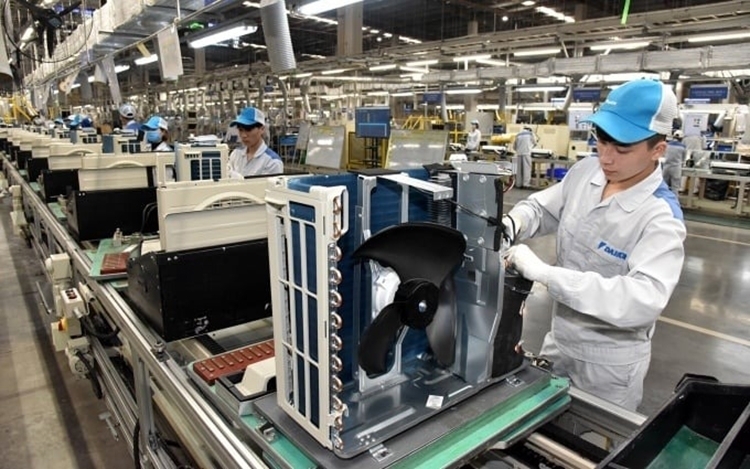
The Ho Chi Minh City People's Committee has officially issued Plan No. 122/KH-UBND, dated April 1, 2026, regarding the development of strategic technologies and products through 2030 (Plan 122).
The central theme of this plan is a shift beyond mere research toward mastering, localizing, and commercializing technology, aiming to gradually establish a complete strategic technology ecosystem.
By 2030, the city aims to support the development of 30 to 50 strategic technology products with commercial potential and to establish five to seven shared research centers, laboratories, and platforms for R&D. Approximately 100 to 150 enterprises will be supported to participate in the research, development, and application of strategic technologies. Among these, 10 to 15 products are expected to be directly implemented in state management, public services, or key economic sectors.
A notable feature of Plan 122 is the emphasis on a comprehensive survey of the current technological landscape within 2026. This survey intends to build a database and clearly identify the capabilities of every stakeholder in the ecosystem, from research institutes and universities to businesses. This is considered a vital foundational step to prevent scattered investment and ensure that development programs remain focused and high-impact.
Another key component is the development of shared technology infrastructure. Rather than fragmented investments, the city is directing the construction of research centers and platforms capable of serving the entire value chain, from research and testing to commercialization.
Regarding technological focus, the city has selected nine strategic technology groups with 26 priority product categories, ranging from Artificial Intelligence (AI), robotics, and 5G/6G networks to blockchain, semiconductors, new energy, cloud computing, and biotechnology. High-value, breakthrough areas identified as key directions include Vietnamese Large Language Models (LLMs), AI chips, autonomous robots, hydrogen energy, and gene and cell therapies.
The defining difference of this plan lies in its approach to tightly coupling research with the market. The city has set clear requirements for commercializing research results and increasing the proportion of science and technology tasks that yield practical applications, revenue, or specific socio-economic value.
Furthermore, the city is placing special emphasis on high-quality human resources. The training model will be linked to real-world projects, laboratories, and businesses to cultivate a workforce of experts and scientists capable of mastering technology.
The plan aims to attract 30 to 50 domestic and international experts and scientists for strategic technology tasks, while fostering strong research groups through university-institute-business collaborations.
In terms of cooperation, the city intends to implement 10 to 15 international programs for research and technology transfer, while forming inter-regional strategic technology value chains through three to five linkage programs.
Attracting high-quality foreign direct investment (FDI) into strategic technology sectors is also a pillar of the plan, coupled with the development of a network of international-standard innovation centers.


 Google translate