



Vietnam has continued to assert itself as one of the region’s most “safe and attractive” destinations for foreign investors, with disbursed FDI reaching a five-year high in 2025, of an estimated $27.62 billion, up 9 per cent against 2024.
According to a report from the National Statistics Office at the Ministry of Finance, total registered FDI into Vietnam last year amounted to $38.42 billion, up a modest 0.5 per cent from 2024. This is considered a positive outcome given the intense competition for investment among regional peers such as India, Indonesia, and Thailand, and in light of the $38-40 billion target Vietnam set at the beginning of the year.
Positive picture
The most notable aspect lies in the composition of these capital flows. While newly-registered capital reached $17.32 billion, down 12.2 per cent in value but up 20.1 per cent in project numbers, with 4,054, additional capital showed a slight improvement, totaling $14.07 billion, up 0.8 per cent. This suggests a clear trend: new investors are being more cautious about initial investment sizes as they test the market, while existing investors in Vietnam are increasingly committed to expanding their operations.
Notably, capital contributions and share purchases recorded a sharp surge, of 54.8 per cent, reaching $7.03 billion. This reflects a rapidly-heating market for mergers and acquisitions (M&As), as foreign investors seek faster market entry by partnering with promising domestic companies.
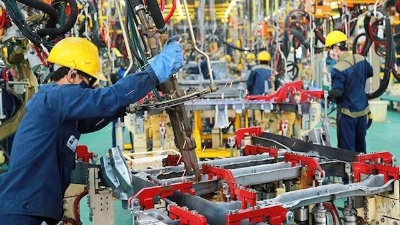
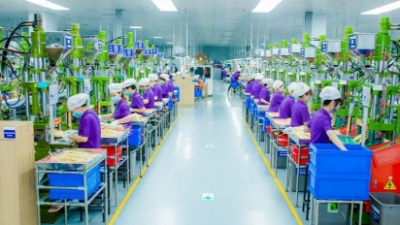
The record-high disbursement level indicates that FDI projects are moving beyond paperwork and being translated into factories, machinery, and jobs. The manufacturing and processing sector continued to serve as the backbone of FDI, accounting for 82.8 per cent of total disbursed capital, equivalent to $22.88 billion. This underscores Vietnam’s growing role as a key manufacturing hub in global supply chains, particularly in electronics, end devices, and semiconductor components.
The surge in disbursed capital also reflects government efforts to remove bottlenecks related to infrastructure, logistics, and administrative procedures - all critical factors enabling investors to accelerate project implementation after registration.
In terms of investor structure, Singapore maintained its position as the largest source of FDI in Vietnam in 2025, with $4.84 billion, accounting for 27.9 per cent of newly-registered capital. However, this year’s investment landscape also featured new highlights. China and Hong Kong (China) significantly increased their presence, accounting for 21 per cent and 10 per cent of newly-registered capital, respectively. The “China + 1” supply chain shift continues to gain momentum, further reinforcing Vietnam’s appeal as an investment destination.
Particularly noteworthy was Sweden’s emergence, with $1 billion, or 5.8 per cent of newly-registered capital; a positive sign for Vietnam’s attraction of high-tech and sustainable investment flows from Northern Europe. Though Japan and South Korea ranked lower in terms of newly-registered capital, accounting for 9.4 per cent and 5.2 per cent, respectively, they remain among Vietnam’s most important partners, operating projects with substantial disbursement volumes and spillover effects.
Advantages and challenges ahead
While monthly FDI inflows fluctuated, the overall trend in 2025 broadly aligned with earlier assessments by international organizations. In its “Vietnam at a Glance” report, HSBC noted: “Vietnam is no longer merely an alternative to China, but is becoming an indispensable link in the global value chain.” In particular, the country’s transition from a low-cost manufacturing base to a high-tech production hub has attracted strong interest from major US and European tech groups, especially in semiconductors and clean energy.
At the same time, improvements in Vietnam’s investment and business environment, increasingly aligned with international standards, have been positively assessed by strategic partners.
The implementation of the Global Minimum Tax in 2025, meanwhile, posed new challenges to Vietnam’s traditional reliance on tax incentives to maintain competitiveness. Rather than viewing this as a setback, however, the country proactively shifted towards non-tax investment support policies, including high-quality workforce training, digital infrastructure upgrades, and green energy development.
In its recent “East Asia and Pacific Economic Update,” the World Bank described Vietnam as one of the most adaptable economies in the region, noting that its deep participation in next-generation free trade agreements has created a “shield” protecting investment flows from global trade volatility.
Meanwhile, the International Monetary Fund emphasized that Vietnam’s macro-economic stability and effective inflation control are among the most important factors in retaining FDI levels. It forecast that Vietnam would continue to be a key growth engine in ASEAN in 2026 and remain an attractive destination for foreign investors.
A recent report from the Organisation for Economic Co-operation and Development (OECD) on Vietnam’s investment environment also highlighted that modern investors no longer focus solely on tax incentives. Rather, they prioritize access to renewable energy, infrastructure quality, and the transparency of legal systems. In this context, Vietnam is moving in the right direction by accelerating offshore wind power projects and smart grid development, meeting the stringent environmental, social, and governance (ESG) requirements of multinational corporations.
As a result, international organizations continue to forecast that FDI inflows into Vietnam in 2026 will further shift towards higher quality. Sectors such as semiconductors, the digital economy, and green energy are expected to emerge as new magnets for investment.
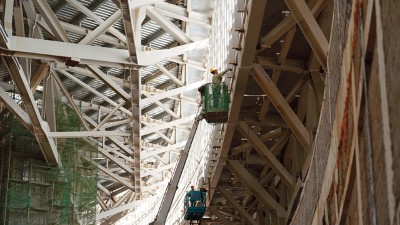
However, to fully realize these opportunities, Vietnam will need to act more decisively in upgrading transport and energy infrastructure, while narrowing the skills gap to ensure readiness to absorb core technologies from leading global investors.






 Google translate